Start With the Outlets That Depend on Treatment
Treat a bypass as a different supply path. Trace what arrives at the ice machine, the beverage tap and any equipment on the same branch before putting the filter or softener out of service. Write the treatment each outlet needs beside its name. A line that can feed the building may leave one piece of equipment waiting for its specified water.
If a cartridge treats the water only for an outlet’s scale or taste target, document that target and which operations can continue without it. Where a step is required for the water to meet a health criterion or the equipment’s inlet specification, keep that outlet closed until an approved source supplies it. A standby train that delivers the same required treatment gives you a different option from a pipe around the unit.
Put Three States on the Plumbing Drawing
In normal service the flow goes through the treatment train. In the isolated state that equipment is out of the water path, protected against backfeed and made safe by the installer’s procedure. The connected outlets may have to stop. In an approved bypass or standby state, show exactly what water returns to which branch and what treatment that route includes. Specify where the required backflow protection and the service drain belong, including any air gap required for the installation.
The Fleck 9500 SXT/MECH commercial installer manual makes the distinction visible. The normal-flow drawing runs the water through the softener. The bypass drawing isolates the softener and supplies unconditioned water downstream. Label the states on the diagram and on the actual valves. Use the unit procedure and let the qualified installer verify isolation, depressurization and any electrical supply that must be secured before opening the equipment.
A common external three-valve bypass uses two isolation valves, one at the treatment inlet and one at the outlet. The third valve sits on a pipe that runs around the treatment stage. Show all three in the as-built drawing and name the branch they serve.
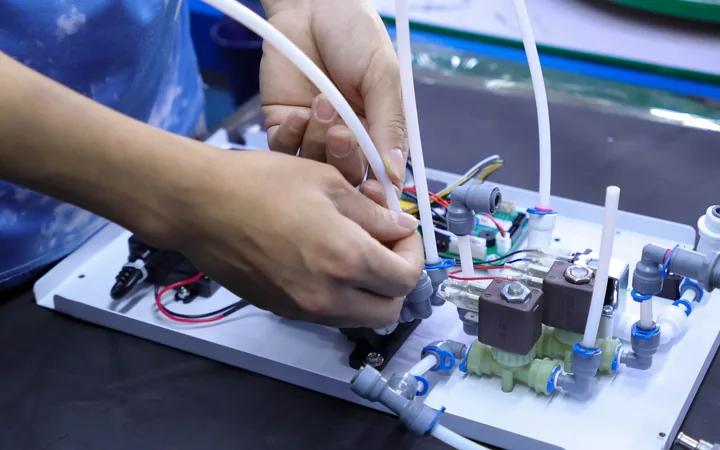
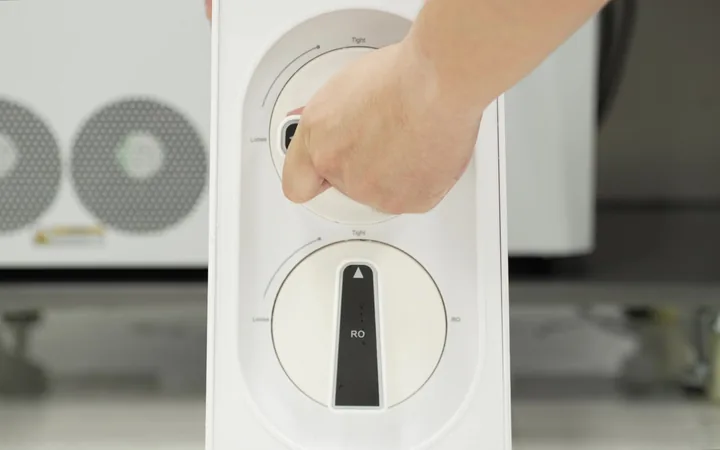
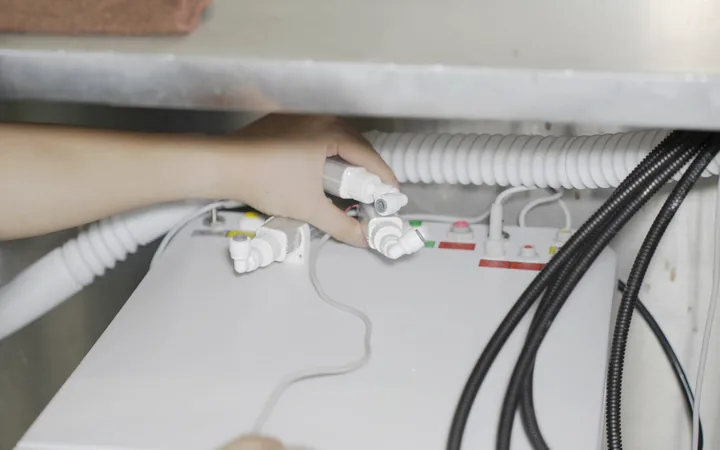
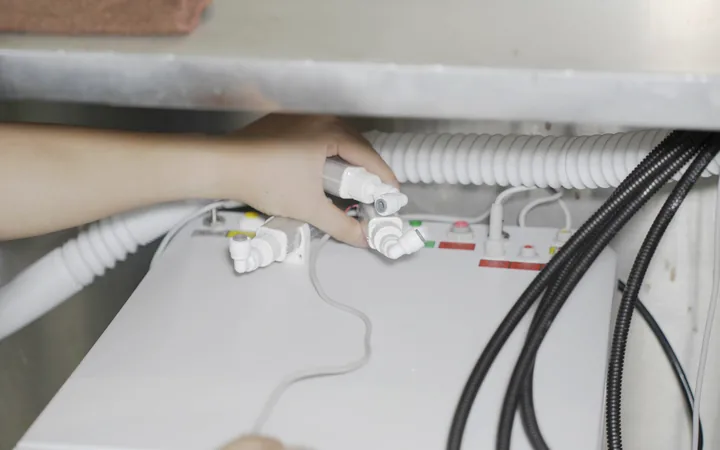
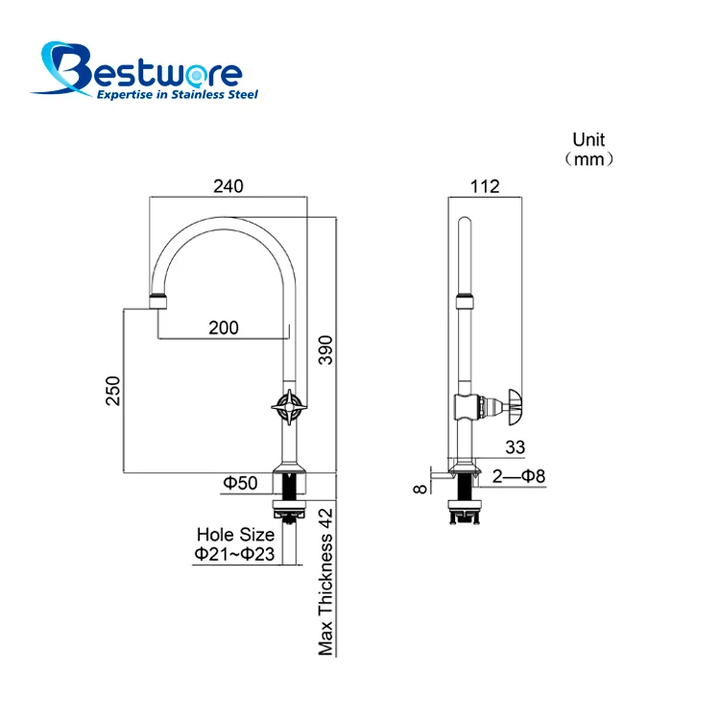
Bestware’s G1DS-123 / G1DS-1023 V1.2 manual shows a connection diagram for the configuration with RO. It labels the angle valve, a three-way shut-off, the RO filtration unit, and the heating and chilling connections. Draw the job’s actual feed to the RO unit and the outlets it serves. That label on the three-way shut-off identifies a connection in the drawing. The project drawing is where a separately approved maintenance supply would be shown.
Test the Alternate Supply at the Working Outlets
For a worked example, take a restaurant with a dispenser and ice maker on the same treated branch. Their planned simultaneous draw is 8 L/min at the site’s specified minimum pressure. The standby feed on a supervised commissioning test delivers 6 L/min at that pressure. Even after the water-quality record is accepted, the feed is 2 L/min short for joint service. Set up a smaller approved operating pattern and test that load, or pause the restricted outlets while the normal train is serviced. Record pressure with the flow at the point that sets the limit.
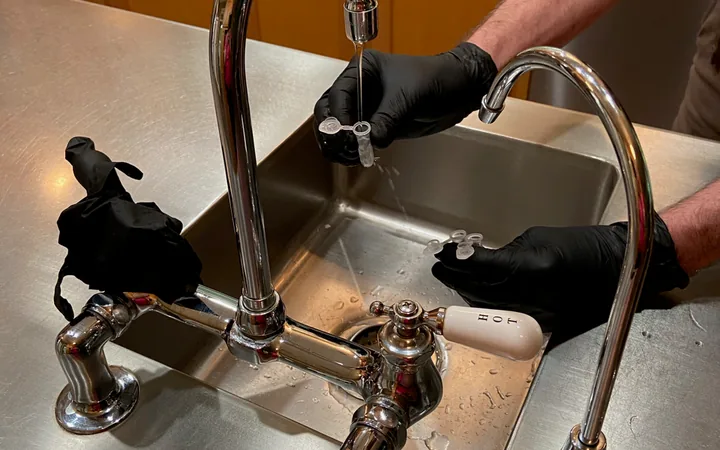
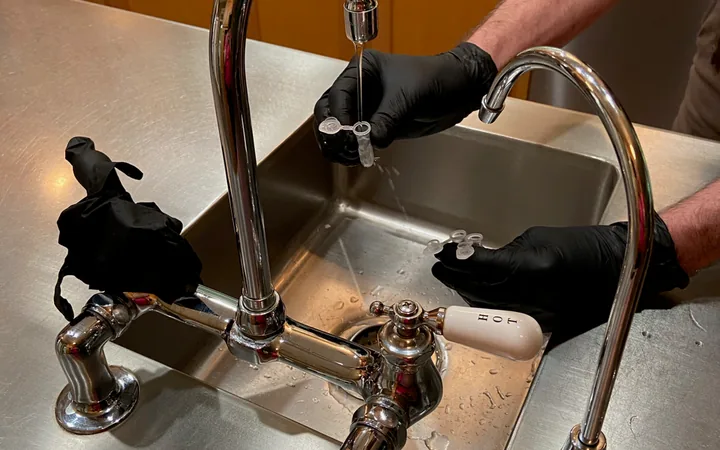
Monitoring at ten rural healthcare facilities in Rwanda illustrates why an operator needs two status fields. The 2015 study counted treatment interruptions separately from piped-water interruptions, and its results classified user bypass as a treatment interruption. In Flint, EPA researchers sampled water with and without tap-mounted filtration at more than 345 locations in 2016. The tested filters were certified to NSF/ANSI 53 for total lead reduction and NSF/ANSI 42 for Class I particulate reduction. Over 97% of the filtered samples were below 0.5 µg/L lead in that study. The results describe the devices and conditions studied. For a job’s handover, record the water path used and sample the treatment parameter specified for that outlet when the site’s plan calls for it.
Use the Current Advisory to Set Service Limits
An active public-water advisory sets a separate limit on service. Identify whether the notice calls for boiling, prohibits drinking or prohibits use. Keep affected connected equipment out of the prohibited activities and use the alternative source the authority permits. Keep the notice in force on the branch until the issuing authority lifts or changes it. A valve position applies to the plumbing plan, and the authority’s notice applies to the water use.
See what restaurants should pause during each type of water advisory
Sign off the Return With the Shift Lead
The handover starts while the service team still has the job open. Confirm the approved position of every tagged valve and verify that the temporary feed is closed or removed as the drawing specifies. The installer follows the equipment procedure for checks after the work, including required leak checks, flushing, sanitation or water-quality tests. For the Bestware assembly in the manual, the leak check comes before powering the chilling and heating units.
Run a supervised draw at the outlets being released. Check which water they receive, record the flow and pressure under the intended demand, and confirm any treatment readings the site requires. Put the completion time and the person authorizing reopening in the log. The incoming shift should be able to find the confirmed water path, the outlets still restricted and the contact for any problem.
Carry the valve, outlet and responsibility checks into the handover record
Sources for This Edition
- Bestware — G1DS-123 / G1DS-1023 Installation Manual, V1.2 · PDF page 14, printed pp. 24–25, the labeled assembly for the configuration shown with RO and the pre-startup water connections. PDF page 15, printed p. 26, the leak check before powering.
- Pentair — Fleck 9500 SXT/MECH Installer Manual, MKT-IM-057/B, 18 December 2025 · Page 45, section 5.11, the normal and bypass illustrations for this softener installation. The opening of chapter 5 states the installer qualification and pressure precautions.
- Pentair — PCFFE54P12 Carbon Filter Manual · Printed page 12, Water Line and Bypass Connection. The external three-valve drawing identifies separate inlet, outlet and bypass valves.
- Washington State Department of Health — Water System Design Manual, DOH 331-123 · PDF page 173, Protection Against Cross-Connection (§6.3.10), design considerations for the state’s water systems.
- Alexandra Huttinger et al. — Evaluation of Membrane Ultrafiltration and Residual Chlorination as a Decentralized Water Treatment Strategy for Ten Rural Healthcare Facilities in Rwanda (2015) · Original publisher PDF page 9, Table 1 and results section 3.1.2. Treatment interruptions and water interruptions are tracked separately.
- U.S. EPA — Flint Water Sampling Objectives · Testing In-Home Lead Filters, including the 2016 field data and the abstract of Valerie Bosscher et al., 2019.
- CDC — Drinking Water Advisories: An Overview · Terms to know defines the three advisories; the article addresses appliances connected to the water line and separate actions for the different notices.
- Bestware Wiki — What Restaurants Should Stop During a Water Advisory · Decide what to pause and how each point can return under the current advisory.
- Bestware Wiki — Water Dispenser Installation and Handover · Put fixture, service trial and responsibility checks in the installation record.
Continue With These Decisions
- What Restaurants Should Stop During a Water Advisory
See what restaurants should pause during each type of water advisory
- Water Dispenser Installation and Handover: What to Sign Off
Carry the valve, outlet and responsibility checks into the handover record