Read Across the Certified Listing
An activated carbon filter can reduce a chlorine taste in already potable tap water. If your utility uses chloramine, ask for the reduction claim for chloramine. NSF/ANSI 42 listings distinguish the two. A quote that says only “carbon” leaves you without the flow or rated capacity for the disinfectant at your address.
Take Solventum’s High Flow Series as a real example. The HF160-CLX system sheet specifies replacement HF60-CLX, part 5637210. NSF lists that element under the High Flow Series with the same configuration footnotes for two entries. For chloramine, it shows 1.67 US gallons per minute and a service cycle of 6,300 US gallons. The chlorine row shows 3.50 gallons per minute and 35,000 gallons. The manufacturer’s metric figures are 6.32 L/min and 23,848 L for chloramine, and 13.25 L/min and 132,489 L for chlorine taste and odor.
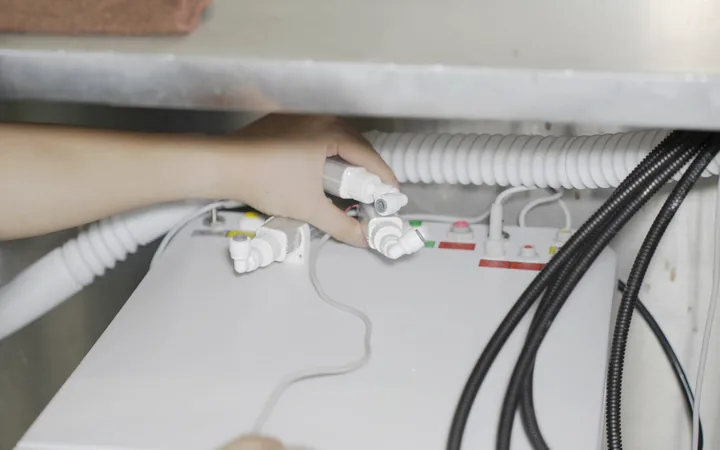
Ask the supplier for the exact head or manifold as well as the replacement element. In the listing, record the configured model, the footnotes, the claim, the flow and the service volume together. Put that line on the purchase order so it can be checked when the carton turns up.
Ask What Is in the Main This Week
For an address served by Harris County Municipal Utility District No. 412 in Texas, the October 12, 2026 notice spelled out a temporary switch from chloramine to free chlorine. The district planned to start October 15 and run through about November 16. A taste comparison done during that period would have a different starting point from one done after the district returned to its regular disinfectant. Confirm the actual return date with the utility if it matters to your records.
Ask the utility which residual to expect at your service address on the day of the test. Save the notice or reply with the quote. If the disinfectant changes during the year, keep the appropriate performance figures on hand for both periods.
Why the Draw Rate Matters
Water meets a large internal surface as it passes through porous activated carbon. Some taste and odor compounds adsorb to that surface. Chloramine reduction also depends on reactions at the carbon surface and how much contact the water gets. A laboratory study compared five granular carbons and found that reduction also changed with water pH. For a replacement you can order, use the tested claim for the actual assembly.
Imagine a cold drink line drawing 2 L in 15 seconds at its busiest. That is 8 L/min through the one filter if every branch used in the check shares it. The flow is below the 13.25 L/min chlorine figure in the example, yet above the 6.32 L/min chloramine figure. Ask for an assembly with documented chloramine performance at your design flow if that is what the utility uses. Then check whether the supplier’s other operating conditions fit the site.
Check Which Café Outlets Share a Filter Under Load
Set out Two Sampling Points
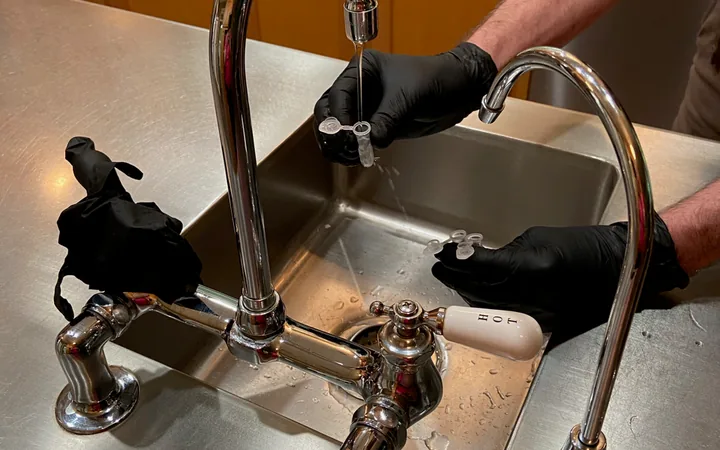
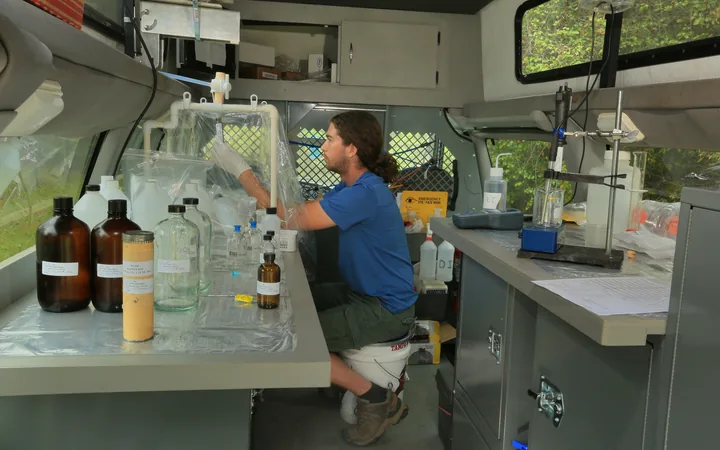
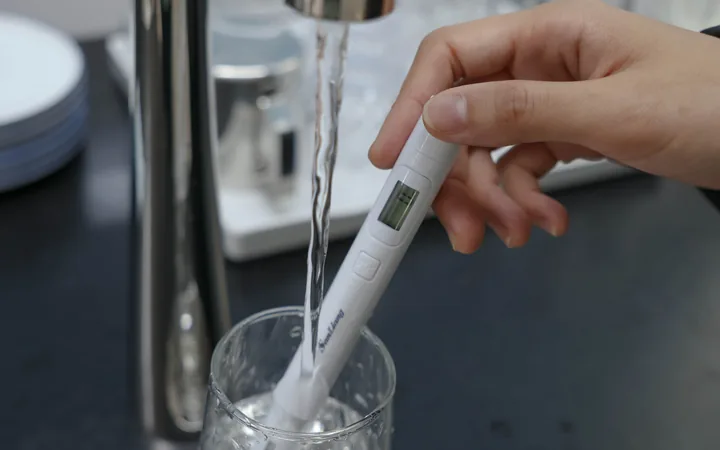
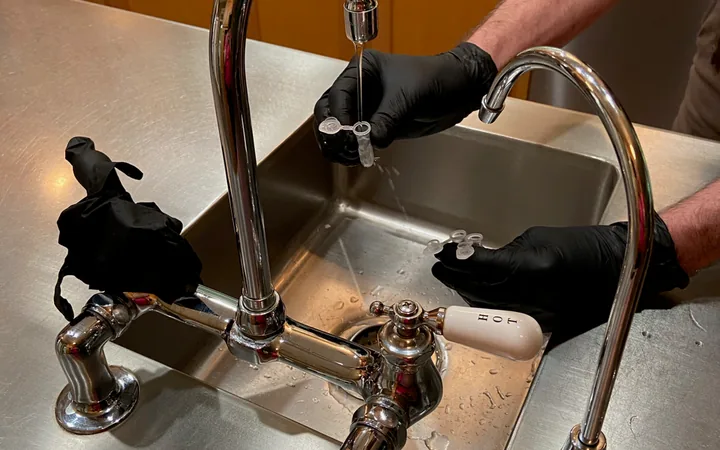
Have the installer identify where to take a sample immediately before the filter and where to take one downstream before mixing or carbonation. Fill comparable clean containers from the same supply and record the temperature, time and flow. Do a normal draw and repeat with the shared outlets running as they do at the peak. A timed container at one faucet gives that one outlet’s flow. Use a meter on the common branch, or timed volumes from all the relevant outlets over the same interval, to check what passed through the cartridge.
Keep incoming, downstream and service-visit notes side by side. If a residual result is part of acceptance, agree which disinfectant the method measures, where to sample, the project’s criterion and who records the result. Taste can help a team pinpoint when a change began. Use the agreed test and the verified model’s documentation for the reduction claim.
Keep the Capacity With Its Own Flow
At handover, write down the date, starting meter reading, installed head and element, and next service limit. Check the capacity for the claim your site relies on, plus the maker’s time interval and pressure or temperature conditions. The larger chlorine number stays with its own row if the utility switches to chloramine.
If two samples taste the same from the first day, check the actual replacement code and ask the installer to inspect its seating and any bypass. If the difference disappears later, use the meter and latest utility notice to separate a change in usage from a change in the water. Keep the note for the next service visit.
Sources for This Edition
- NSF · Solventum Purification Inc. Drinking Water Treatment Listing · NSF/ANSI 42, Commercial Modular, High Flow Series. Find adjacent entries with replacement element HF60-CLX and identical references [3]–[6]. Chloramine is listed at 6,300 US gal and 1.67 gpm, chlorine at 35,000 US gal and 3.50 gpm.
- Solventum · 3M High Flow CLX Series Technical Brochure · Printed pp. 10–11, Single-Application Systems table. HF160-CLX with HF60-CLX replacement, part 5637210. The brochure gives 6.32 and 13.25 L/min and capacities of 23,848 and 132,489 L for the respective claims.
- Harris County Municipal Utility District No. 412 · Notification of Disinfectant Change · Notice issued October 12, 2026. The district planned to run free chlorine from October 15 to approximately November 16. See public water system TX1013354 for its service area.
- Texas Commission on Environmental Quality · Controlling Nitrification in Public Water Systems with Chloramines · Temporary change section, point 3. Taste or odor changes can be noticed during conversion and again when chloramine returns.
- U.S. EPA · WaterSense Guide to Selecting Water Treatment Systems · PDF p. 3, swimming-pool smell and NSF/ANSI 42 aesthetic effect. See the treatment method and certification sections for the evidence boundary.
- U.S. EPA · Overview of Drinking Water Treatment Technologies · Granular Activated Carbon section. Porous media, surface area, adsorption and changes in capacity with material and water composition.
- Julian L. Fairey, Gerald E. Speitel Jr. and Lynn E. Katz · Monochloramine Destruction by GAC · Journal AWWA, vol. 99, no. 7, pp. 110–120, public abstract. Laboratory fixed-bed columns compared five carbons and two background waters, including how reduction changed with pH.
- U.S. CDC · Water Disinfection with Chlorine and Chloramine · Public water disinfection and explanations of what utilities use. Use local notices and officials for the current conditions at your service address.
- 中国国家市场监督管理总局 · GB/T 30306—2024 标准解读 · Official explanation of the recommended Chinese standard for household and similar drinking-water treatment filter elements. Covers performance, testing, specifications and labeling in that scope.
- Bestware Wiki · Chlorine, Chloramine and Water Odor · Use the location and the pattern to find the source of a new odor.
- Bestware Wiki · Café Multistage Water Filtration · Map which equipment demands water simultaneously and which treatment branches it shares.
- Bestware Wiki · Water Filter Replacement Criteria · Review replacement dates, actual volume and pressure with the correct meter and cartridge.
- Illustrative Peak Flow · 2 L in 15 Seconds · 2 L ÷ 15 s × 60 = 8 L/min. The draw is illustrative and the two comparison rates come from the actual listing.
Continue With These Decisions
- Why Tap Water Smells Like Chlorine and What to Check First
Work Out Whether a New Odor Follows the Water
- How to Size Multistage Water Filtration for a Café
Check Which Café Outlets Share a Filter Under Load
- When Should You Change a Commercial Water Filter?
Set the First Replacement Date With the Right Meter