Give Both Shops the Same Part to Quote
Ask for the cost of a part you can install and sign off. Start with the same drawing revision, especially the threads, bores and sealing faces. List the finish, which surfaces contact water and what inspection evidence you need with the delivery. If a shop proposes an alternate alloy or blank, ask for it as a separate option with any changes to the drawing and the required material evidence.
Two austenitic stainless grades or two brasses can machine differently. The British Stainless Steel Association covers work hardening and chip control in stainless machining. Kupferverband describes differences among copper alloys. Ask whether the quote starts from bar, a forging or a casting, and whether the first sample uses the production route. It is easier to compare the prices when both sides can point to the same finished surface and inspection.
Write the grade, finished surface and service conditions into the specification
Check the Existing Opening Before Asking for a Custom Part
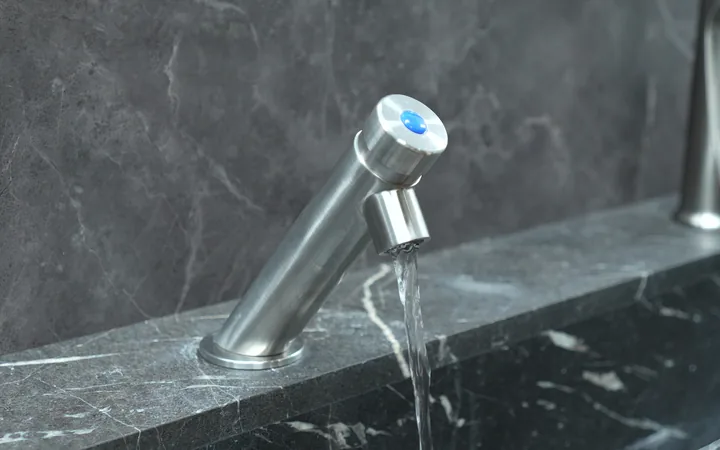
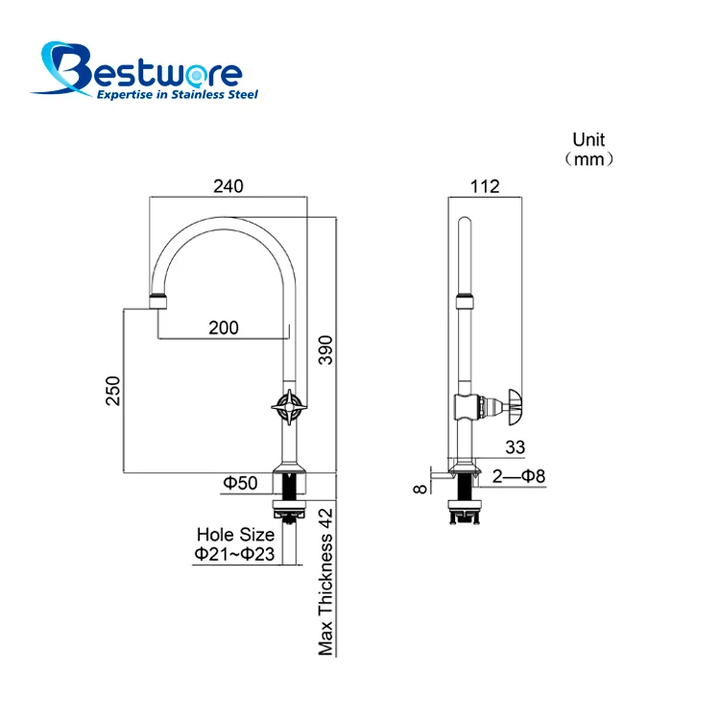
On a replacement job, a catalog part may fit the measured opening. Bestware’s AS112 is a single-hole, cold-water pre-rinse faucet with a SUS304 body. Its published opening is Ø21–23 mm. If the counter has a round Ø22 mm hole, the diameter falls within the catalog range. Check the supply connection, fastening access and sealing surface at the actual counter before selecting it. Those dimensions help decide whether you need a new drawing for the job.
Divide by the Parts That Pass Final Inspection
Separate fixture or programming charges from the costs you expect on a repeat run. For the run itself, compare material, machine time, tools, finish, inspection and rework on the same basis. NIST’s process-planning model includes scrap rate and quality control alongside machine and tooling use, materials, labor and time when estimating a specific production quantity. If fixture cost is already in the price, leave it there when you add the total.
Suppose two pilot lots each start with 100 blanks. Route A costs US$970 in all and yields 97 accepted parts at final inspection. That is US$10.00 each. Route B costs US$950 and yields 94 accepted parts, about US$10.11 each. These are hypothetical amounts for the same scope, including any rework. A job that needs 100 accepted parts still has a shortage on either route. Ask who supplies the balance and by what date.
Get a First-Article Date and a Shipment Date
In a NIST Manufacturing Extension Partnership case, a Connecticut machine company changed its returned-material workflow. The total lead time went from more than 40 days to five, while processing time went from 11.8 hours to 3.4. The case shows why a shop’s processing hours and a buyer’s elapsed days deserve separate entries.
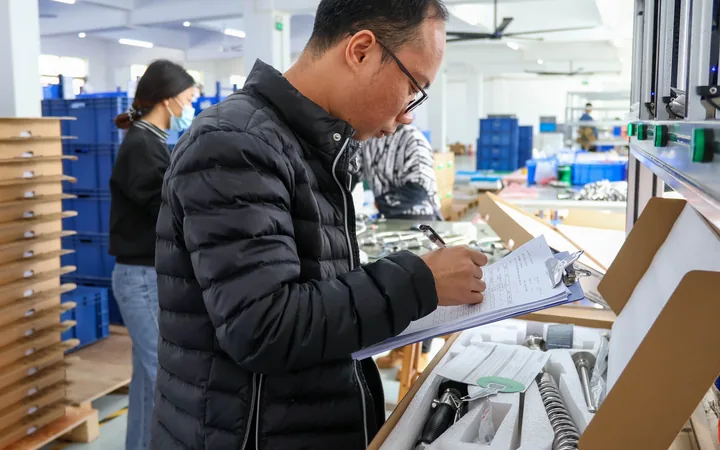
Ask when the first article will be ready to inspect and when the lot of accepted, finished parts can ship. Make the supplier include any outside finishing and the agreed recheck after rework in the schedule. On the next order, check who still has the fixture, whether the drawing is the same and which inspection record will go in the box.
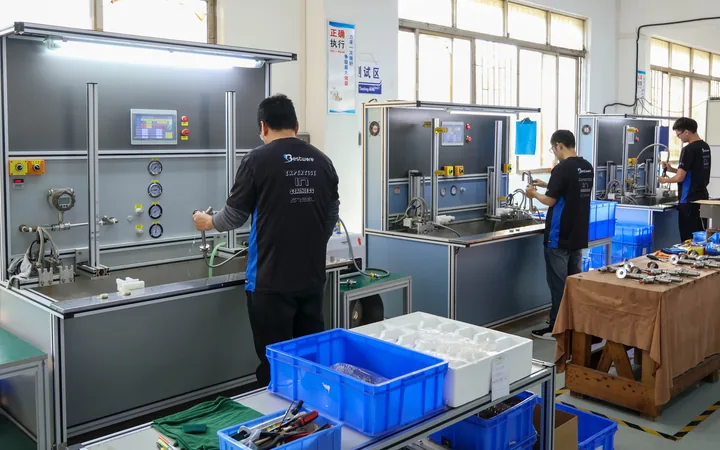
Specify the sealing interface and the leak-test record with the delivery
Sources for This Edition
- NISTIR 5808 · A Machining Process Planning Activity Model for Systems Integration · March 1996, PDF page 24 / printed page 18, Cost Estimates. Printed page 19 distinguishes process plans, routing plans and resource needs.
- NIST Manufacturing Extension Partnership · Returned Material Process Case · Published August 4, 2022, MEP’s Role. Carlyle Johnson’s returned-material process, with total lead time from more than 40 days to five days and total processing time from 11.8 hours to 3.4 hours.
- British Stainless Steel Association · General Principles of Machining Stainless Steels · Discussion of stainless grades and machining characteristics, including work hardening and chip control.
- Kupferverband · Machining Copper Materials · Machining overview. Copper alloys differ in machinability according to the specific alloy and condition.
- Bestware Stainless · AS112 Pre-Rinse Faucet · Specifications rows 3, 4, 12 and 18: single-hole deck mount, Ø21–23 mm opening, SUS304 body and single cold-water control.
- Worked Example · Checking an Existing Deck Opening · Illustrative round opening measured at Ø22 mm. It falls within the published Ø21–23 mm range. The remaining checks depend on the site and complete configuration.
- Worked Example · Comparing Two Pilot Lots by Accepted Parts · Illustrative equal-scope pilot lots, each with 100 blanks started. Route A totals US$970 for 97 final accepts, US$10.00 each. Route B totals US$950 for 94 final accepts, about US$10.11 each. The set totals include production, rework and inspection as applicable.
- Bestware Wiki · Specifying Stainless Steel and Surface Care · Identify grade, fabrication, finished surface and exposure for the same requirement.
- Bestware Wiki · Specifying Seals and Verifying Leak Tests · Tie the actual sealing interface and leak-test record to the delivered configuration and lot.
Continue With These Decisions
- How to Specify and Care for Stainless Steel Surfaces
Write the grade, finished surface and service conditions into the specification
- How to Specify Seals and Verify a Leak Test
Specify the sealing interface and the leak-test record with the delivery