Ask Where Each Number Came From
Before you renew a monitoring service, ask the supplier to open one machine’s report. Pick a water volume, a filter-life figure and a recorded visit. Find out whether each came from a sensor, a calculation or a person closing a job. In the export, look for the device ID, units, the time a reading was taken and the time the service received it.
One counter can move twice during a single fill. In Meyer and colleagues’ SmartSpout lab validation, eleven people filled graduated cylinders while observers timed them. Thirteen percent of the observed withdrawals first generated two log entries. The researchers combined these before counting events. Their sensor timed movement at the tap. A count of openings or a total in liters also leaves the number of individual users unknown.
Compare the Same Station and Ten Minutes
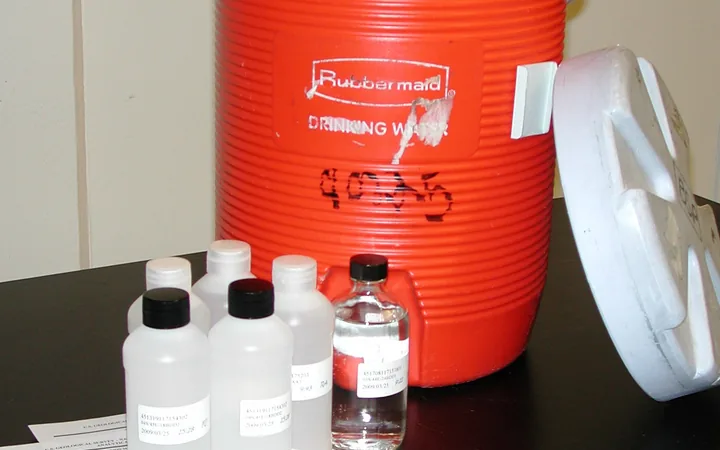
Try one short, agreed check with the unit on offer. Suppose four fills from 10:00 to 10:10 add up to 2.00 L in a graduated measure, while the export for that station and window shows 1.80 L. Write down the 0.20 L difference and check the timestamps, units and any entries still waiting to upload. Apply the tolerance you agreed before the trial.
Set aside a separate check for a lost connection on an approved test setup. Watch what the machine still does at the tap and what the report shows later. An empty interval could be missing data. Record a marked zero only for a period the equipment monitored and for which no volume was measured. Ask what changes in the record after a counter reset or replacement.
Put the timed volume comparison and offline window into the acceptance trial
Find the Person Who Owns the Alert
In a seven-month Rwanda field study, Nagel and colleagues compared three service arrangements for rural handpumps. The estimated median times to a successful repair were about 21 days for sensor-assisted dispatch, 57 for scheduled rounds and 152 under existing arrangements. The first group gave its maintenance provider access to the signals and a way to send technicians. Those are results for three whole service arrangements in that study.
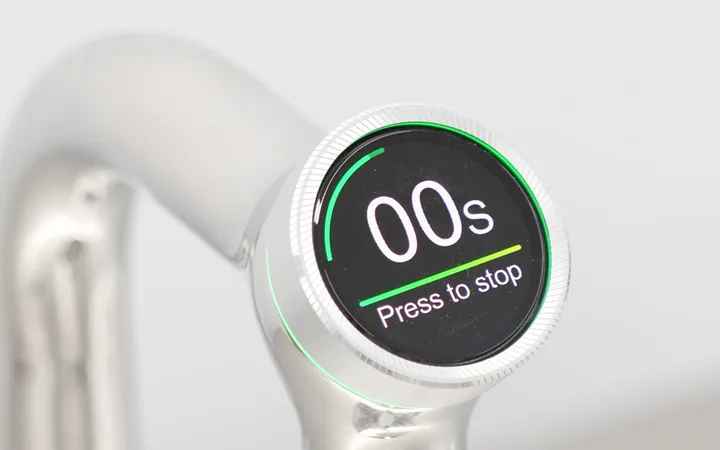
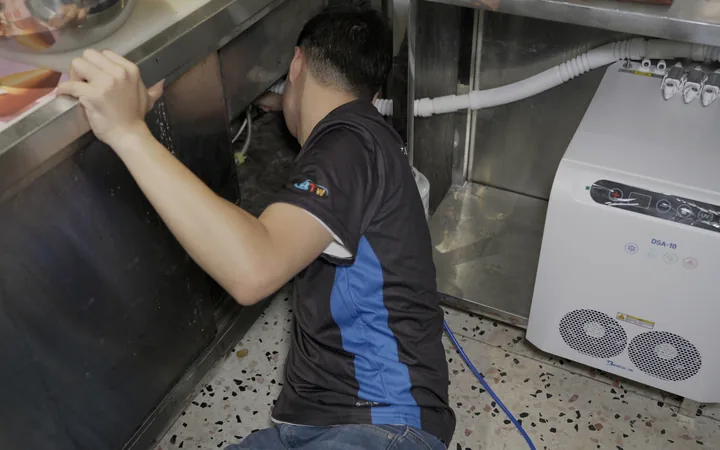
Ask whom your dispenser provider alerts and what that person will do. On a Bestware G1DS-123, V1.2 documents the local tap countdown and its settings, plus the local chiller and heater displays with a code such as E0 for leakage protection. Put the model, affected unit and local display in a work order. Ask separately whether the exact supplied package forwards it. Run a clearly labeled test notification and have your operator take it through acknowledgment, assignment and closure.
Record the model, local display and symptoms when opening a service ticket
Keep Access and Records When Service Changes
Read the model’s feature list and the service offer together. The Rebel Plus manufacturer, for example, describes an on-screen display and separately makes remote monitoring subject to a distributor request and service activation. Ask who can see alerts or export old readings and whether the shop can keep its service history if it changes distributor. Test any promised backfill using the configuration that will be installed.
NIST’s device baseline is a place to get questions about identity, configuration, access, updates and security status. Confirm who removes a former operator and who owns software updates. Use a calculated filter-life figure to decide when to look or restock. Check water quality on its own evidence. For fewer bottles bought, compare actual purchases over reasonably comparable periods rather than a dashboard’s bottle-equivalent estimate.
Sources for This Edition
- Meyer et al. · Embedding Usage Sensors in Point-of-Use Water Treatment Devices (2021) · Laboratory Validation, Sensor and Stopwatch Alignment and Figure 2. Eleven users with 250 and 500 mL cylinders. Thirteen percent of observed water withdrawals logged initially as two entries; combined for event analysis.
- Nagel, Beach, Iribagiza and Thomas · A Longitudinal Study in Rural Rwanda (2015) · Original paper Abstract and Table 2, DOI 10.1021/acs.est.5b04077. Seven-month comparison of three service arrangements. Table 2 modelled median times to successful repair about 21, 57 and 152 days for sensor-assisted dispatch, circuit rider and existing nominal maintenance.
- Bestware · G1DS-123 / 1023 Installation Manual, 2026 V1.2 · PDF p. 3, printed pp. 01–02, tap countdown and separate settings with power-off memory. PDF p. 7, printed pp. 09–10, local error displays on the chiller and heater, including E0 Water Leakage Protection.
- Blupura · Rebel Plus: the water dispenser with touch display, environmental metrics and IoT connectivity · 2026 manufacturer announcement, on-screen information and ‘IoT and remote monitoring’. Remote service requires distributor request and dedicated service activation.
- NIST IR 8259A · IoT Device Cybersecurity Capability Core Baseline · May 2020, §3 Table 1, core capability baseline, configurable to use context. The document covers device identity, configuration, data protection, interface access, updates and security state awareness.
- Illustrative dispenser volume readback and service handoff · One device and 10:00–10:10 agreed local time. Four pours total 2.00 L in an independent graduated measure; candidate export shows 1.80 L for the same interval. Difference 0.20 L. The example defines no meter tolerance or incident outcome.
- Bestware · Reporting Dispenser Faults · Record the station, local display and service handoff.
- Bestware · Water Equipment Pilot Acceptance · Compare operating conditions and agree which items must be tested before acceptance.
Continue With These Decisions
- How to Test a Commercial Water Dispenser Before You Accept It
Put the timed volume comparison and offline window into the acceptance trial
- How to Report a Water Dispenser Fault
Record the model, local display and symptoms when opening a service ticket