Write Down What the Next Shift Needs
Before accepting the dispenser, serve the first cup after a typical idle period, run the sequence your busiest shift needs and time how long it takes to serve again. Put the actual cup or bottle on the counter. Ask the site lead and installer to fill in the pass line before they start. Water type ___; cup volume ___ mL; longest fill time ___ s; acceptable outlet temperature ___ to ___ °C; carbonation check if specified ___; required servings in the busy window ___; latest acceptable recovery ___ min.
Above the pass line, record the point of use, model and serial number, filter and CO₂ setup if fitted, equipment setting, time since the last draw, temperature at the air intake and temperature of the incoming water. Have the installer note the inlet pressure during a draw, with the measurement point and unit. Leave the cabinet door, shelving and other outlets as they will be used on shift. A repeat run begins with the same documented conditions or says exactly what changed.
Log the First Cup and Every Pour in the Rush
Let the installer complete the commissioning procedure for the delivered model. Then wait the agreed idle period and follow the opening routine the staff actually use. If that routine includes a flush, record the discarded water and time. Use a measured volume and take the outlet water temperature at the same point in every pour. Keep a line for each cup: water type, time started, time finished, actual volume, outlet temperature, carbonation observation if relevant, and pass or fail.
A bar that needs 12 servings of 250 mL can schedule a pour start every 15 seconds in a three-minute window. That is 3 L of planned service. Plan the first start at 0 seconds and the last at 165. At 180 seconds, count cups already finished that meet the pass line. If a prior pour occupies the outlet at the next planned start, keep the schedule and record the wait and actual start and finish. Write the order of still and sparkling pours if both matter. Mark the number of the first cup outside the target and total the accepted servings. The sequence shows whether later cups take longer or come out warmer.
Time Recovery From the End of the Last Pour
Start the recovery clock when the final busy-period pour ends. Agree when to take the next samples and how much water each sample will use. Note the elapsed time at the first agreed serving or short sequence that meets the pass conditions again. Sampling uses water too, so keep the same check schedule in a repeat run and write down any extra draw.
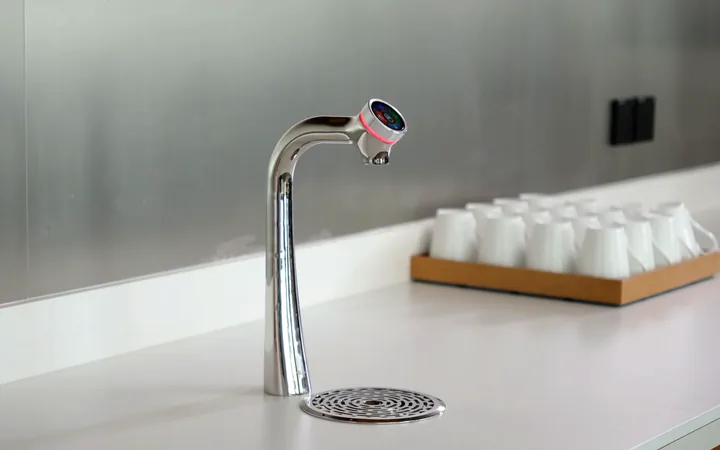
For a Bestware trial, the G1DS-110 specification lists 20 L/h of chilling and a maximum sparkling flow of 1.5 L/min. The G1DS-123 lists 40 L/h of chilling and a maximum sparkling flow of 3 L/min. Both pages list 3 vol as the sparkling-water concentration. Enter these in the specification column. The last accepted cup, the time to serve again and any measured carbonation belong in the observation column. If the order specifies quantitative carbonation, agree on an outlet sampling method and instrument with the supplier. Record a tasting note against an agreed sensory check. A contract that calls for a quantitative measurement needs a result from that method.
Reopen After Cleaning and a Planned Part Change
Ask the person who will clean the station to show the approved procedure, including how the outlet and drip tray go back together. Record who did it, the procedure revision, how long the station was unavailable and the checks of reassembly and drainage. The designated site lead signs and timestamps reopening after the applicable cleaning and sanitizing checks pass. For U.S. foodservice projects, confirm the requirements adopted locally. The FDA Food Code model covers cleaning of applicable beverage nozzles and equipment and sanitizing applicable food-contact surfaces before they are used again.
Have authorized staff demonstrate a planned service job, such as changing the specified filter cartridge. Write down the old and new part numbers, the time out of service, the manufacturer’s flush procedure used, the leak check and the first pour after restart. Keep the cupboard in its finished state while checking access. Use the agreed backup supply if the station will be out of service during the shift.
Link the Retest to the Original Problem
If a later cup misses the target, keep its original row. Add the observation, correction, person responsible and a new test ID. Repeat the affected checks with the approved setup. A changed door or cooling setting can affect the busy run and recovery. After a filter change, check for leaks and run the agreed flush and first-cup checks, plus any further tests affected by the change.
Use four outcomes on the signed sheet: Pass, Fail, Not Tested and Not Applicable. Record the decision next to the configuration and test conditions. A failed or untested critical check holds final acceptance open. If sparkling water is fitted but untested, mark it Not Tested. Any permitted partial sign-off lists the water types already checked. The next site can use the results to plan its own acceptance.
Sources for This Edition
- Bestware G1DS-110 Product Specifications · Model specification fields: Chilling Capacity 20 L/h; Sparkling Capacity Max 1.5 L/min; Sparkling Water Concentration 3 vol. The summary refers to a cold-water temperature of 10 °C or below. The page does not provide a fully specified repeated-pour test with results.
- Bestware G1DS-123 Product Specifications · Model specification fields: Chilling Capacity 40 L/h; Sparkling Capacity Max 3 L/min; Sparkling Water Concentration 3 vol. The factory cup count is expressed using 200 mL per cup. Repeated service and carbonation sampling conditions require separate confirmation.
- Bestware G1DS-110 / G1DS-1010 Installation Manual, 2026 V1.1 · PDF 15 shows model-specific commissioning. PDF 6 covers restart protection after disconnection. PDF 7 lists warning symptoms. Neither of those timings is the service-recovery criterion for a restaurant.
- Bestware G1DS-123 / G1DS-1023 Installation Manual, 2026 V1.2 · PDF 15–16 cover post-installation setup and initial sparkling water checks. PDF 6–7 list restart protection and troubleshooting.
- EPA and DOE — Water Coolers Final Test Method, May 2013 · §6.2 and the following page distinguish supply and outlet temperatures, mass of collected water, and recovery after a draw. The certification method concerns energy performance. The site protocol uses distinct service criteria.
- Livchak, Ruan, Karsz and Zabrowski — Field Demonstration of Commercial Kitchen Equipment · California Energy Commission report CEC-500-2021-021. PDF 24, project methodology for observing six operating kitchens; PDF 3 names Werewolf Bar & Grill among the participants. Its results concern cooking and ventilation equipment.
- FDA Food Code 2026 — Equipment Food-Contact Cleaning · §4-602.11(E)(4), printed 109 / PDF 137, includes applicable beverage dispensing nozzles and enclosed equipment; §4-702.11, printed 112 / PDF 140, addresses sanitization before use after cleaning. Model code offered for local adoption in the United States.
- Suggested Three-Minute Service Log · Twelve 250 mL servings planned across a three-minute window, 15 seconds between starts, for 3 L of planned water. No measured values, recovery result, product capacity or format-specific pass thresholds are implied.
- Bestware — Planning a Multi-Site Water Rollout · Use the completed pilot record to inform local readiness and release the next sites.
Continue With These Decisions
- Restaurant Sparkling Water Capacity Calculator
Estimate the number of servings for the busiest test window.
- How to Roll out a Commercial Water System Across Multiple Sites
Release further installations using the signed pilot and each site’s readiness.