Get an Exchange Quote for the Actual Address
A Friday gas outage can start with a perfectly good cylinder that nobody in town will exchange. Give the gas supplier the delivery address and the intended use before you order the dispenser. Ask what cylinders it will deliver and collect, its ordinary lead time, the weekend cutoff and the charge for an extra call. Write down who owns the cylinder and whether the deposit returns to you when service ends.
Order CO₂ documented for beverage use. Put the supplier’s product designation on the order and ask what quality record they can provide for that supply. Have the receiver match the cylinder label and delivery record to the order. At a site with cylinders for more than one purpose, give the beverage stock a clearly identified position so it stays with the documented supply.
Put the Model and Gas Components on One Drawing
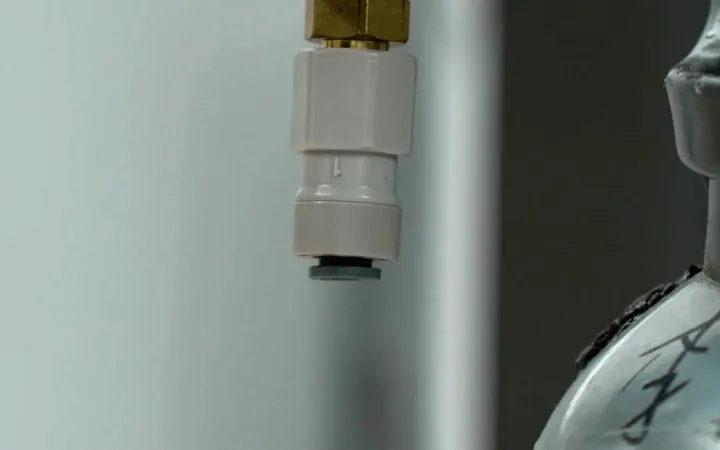
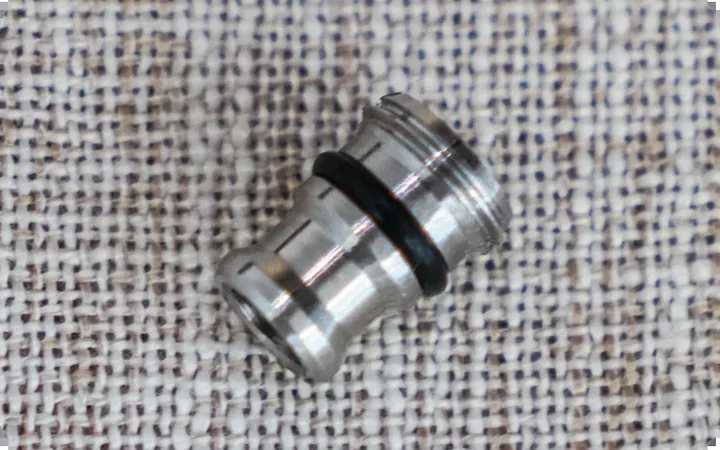
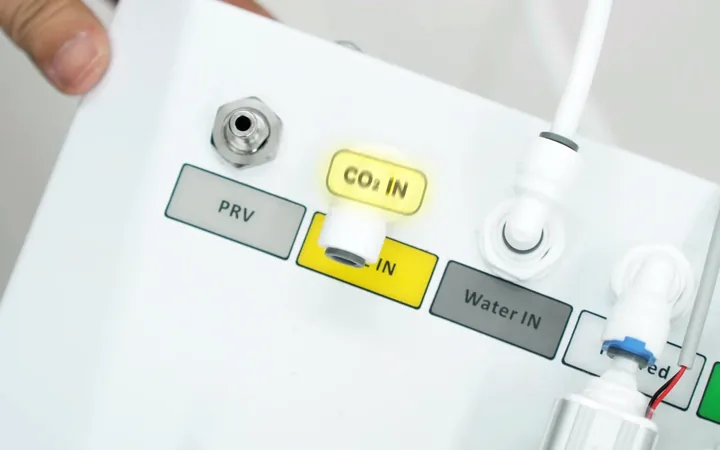
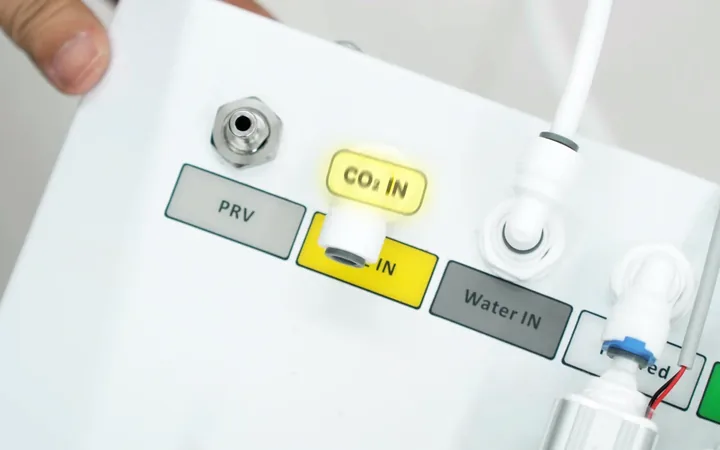
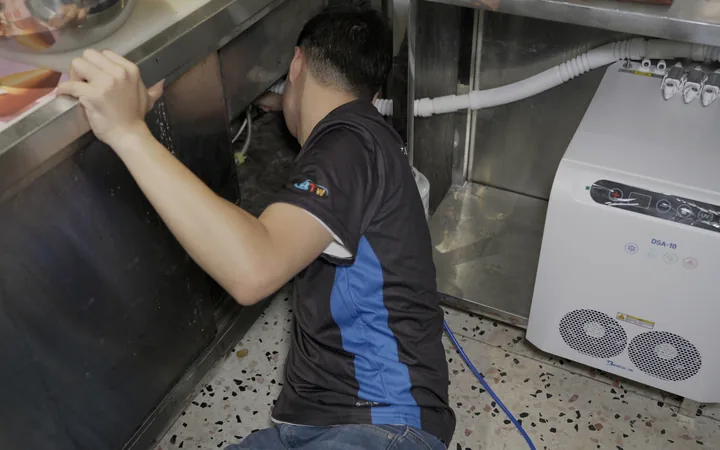
Ask the installer to draw the path from the cylinder valve through the regulator and line to the dispenser. The useful labels are the cylinder and valve reference from the exchange supplier, the regulator reference cleared by the equipment supplier and the machine’s gas connection. Have both suppliers confirm the same set. A photo of a label helps them identify a component, and the approved references belong in the handover record.
On a Bestware G1DS-110 or G1DS-123 job, begin with PDF page 11 of the applicable 2026 installation manual. It shows room for the cylinder and regulator and a cylinder secured upright to a substantial surface. Draw the bottle in the position where it will actually stand. Leave room for the delivery route and for the replacement to be secured after exchange. The installer uses the separate model-specific commissioning page for initial sparkling service and records the result for that configuration. See PDF pages 14–15 for the G1DS-110 or 15–16 for the G1DS-123.
Ask for separate entries for the cylinder-side identification, regulated gas reading and water-feed check. A gauge reading makes sense with its location and the test that produced it. For the cylinder valve and regulator pair, record the combination the suppliers approved for that market and the equipment on the order.
Walk the Delivery Route With the Installer
Stand at the place where a delivery person will leave the full bottles. Look at stairs, cellar doors, the route to the cabinet and the spot where empties collect. Ask the installer and gas supplier to assess ventilation, restraint, any required detection and the response at both the storage point and the point of use. Put their contact and the site's agreed response at the bar where a shift lead can find it.
A US OSHA bulletin describes a restaurant’s stationary CO₂ fill connection in a below-grade stairwell. Investigators suspected a leak where the truck hose connected to the fixed filling point. CO₂ accumulated in the stairwell. For a cylinder job, the practical question is where a release could collect on this particular site. The answer belongs to the site assessment, including access when the kitchen is closed. If an alarm sounds or you suspect a leak, leave the affected area and raise the alarm from a safe place under the site’s plan. Return only when trained personnel designated in the site’s emergency plan confirm that the area has been adequately ventilated and that CO₂ measurements show it is safe to re-enter.
Reorder With Enough Gas to Cover the Next Delivery
Start a log on the first normal trading week. Record the fill size, when each cylinder goes into service and when it comes off, plus the sparkling pours for that period. Note a private party or a service visit on its own line. Those entries explain why two weeks of the same menu can use different amounts of gas.
For example, a bar uses the equivalent of four full cylinders of the same fill size over eight comparable weeks. That is half a cylinder a week. With up to 14 days until the next delivery, ordinary use during the wait is one full-cylinder equivalent. Reorder when gas on hand reaches that expected use plus the agreed reserve. Allow for an event or missed delivery within the approved storage arrangement. If a second delivery is hard to get before Saturday, place the order earlier. Round the order to full exchange cylinders and track the in-use cylinder separately.
Use an event or a full service week of your own records to refine that trigger. A cylinder count only compares periods when the fill size is the same. Mark any shift when an order went in late or a delivery slipped. Note what was still available when the next bottles arrived.
Close the Loop at Handover
Put the order cutoff, gas designation, approved component references, normal exchange fee, delivery fee and emergency call number on one sheet. Give one shift role responsibility for orders and one for checking the delivery receipt. Reconcile full cylinders received, empties collected and any bottle still on the premises against the supplier’s statement. A disputed deposit is easier to settle when the exchange receipt carries the cylinder identifier and date.
On opening day, have the installer demonstrate the agreed handover and record the first sparkling pours for the intended service. Save the equipment drawing and the first gas delivery record with that sign-off. The next manager then inherits a supply arrangement they can actually use.
Sources for This Edition
- Brewers Association — CO₂ Supply Quality · Supplier quality assurance discussion. Food and beverage grades, supply variation and quality records. Applies to gas purchasing, with the article written for breweries.
- Brewers Association — Draught Beer Quality Manual, fourth edition · Chapter 1, Gas Source, Regulators and Gas Distributors. Supports cylinder supply and component distinctions, with system design specific to draught beer.
- US OSHA — Hazard Information Bulletin on CO₂ in Beverage Supply · 1996-06-05, restaurant case and recommendations. Describes a stationary system filled in a below-grade stairwell, not a portable cylinder exchange.
- Bestware G1DS-110/1010 installation manual, 2026 V1.1 · PDF page 11, CO₂ cylinder precautions and securing bracket. PDF page 15, initial sparkling-water commissioning.
- Bestware G1DS-123/1023 installation manual, 2026 V1.2 · PDF page 11, cylinder and regulator clearance and vertical restraint. PDF page 16, initial sparkling-water commissioning.
- Bestware — Water system installation and handover · Installation and handover checklist. Add the approved gas arrangement, onboarding of the local supply and sign-off to the site record.
- Bestware G1DS-110/1010 initial sparkling-water commissioning · 2026 V1.1 PDF pages 14–15.
- Bestware G1DS-123/1023 initial sparkling-water commissioning · 2026 V1.2 PDF pages 15–16.
- EIGA Doc 67/20 — Carbon Dioxide Cylinders at Users’ Premises · PDF page 7, §5.1, conditions for re-entry. PDF pages 15–16, §17, evacuation and response.
Continue With These Decisions
- G1DS-110
Open the installation and commissioning references for the G1DS-110.
- A Commercial Sparkling Water Buying Checklist
Include cylinder exchange in the equipment quote.