Put Three Checks on the Handover Sheet
Before a counter goes into service, write one line for the inlet water, one for beverage CO₂, and one for hot water at the tap. The water line needs a supply reading, the gas line needs both its separate equipment reading and a room safety review, and the hot line needs an actual use check. Put the model, separate equipment modules, nameplate voltage and frequency, and manual revision at the top.
On the Bestware G1DS-123, the published specification’s cooling and heating tables cover separate units. This catalog configuration is supplied without a separate RO unit. G1DS-1023 is listed with a separate RO unit and has its own water path to check. The public G1DS-123 tables list 110 V/60 Hz and 220 V/50 Hz options. Which one the installer has in front of them comes from the installed nameplate and job documents.
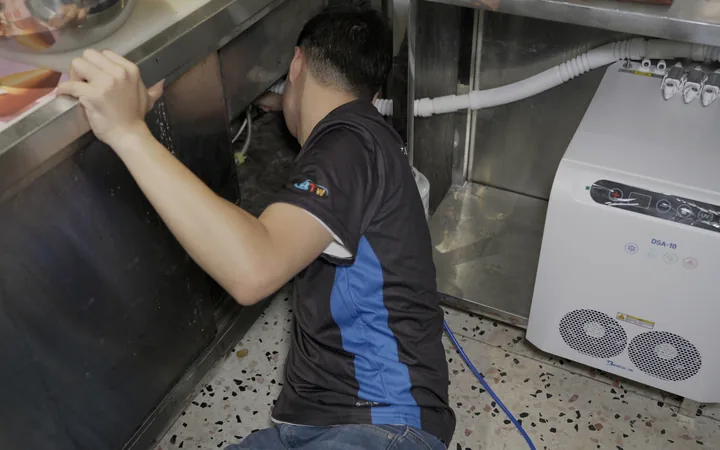
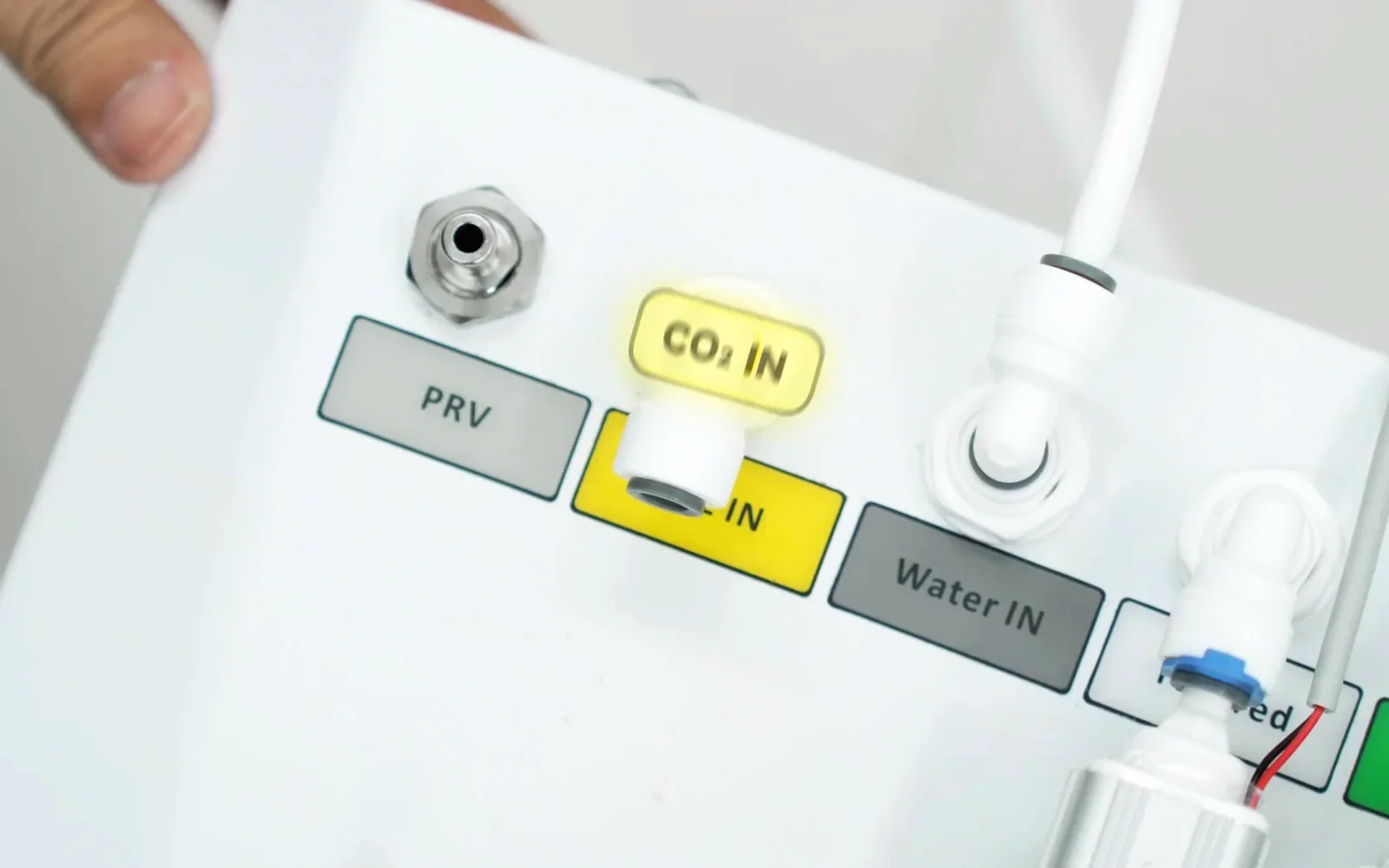
Record Pressure at the Inlet While Water Flows
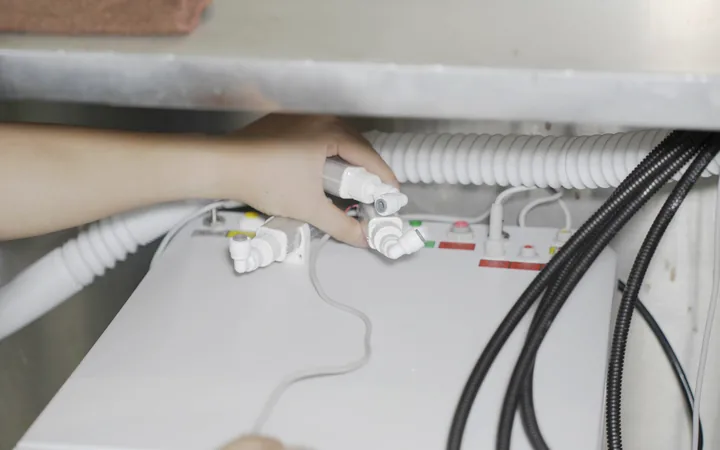
For the named G1DS-123 chilling and heating modules, the catalog lists water pressure of 0.15–0.60 MPa. Ask the installer to record the no-draw pressure at the approved connection, the pressure and flow during the agreed draw, and which other outlets were in use. Confirm the manufacturer’s measurement requirements for the exact assembly before judging a result.
Say a closing checklist shows 0.27 MPa without a draw and 0.14 MPa during a representative draw with a nearby sink open. Those are illustrative readings. The second value is below the catalog’s lower figure. Leave water acceptance open while the installer confirms the measurement and the shared supply. The first reading by itself misses why the bar can run short during service.
Follow the Gas Route Into the Room
For the G1DS-123 chilling unit the published beverage CO₂ operating range is 0.35–0.40 MPa. The 2026 V1.2 manual returns to that range in its commissioning section. Have the qualified installer record the specified and observed operating reading separately from the water reading, including where it was taken. The job sheet should also identify who verifies the cylinder location, ventilation and any detector and alarm required by the site review. Operating pressure and room air are different measurements.
In a 1996 bulletin, U.S. OSHA documented a fatal delivery incident at a restaurant with a stationary bulk CO₂ supply. The investigation described accumulation in a below-grade area after a leak. Stocking food-grade gas and having the cylinder outside tell you little about an enclosed area that the line serves. Use the local emergency plan if there is an alarm or suspected release. Keep people out of the affected area and leave entry and clearance to the designated responders.
Watch the Actual Hot Outlet With the Service Vessel
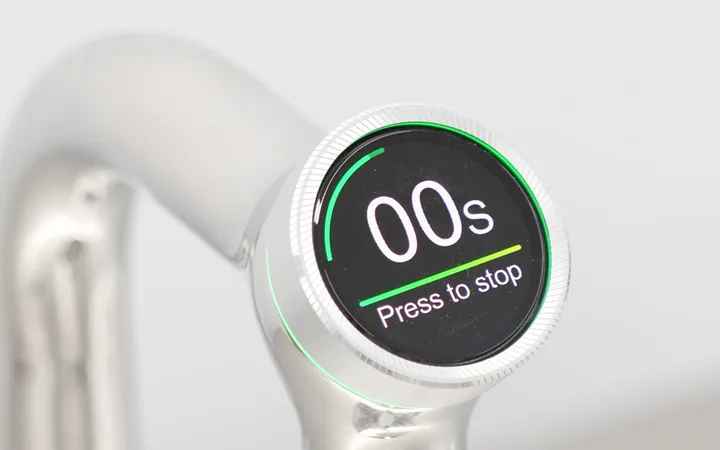
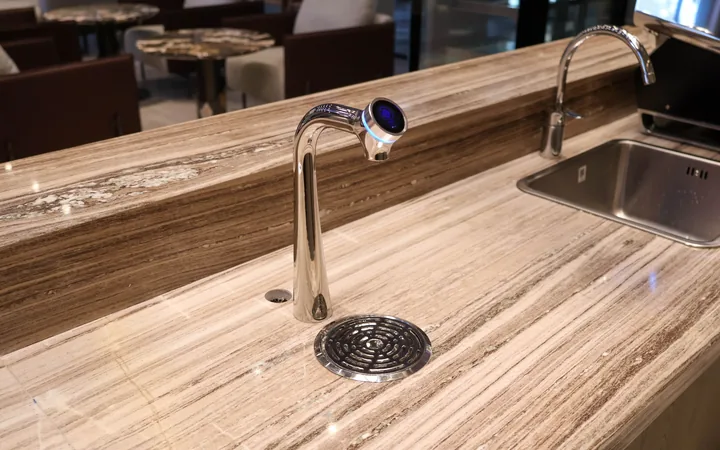
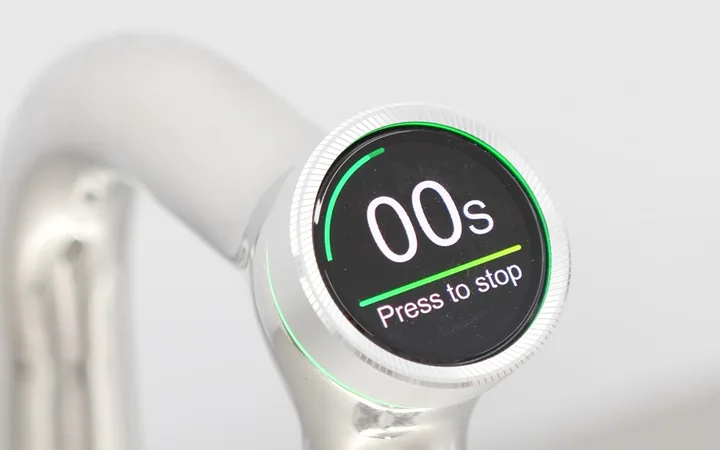
The G1DS-123 catalog lists an adjustable heater range of 45–98 °C. For the hot control shown in the English 2026 V1.2 manual, the display shows an unlock, a separate start, and a stop prompt. Have qualified staff confirm the sequence for the installed panel with the point closed to guests. Use the service vessel and record the measured water temperature in it separately from the setting, along with start, early stop and any splash that reaches the working area.
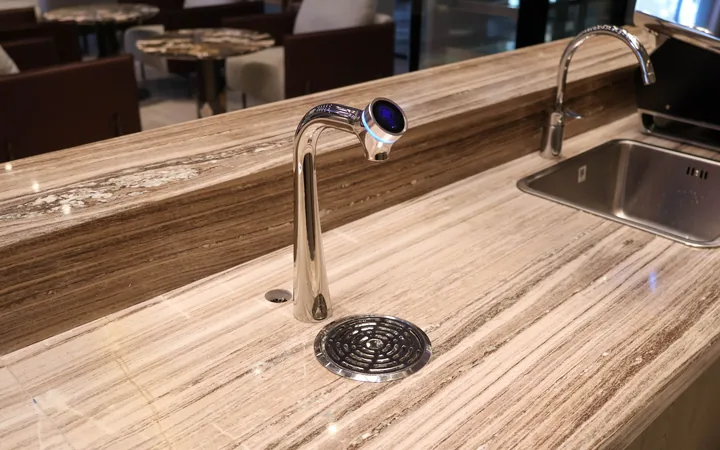
Decisions about unattended access, users and the approved acceptance temperature belong to the project. UK HSE’s scalding guidance in health and social care is a useful reminder about users who cannot react quickly. Choose the check for the actual use. When staff take over, show them who can authorize hot service and what to do if the command or outlet behaves differently.
Close the Open Item Before Opening the Counter
Leave the installer and operator the same drawing and readings. Note the test point, units, load and who accepted each of the three checks. If a protection, an opening result or an operating requirement is unresolved, hold the affected service and write down who has to retest it.
A new filter, a changed supply branch, a moved gas store or a revised control panel can change what the first handover covered. Check the relevant item again when that change is made. Record an approved temporary service and the person the shift should call while the issue is open.
Sources for This Edition
- Bestware · G1DS-123 4-in-1, published specification tables · Chilling rows 3–4 and 13, heating rows 2–3 and 6. Without separate RO supplied. Water pressure 0.15–0.60 MPa, CO₂ operating 0.35–0.40 MPa, heater adjustment 45–98 °C; 110 V/60 Hz or 220 V/50 Hz options.
- Bestware · G1DS-1023 4-in-1, published specification tables · Separate RO unit variant. Corresponding chilling and heating section figures are manufacturer values for the named modules. Trace the installed water path for the variant.
- Bestware · G1DS-123 / G1DS-1023 Installation Manual, 2026 V1.2 · PDF p. 3, printed p. 02, hot mode unlock, separate start, countdown and Press to stop. PDF p. 14, printed pp. 24–25, connection layout. PDF p. 16, printed pp. 28–29, operating range following gas commissioning.
- Health and Safety Executive · General Hazards of Carbon Dioxide · General hazards, ordinary colorless/odorless gas and potential accumulation in low places.
- WorkSafe Victoria · Cellar and Cool Rooms: Beverage Gas Safety · What are the risks and What is a solution to the problem, the Victorian beverage-gas space and operator scope.
- Missouri Division of Fire Safety · Carbonated Beverage CO₂ System Safety · Description and detection guidance. Beverage gas dangers and why an oxygen-only reading cannot clear a CO₂ risk.
- U.S. OSHA · Hazard Information Bulletin, June 5, 1996 · Cincinnati restaurant-area CO₂ filling incident and findings on accumulation in a below-grade space. Historical report on a bulk stationary system.
- Health and Safety Executive · Scalding and Burning · Risks from hot water and hot surfaces. Health and social care context, users at increased risk and design considerations. Not dispensing setpoints.
- Illustrative water supply reading and acceptance record · Fictional 0.27 MPa static and 0.14 MPa during a draw with another tap open. Compare the chosen checking conditions with the exact equipment requirements, and hold acceptance pending investigation. No measurements or installation adjustment instructions.
- Bestware · How to Check Inlet Pressure and Flow for a Water Dispenser · Record no-draw pressure, pressure under flow and corresponding flow on the approved connection.
- Bestware · How to Test a Table-Side Hot-Water Control · Hand off a supervised check of the actual outlet, container, start and stop response.
Continue With These Decisions
- How to Check Inlet Pressure and Flow for a Water Dispenser
Use the separate inlet-pressure and flow checklist
- How to Test a Table-Side Hot-Water Control
Use the supervised hot-outlet acceptance procedure