Find out What Sat Full
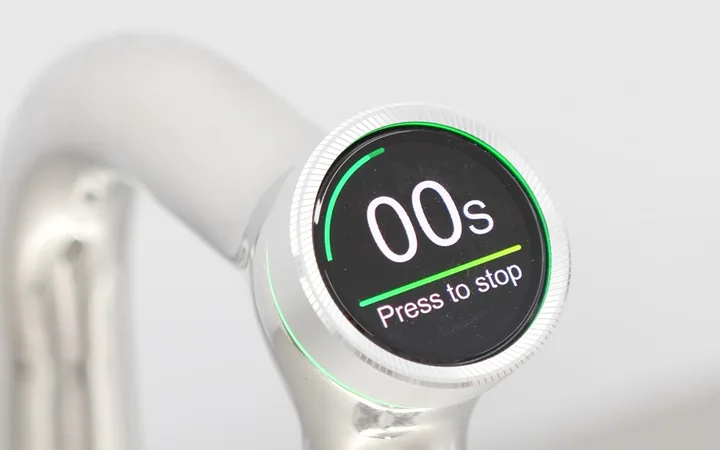
If a plumbed-in dispenser has sat unused through an extended closure, keep it out of drinking service until the building supply and the appliance have both been checked. A lit display tells you that the machine has power. At a café, the branch to a closed bar can still have seen little use even when staff were drawing water elsewhere.
Ask when water last moved regularly through that branch and appliance. Look for a closure log, a supply notice, and records of pipework, flooding, shutdown or draining. Note which outlets were used. A documented, maintained pause calls for a different review from an extended shutdown with no records. If the supply is restricted, follow the notice and arrange an approved drinking-water alternative.
Start Upstream and Follow the Water Route
Ask facilities to trace the path from the building inlet to the dispenser, including any local branch or storage covered by the reopening plan. The U.S. EPA checklist puts the utility and local reopening requirements first. The work depends on the plumbing and the outlet. If a venue has its own water supply, ask who is responsible for the requirements that apply to that supply.
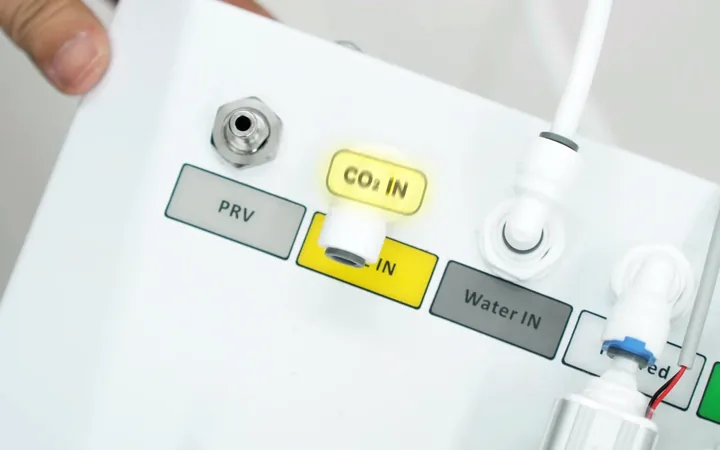
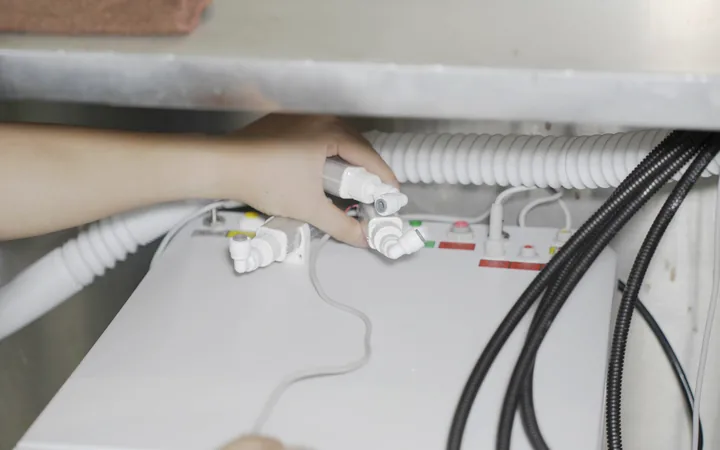
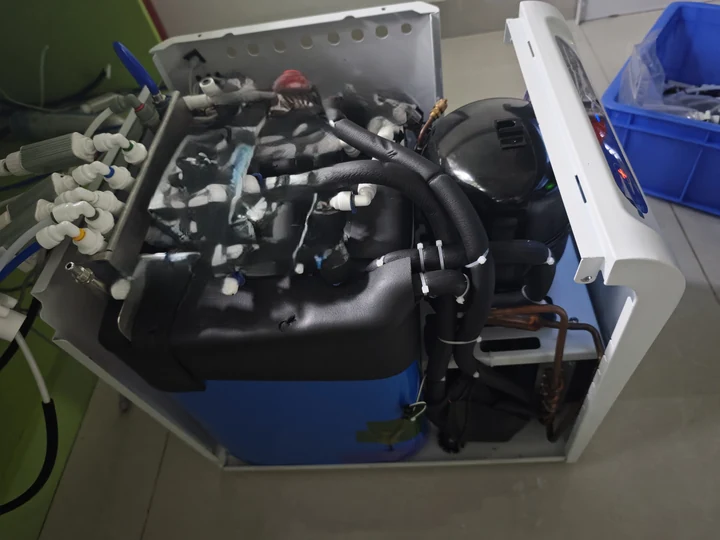
Give the service provider the exact machine and filter identifiers. List the outlets and water-contact components the procedure covers. For a Bestware G1DS-110 or G1DS-1010, the V1.1 manual distinguishes the operating modes and labels the connections. It has a separate section for initial sparkling-water commissioning. Use those pages to identify the installed setup, then ask which return-to-service procedure applies to it.
Check which cleaning work reached the drinking-water circuit
Three Checks Before Service Resumes
- Confirm the Supply
Resolve relevant supply restrictions and complete the building’s recovery work.
- Complete Device Work
Apply the model’s procedure to the fitted components and all relevant outlets.
- Review and Record
Check the required results and identify who approves the return to service.
An unresolved item stays with the responsible team; it is not cleared by moving to the next step.
What Three School Buildings Showed
In a 2023 PLOS Water paper, Kyungyeon Ra and colleagues reported on three buildings converted to school use that had been closed for three months. At two locations in their field work, chlorine residual was detectable while the fixture was being flushed and was no longer detectable at the end. These were measurements from particular sites. They explain why the facilities record should name the location and time alongside the result.
If the reopen date slips after facilities completes its work, tell the person who signed that record. Ask whether the new interval without use changes the checks their plan calls for. The research team returned two weeks later to take more samples. A result from an earlier shift tells you what was verified that day.
Hand Over the Outlet With Its Record
Imagine the notice on a bar’s municipal supply has been lifted and maintenance has signed off the relevant branch, but nobody can say when the dispenser cartridge was installed. Leave that dispenser out of service until the equipment technician resolves the cartridge history and any other outstanding work. Tell the shift where to get approved drinking water in the meantime.
When the unit is ready, enter the procedure revision, the outlets covered, the required check results, and the name and time of the person who authorized use. Record clear water or restored flow under observations. If several dispensing modes were fitted, make it clear which ones the work and decision cover.
Locate the filter model and its last service date
| Observation | Still Unverified | Next Check |
|---|---|---|
| The Display Works | The condition of standing water and water-contact components. | Review supply recovery and the completed appliance procedure. |
| The Water Looks Clear | Microbial or dissolved contamination cannot be excluded by appearance. | Use the checks required by the site plan and applicable supply notice. |
| One Outlet Was Flushed | Other branches, reservoirs or components may not have been included. | Compare the completion record with the identified water paths. |
| The Filter Was Replaced | Upstream water and the rest of the appliance still need review. | Complete the other required supply and device work. |
Sources for This Edition
- U.S. CDC · Reopening Buildings Guidance · Feb. 6, 2024. Legionella, Steps 1, 3 and 8. Cover building water and connected devices, use maker instructions, and document work.
- U.S. EPA · Maintaining or Restoring Water Quality in Buildings with Low or No Use · Version 3, July 2020, PDF pp. 1–4. Layout, utility coordination and reopening after extended low use. Distinct guidance for sites with their own supply.
- U.S. EPA · Restoring Water Quality in Buildings for Reopening: Checklist · May 2020, introduction and items 1–3. Flushing time varies with plumbing and outlet. Review the route, follow maker instructions and consider site verification and access restrictions.
- U.S. CDC · Overview of Water Management Programs · March 15, 2024. Program steps include a team, system description, monitoring, corrective actions, verification and records.
- Ra et al. · Investigating Water Safety in Multi-Purpose Buildings Used as an Elementary School · PLOS Water 2(7):e0000141 (2023), PDF p. 1 Abstract; pp. 5–6 Methods; pp. 9–10 Results and Fig. 4. Three buildings closed for three months. At two locations chlorine residual was detectable during fixture flushing but not at the end.
- Bestware · G1DS-110 / G1DS-1010 Installation Manual, V1.1 · PDF p. 3 (printed p. 01), modes; p. 13 (printed p. 22), Connection Diagram; pp. 14–15 (printed pp. 24–26), Initial Sparkling Water Commissioning. Installation and mode-specific checks.
- Bestware Editorial · Illustrative Shift Handoff · Hypothetical handoff between facilities, the service provider and the operator. Conditions, incomplete work and drinking-water alternatives are specific to the example.
- Bestware Wiki · Commercial Filter Replacement · Match the filter model and date to the service log.
- Bestware Wiki · Surface Cleaning and Internal Sanitation · Separate surface cleaning from documented work on the drinking-water path.
- U.S. CDC · Reopening Buildings Guidance · Feb. 6, 2024. Legionella, Steps 1, 3 and 8. Cover building water and connected devices, use maker instructions, and document work.
- U.S. EPA · Maintaining or Restoring Water Quality in Buildings with Low or No Use · Version 3, July 2020, PDF pp. 1–4. Layout, utility coordination and reopening after extended low use. Distinct guidance for sites with their own supply.
- U.S. EPA · Restoring Water Quality in Buildings for Reopening: Checklist · May 2020, introduction and items 1–3. Flushing time varies with plumbing and outlet. Review the route, follow maker instructions and consider site verification and access restrictions.
Continue With These Decisions
- Water Dispenser Cleaning: Who Signs off on What?
Check which cleaning work reached the drinking-water circuit
- When Should You Change a Commercial Water Filter?
Locate the filter model and its last service date