Test the Control a Person Will Use
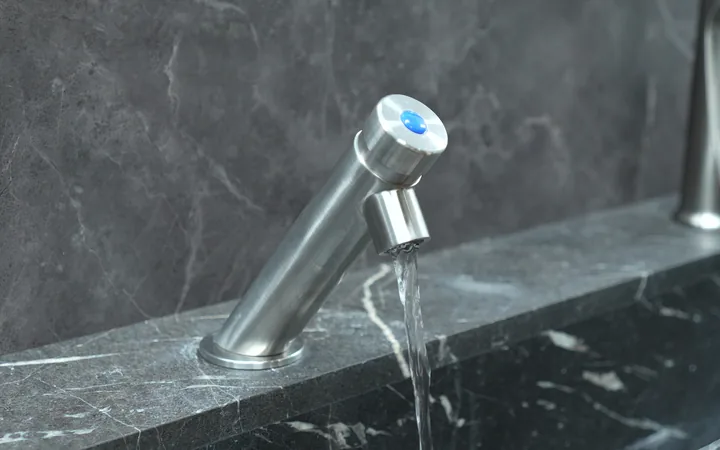
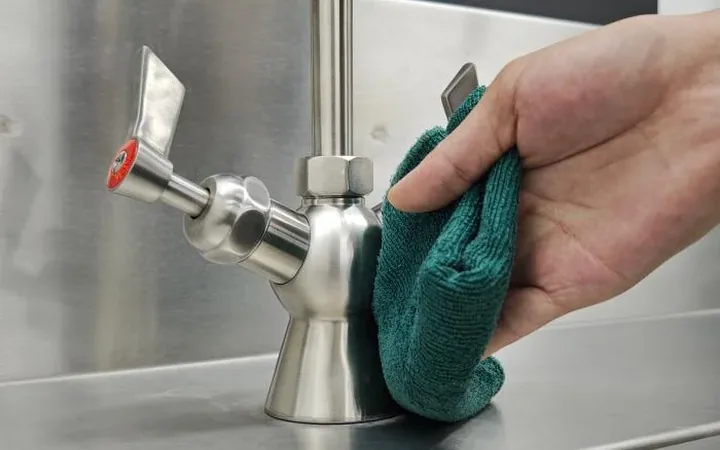
Agree on an inlet pressure range, a contact point and a measurement direction before comparing two faucets. Then check the complete control in the basin you will install. If a handle feels easy when you push its tip on a display stand, it may feel quite different when the backsplash leaves room to touch it only near the pivot.
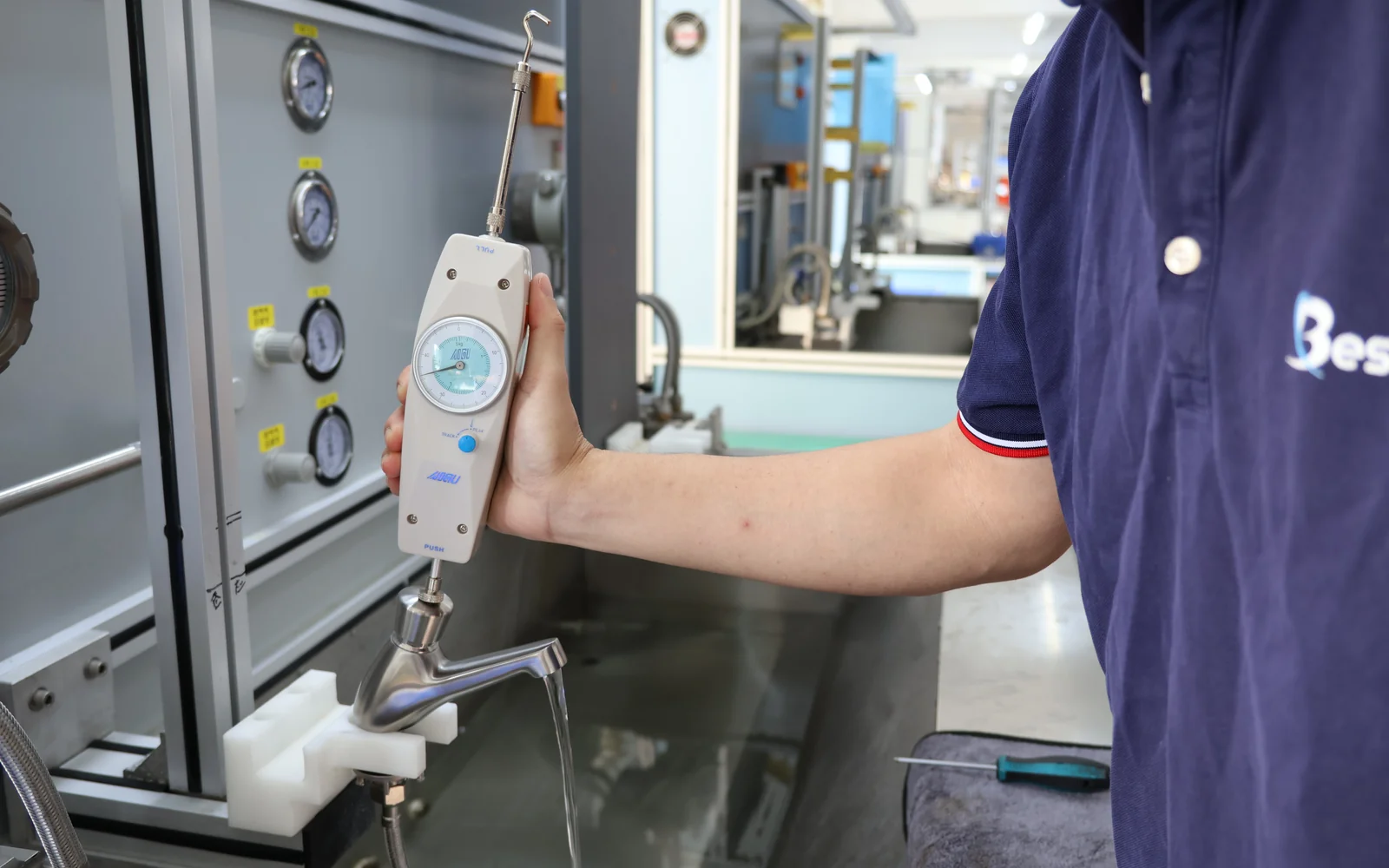
Write the handle or button, cartridge, mount and model revision into the acceptance sheet. With a push button or a moving lever, mark where the gauge meets the control and show the direction in a photo or sketch. If the supplier reports torque on a rotating control, retain the result in N·m. A force in newtons depends on the point and direction of application. Comparing the two numbers requires the lever geometry.
Read the Gauge and the Inlet Pressure Together
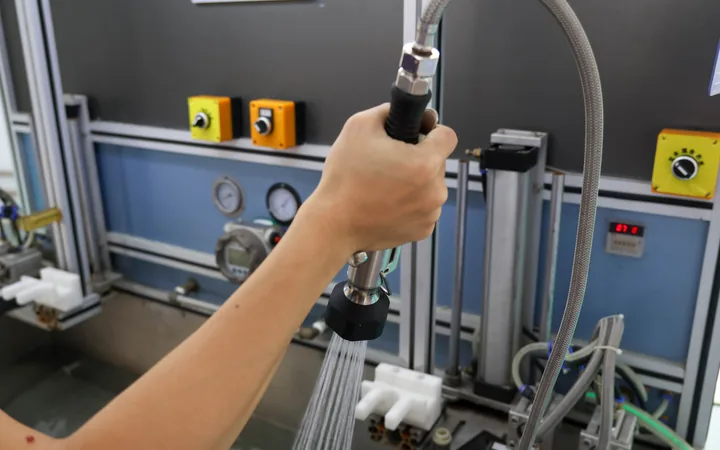
Start each trial from closed. Agree with the tester on an opening rate and a reference pressure measured at the faucet inlet. Record whether the pressure reading is static with the valve shut or taken while water is flowing. As one documented test example, a 2021 Queensland Testing Laboratory report used 250 kPa static and the first visible flow for its opening measurement. It had different methods for push force and turning torque. The number is that lab’s test condition for those samples.
Suppose your project trials use 300 and 400 kPa static on the same assembled faucet. At 300 kPa the water starts at 19 N and the highest reading over the opening movement is 20 N. At 400 kPa those readings are 21 N and 24 N. These are practice figures. A sheet that retained only 21 N at the second pressure would miss the harder part of the motion. Have the tester retain both readings and note any sticking. Repeat under the agreed conditions and keep the individual results where a result is near your acceptance limit.
Ask Which Model the Force Table Describes
In its June 2026 light-press metering faucet announcement, Bestware reported 21.08 N at 0.35 MPa and 25.99 N at 0.50 MPa for the series. That is useful for deciding what pressure information to request. The table leaves the sample count, test pressure state and exact model unspecified.
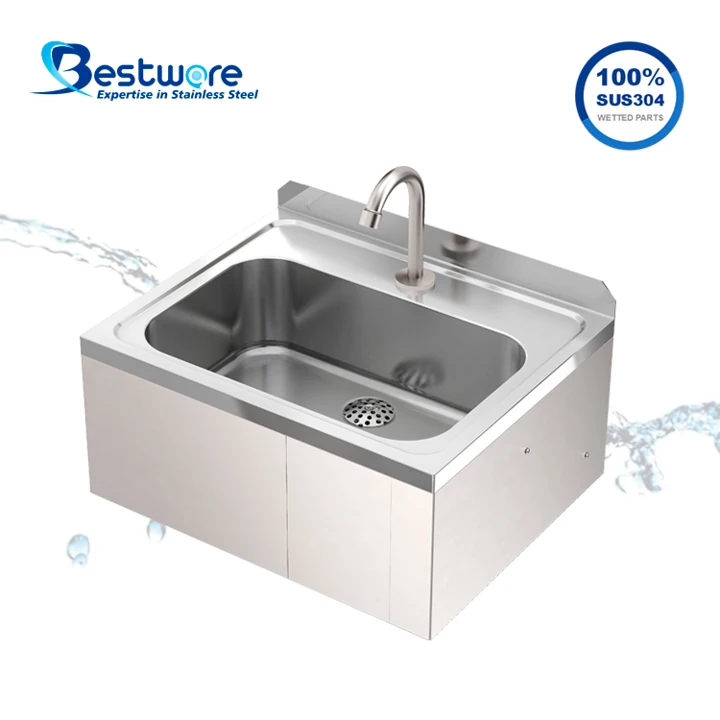
The announcement links to the YS27-PT6PB. Its own specification identifies a deck-mounted push button and a delayed-action cartridge. Ask for the force report for the ordered model, with its supplied cartridge and mount, so you can match the evidence to the equipment arriving on site.
Check the Installed Basin With the Applicable Standard
Where the 2010 U.S. ADA Standards require the lavatory or sink control to comply, §606.4 points to §309. A person must be able to use the control with one hand, without a tight grip, pinching or a wrist twist. The activation force limit is 5 lbf (22.2 N). Check the clear floor space and reach on the layout as well. A low gauge reading at a point the user cannot reach leaves the installed check open.
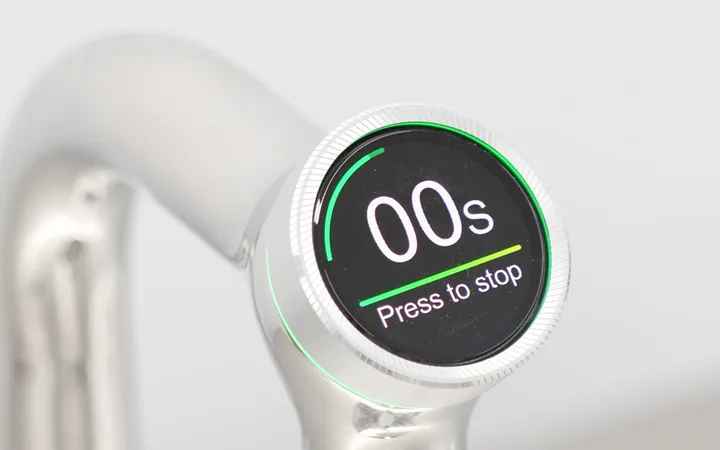
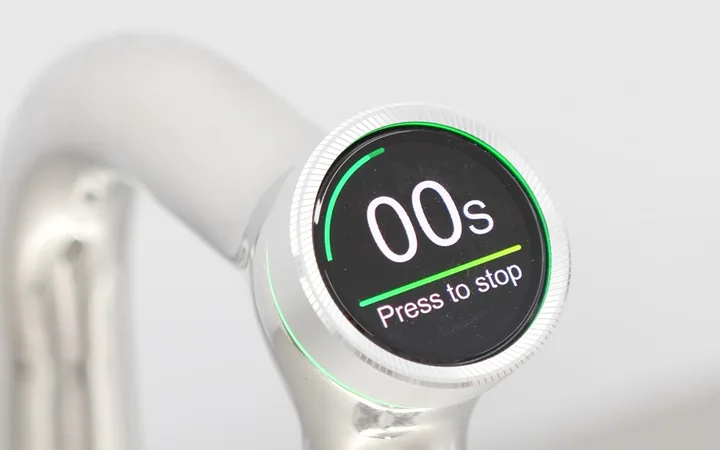
For hand-operated metering faucets subject to §606.4, the minimum time the water stays on is 10 seconds. Time a full cycle separately and have the project reviewer assess the code conditions. Once the first unit is approved, retain the raw readings with the ordered parts. A new handle, cartridge, mount or expected feed condition that changes the measurement warrants another check.
Supporting Figures and Tables
| Reported inlet pressure (MPa) | Reported operating force (N) |
|---|---|
| 0.35 | 21.08 |
| 0.50 | 25.99 |
Sources for This Edition
- U.S. Department of Justice · 2010 ADA Standards for Accessible Design · §§212.3, 309.2–309.4 and 606.4. Covered controls, approach and reach, single-hand operation and 5 lbf (22.2 N) maximum activation force. Hand-operated metering faucets under §606.4 have a 10-second minimum opening time.
- U.S. Access Board · Guide to the ADA Standards: Operable Parts · Operation and Forward Reach. Examples explain tight grasping, pinching, twisting and a closed-fist observation as a usability aid.
- Queensland Testing Laboratory · Test Report 214064 9852 · March 28, 2021, p. 4, Opening Force (Minimum) / Opening Torque (Minimum). The laboratory recorded the first visible flow at 250 kPa static pressure for its samples, with separate procedures for linear force and torque. Historical example only.
- Bestware · Light-Press Metering Faucet Series, Activation-Test Table · June 26, 2026, Light-Press Design, activation-test table rows 3 and 4. Inlet pressure 0.35 MPa → 21.08 N; 0.50 MPa → 25.99 N. The table does not identify the submitted model, sample count, or pressure state.
- Bestware · YS27-PT6PB Product Specifications · Specification rows 1–3 and 7–8. Exact catalog item linked from the series announcement, deck mount, push button and delayed-action valve core. These rows do not specify actuation force.
- Bestware · Illustrative Project Force Readings · Illustrative only. Same finished specimen from the closed position, same measurement point and force direction. Closed-faucet static inlet pressures 300 kPa and 400 kPa. Example first-flow 19 N and 21 N; highest opening-travel force 20 N and 24 N respectively. These numbers are not a manufacturer rating or an ADA test protocol.
- Bestware Wiki · Inlet Pressure and Flow · How to tell supply pressure from flow and record readings at the equipment.
- Bestware Wiki · Metering Faucet Acceptance · Time the full discharge and record water per cycle in the installed basin.
Continue With These Decisions
- How to Check Inlet Pressure and Flow for a Water Dispenser
Check how to take pressure and flow readings at the inlet
- How to Test a Metering Faucet Before You Approve It
Measure a full metering faucet cycle at the installed basin