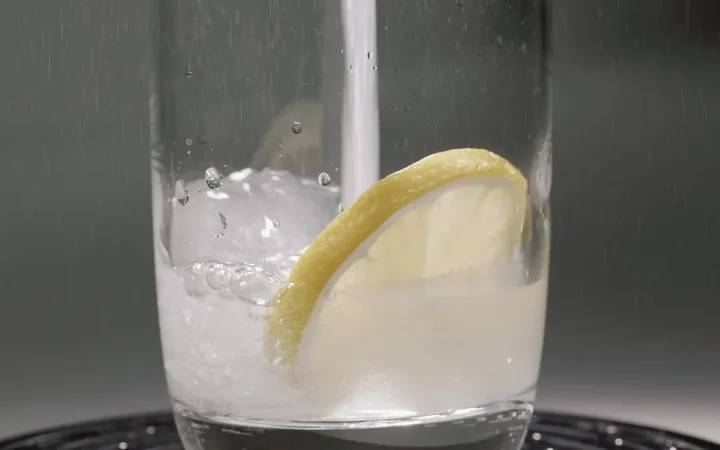
Start With the Water Guests Actually Get
A cylinder invoice gives you the cost of the next delivery. To compare ongoing gas costs at the bar, divide that bill’s recurring share by the liters that actually reached guests. Use the same serving size and the same standard for carbonation. Record gas bought and liters that met the standard on separate lines, so a generous production figure doesn’t do the work of a service count.
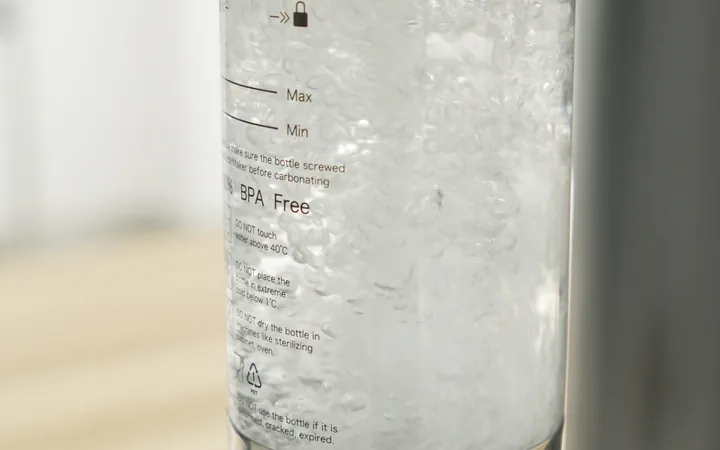
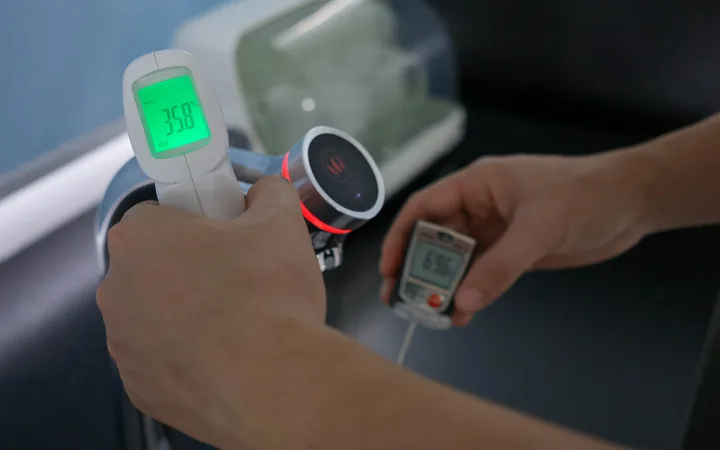
Pick a representative run using the approved equipment. Keep the water temperature, mode, house carbonation target and serving size in the log. The University of Florida’s extension guide describes dissolved CO₂ in grams per liter of beverage. If you use that measurement, record it alongside the target. A tasting target is useful too, provided both runs were judged the same way. Neither tells you the cylinder’s purchased gas mass.
Read the Pack Size and the Approval Separately
Airgas’s U.S. food-grade catalog lists about 5 lb of CO₂ for CD FG5 and a 20 lb fill for CD FG20. Those are examples of gas sold by mass. Before accepting a quote, take its exact SKU and ask the equipment supplier and gas provider to confirm the beverage grade, fitting and supply arrangement for this installation in writing.
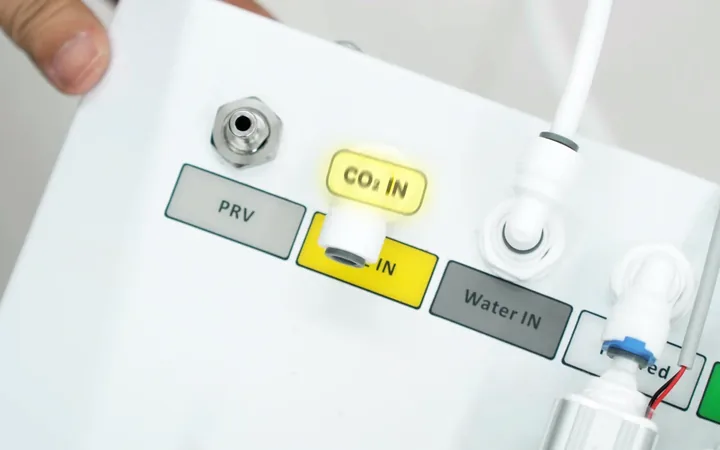
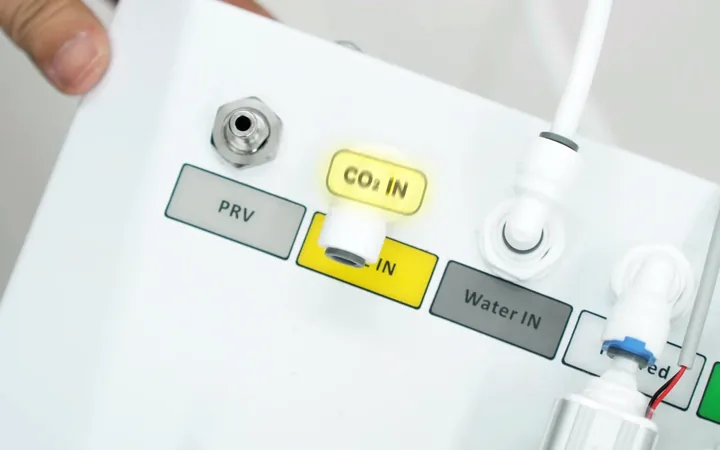
The Bestware G1DS-110/1010 V1.1 diagram is a useful place to start. It shows a separate outside cylinder and CO₂ and water inlets. The drawing alone gives you no answer about which supplier cylinder to order or how much water it will make. A single-use cartridge or a model-specific packet is another purchasing unit. Spärkel, for example, describes its own pre-portioned packets for a dedicated sealed chamber and rejects homemade substitutes. Cost those by the approved pack and actual output. Use the approved change and return service for whichever system you run.
What Came out of One Cylinder in a Real Test?
In a May 2009 household test, Switzerland’s FRC reported 54.9 L for the Soda-Club G 100 using its medium-carbonation test. Its report says the tested Soda-Club cylinders advertised up to 60 L. Another column gives 8.8 L for a siphon, counted against a pack of ten cartridges, with lighter carbonation. That figure makes sense once you read the pack and the test condition together. Use the case to design your own trial, not to budget gas for a commercial dispenser.
Split the Invoice From the Deposit
Take a hypothetical service cycle. Gas costs $42 and the allocated freight costs $10. A separate $60 deposit is recoverable under the example contract. Put $52 in the recurring cost line and keep the deposit in the return record. If a supplier can withhold part of it, price that risk separately once you know the return terms.
The trial dispenses 275 L; 15 L missed the house target. Of the 260 L accepted, 20 L never went out to guests. The $52 works out to $0.20 per accepted liter, about $0.217 for each of the 240 L served, or about $0.054 for a 250 mL serving. These are estimates for the stated example and cover gas plus its allocated freight.
Make Sure the Next Delivery Will Arrive
Check the lead time and return terms with the actual local supplier. Set your reserve from busy-day use, confirmed delivery timing and approved storage capacity. Have the supplier and installer confirm storage, handling and leak response under local rules. Count comps that reached guests as served, and track paid orders separately if you need a cost per sale. Then carry the same service count into the glass-cost worksheet for water, filtration and the other costs your venue includes.
Sources for This Edition
- Airgas U.S. · Food Grade Carbon Dioxide, CD FG5 and CD FG20 · CD FG5 specification lists approximately 5 lb of CO₂, and CD FG20 lists a 20 lb fill. Food-grade U.S. examples. The supplier catalog does not establish fit with a dispenser.
- Bestware · G1DS-110 / G1DS-1010 Installation Manual, 2026 V1.1 · Physical PDF p. 13, printed p. 22, Connection Diagram. The diagram shows a separate outside CO₂ cylinder with gas regulator and distinct CO₂ IN and Water IN connections. This drawing does not establish a cylinder size or beverage yield.
- Spärkel Support · What are Spärkel Carbonators made of? · Official support describes pre-portioned consumables that generate CO₂ in the appliance’s own sealed chamber. Manufacturer rejects homemade substitutes. Use limited to its own system.
- Fédération romande des consommateurs / ICRT · Eau gazeuse à domicile, c’est moins lourd! · FRC Magazine no. 18, May 2009, physical PDF pp. 4–5 / printed 16–17. Text compares up to 60 L on Soda-Club labels with medium-carbonation lab yield. Table row Volume d’eau gazéifiée avec une recharge shows G 100 at 54.9 L, and ISI siphon at 8.8 L per pack of ten Kisag capsules, with a different carbonation result. Protocole de test supplies conditions.
- UF/IFAS Extension · A Guide to Carbonating Beverages at Small Scale (FS379) · PDF pp. 1–2, Carbonation Levels and Temperature sections. Dissolved CO₂ can be stated in grams per liter of beverage. Temperature affects equilibrium solubility. These are liquid measurements, not purchased mass or payout yield.
- WorkSafe Victoria · Cellar and Cool Rooms – Beverage Gas Safety · Victorian guidance on beverage gas storage and use, leak hazards and supplier or installer responsibilities. Apply the project’s local site requirements.
- Bestware Editorial · Illustrative Service and Cylinder Cost Log · One hypothetical completed gas cycle. $42 gas plus $10 allocated nonrefundable freight. $60 recoverable deposit recorded separately. 275 L total dispensed, 15 L outside the agreed target, then 20 L accepted but not served. 260 L accepted and 240 L served or 960 equal 250 mL portions. Cost $0.20 per accepted liter, about $0.217 per served liter or $0.054 per served portion.
- Bestware Wiki · How to Sign for and Reconcile Commercial CO₂ Cylinder Returns · Match delivered and returned containers to the credit, then settle refused returns.
- Bestware Wiki · The Cost of a Glass of Sparkling Water Goes Beyond the Pour · Apply the final served-volume count to the other cost lines on the same site and period.
Continue With These Decisions
- How to Sign for and Reconcile Commercial CO₂ Cylinder Returns
Match the exchange receipt to the deposit
- What Does a Served Glass of Sparkling Water Cost?
Carry the measured service volume into the full glass cost