Count the Water That Reached a Guest
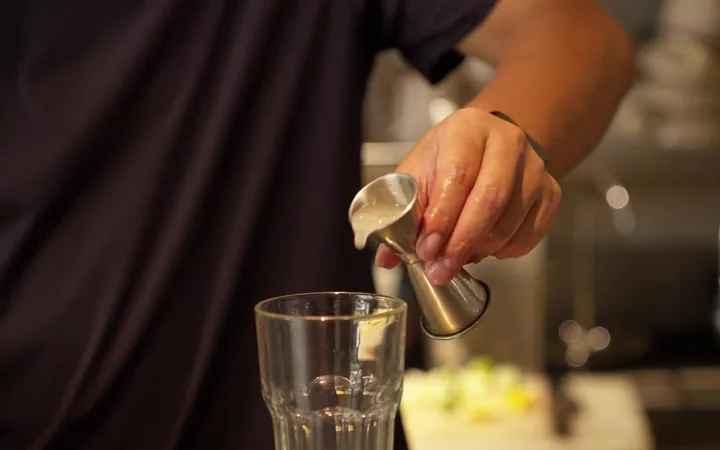
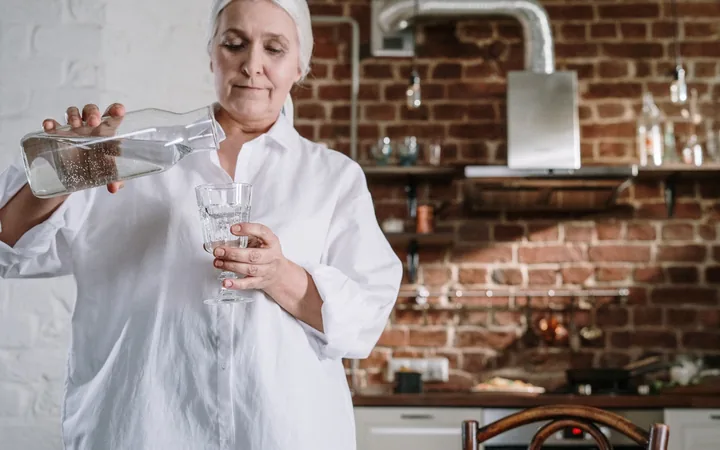
Say the bill lists 100 sparkling waters. During that shift, staff also topped up 20 glasses. If each first glass holds 250 mL and each refill is 125 mL, guests received the equivalent of 110 standard servings. Use those 110 for the service cost. Keep 100 as the count of sold items if those were the only charges. A carafe included with dinner belongs in the served count at its actual filled volume.
Record startup flushes and rejected pours on their own line. You still paid for the water, gas and time they used. If the dispenser counter includes those draws, subtract their volume before you divide by the serving size. Measure the usual fill in the glass or carafe. A change in the glass size can change the cost per serving even when total water use stays the same.
A Bottle Price and a Serving Cost Answer Different Questions
When Tolosa, Spain, studied how to open a bar-café at its Beotibar fronton, the July 2017 feasibility report put a small bottle of mineral water at €0.20 in estimated ingredient cost and €1.50 as its planned selling price. The menu row sits in a broader plan that budgets investment and staffing separately. Its figures are planning estimates for that concession.
If you have an invoice for bottled water and a quote for a tap, put the same amount of water on both sides first. For both, record the water that reaches each table, the service work you include and the billing period. A separate bottle price is handy for setting the menu. The service comparison also needs the costs that occur after delivery.
Work out what to charge when a serving is sold separately or included with a meal
Build One Cost Sheet From One Period
For a Bestware installation trial, the first useful record would be an actual shift tally beside the proposed payment terms. List the part of equipment and installation assigned to the period, any recurring rental or service charge, CO₂ used, filters, water, electricity and attributable cleaning or service work. Ask what the maintenance contract includes before adding another parts cost. Record refundable cylinder deposits separately from the actual gas bill.
Use the water and electricity readings for the same dates as the servings. For electricity, apply your rate or rates to measured kWh attributable to the service, including the operating and standby periods the trial covers. For gas, check opening and closing quantities or use a direct consumption record if you have one. A delivery during the period may refill next month’s stock as well.
| Cost or Count | Where to Look |
|---|---|
| Space and equipment | The project ledger, lease, or the period’s share of purchase and installation costs. |
| Water, CO₂ and electricity | Meter readings and bills, gas deliveries adjusted for changes in stock, and the actual electricity tariff. |
| Maintenance and labor | Service invoices, filter use, washing costs and time spent on the water service. |
| Glasses served | A count of standard servings, including complimentary refills. Reconcile with pour and order records. |
Run the Same Bill With Fewer Guests
Imagine a period with USD 8,000 in fixed costs and USD 0.04 in variable cost per standard serving. At 100,000 served glasses the period comes to USD 12,000, or USD 0.12 a glass. At 80,000 glasses it comes to USD 11,200, or USD 0.14 a glass. The quieter period costs less in total and more per serving.
Put your normal and quieter counts in separate rows. Check which costs actually change and whether a delivery minimum or scheduled service kicks in at either volume. Reconcile the first actual period against the forecast before using the result in a long-term purchase comparison.
Compare the full cost of the two water systems over the same three years
100,000 Glasses Served
- Fixed cost per glass
- 0.08
- Variable cost per glass
- 0.04
- Total per glass
- 0.12
80,000 Glasses Served
- Fixed cost per glass
- 0.10
- Variable cost per glass
- 0.04
- Total per glass
- 0.14
Illustrative calculation in currency units. Fixed costs are 8,000 per period, and variable costs are 0.04 per glass.[2]
Supporting Figures and Tables
Cost per Glass=Costs Within the Period÷Glasses Served
Sources for This Edition
- U.S. EPA WaterSense at Work · Benchmarking · March 2024, printed pp. 1 and 4, functional denominator and water-use intensity. Keep period water use and a defined activity metric, using the same denominator when following the trend. The guide concerns building water management. The standard restaurant glass is this article’s working unit.
- NIST · Handbook 135e2025, Life-Cycle Costing Manual · August 2025. Printed pp. 15, 42–43 (PDF pp. 43 and 70–71), §§2.4 Set the Study Period and 4.2 Cost Categories. Compare on a common period and separate investment and operational costs. The manual concerns federal facility investment.
- U.S. Energy Information Administration · Measuring Electricity · Measuring electricity and electricity meters. Watts express power and kWh express energy accumulated over time. Apply the tariff that covers the actual measured period at the site.
- Tolosa City Council / LKS · Beotibar Hospitality Feasibility Study · July 2017, cover and PDF and printed p. 16, §3.2.1 and Oferta básica bar row Botellín agua mineral. €0.20 estimated average ingredient cost and €1.50 planned price per small mineral-water bottle. No size or carbonation specified on the row. The following page describes demand estimates.
- USDA Food and Nutrition Service · Food Buying Guide · Yield Data, Use of Yield Data and Determining In-House Yield. Describes weighing, defined portions and documenting an operator’s own yield for U.S. child-nutrition programs. The bar application is an editorial example.
- Bestware Wiki · Illustrative Service Counts and Cost per Glass · Worked examples. A standard serving is a set volume. The two period scenarios both use USD 8,000 fixed costs and USD 0.04 per glass and yield USD 0.12 at 100,000 and USD 0.14 at 80,000. No Bestware costs or customer results are represented.
- Bestware Wiki · Total Cost of Ownership · Compare purchase, installation and operation over the same multi-year period.
- Bestware Wiki · Pricing Sparkling Water on a Menu · Set separate charged servings, included service and refills once serving costs are known.
- U.S. EPA WaterSense at Work · Benchmarking · March 2024, printed pp. 1 and 4, functional denominator and water-use intensity. Keep period water use and a defined activity metric, using the same denominator when following the trend. The guide concerns building water management. The standard restaurant glass is this article’s working unit.
- NIST · Handbook 135e2025, Life-Cycle Costing Manual · August 2025. Printed pp. 15, 42–43 (PDF pp. 43 and 70–71), §§2.4 Set the Study Period and 4.2 Cost Categories. Compare on a common period and separate investment and operational costs. The manual concerns federal facility investment.
- U.S. Energy Information Administration · Measuring Electricity · Measuring electricity and electricity meters. Watts express power and kWh express energy accumulated over time. Apply the tariff that covers the actual measured period at the site.
Continue With These Decisions
- How to Make the Same Alcohol-Free Sparkling Drink Each Shift
Check the method and what to record.
- What Will This Water System Cost Over the Next Three Years?
Check the method and what to record.
- Restaurant Sparkling Water Capacity Calculator
Put your serving pattern into the calculator.