Settle What the Water Needs to Do
If the incoming water has been checked for its intended use and the complaint is a chlorine taste, first ask which disinfectant the utility uses. NSF/ANSI 42 listings distinguish chlorine reduction, taste and odor reduction, and chloramine reduction. Match the documented claim and service flow to the problem at that outlet. Consider reverse osmosis (RO) when the project calls for a result it can document, such as reducing a specific dissolved constituent.
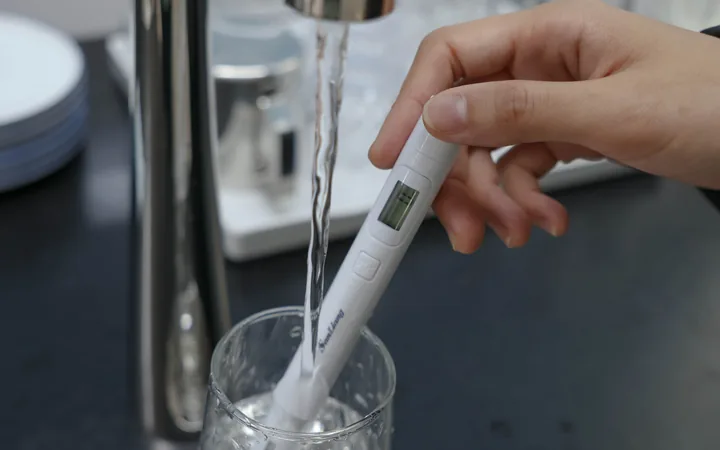
A nitrate finding, for example, gives the supplier a definite question. Ask for the water test, the offered system and replacement module codes, and the current nitrate/nitrite reduction claim with its conditions. NSF/ANSI 58 requires a total dissolved solids (TDS) reduction claim. Nitrate/nitrite and lead reduction appear separately when the listed system has been tested for them. Keep a TDS meter reading with the operating record if useful, and use the relevant evidence for the contaminant named in the order.
Put the Three Ratings on Separate Lines
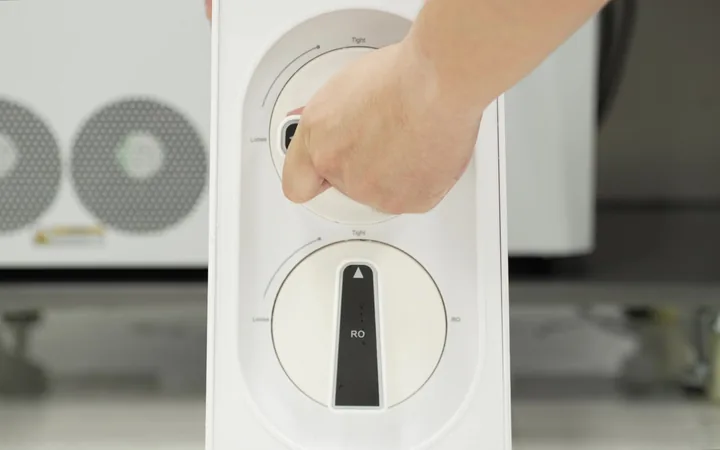
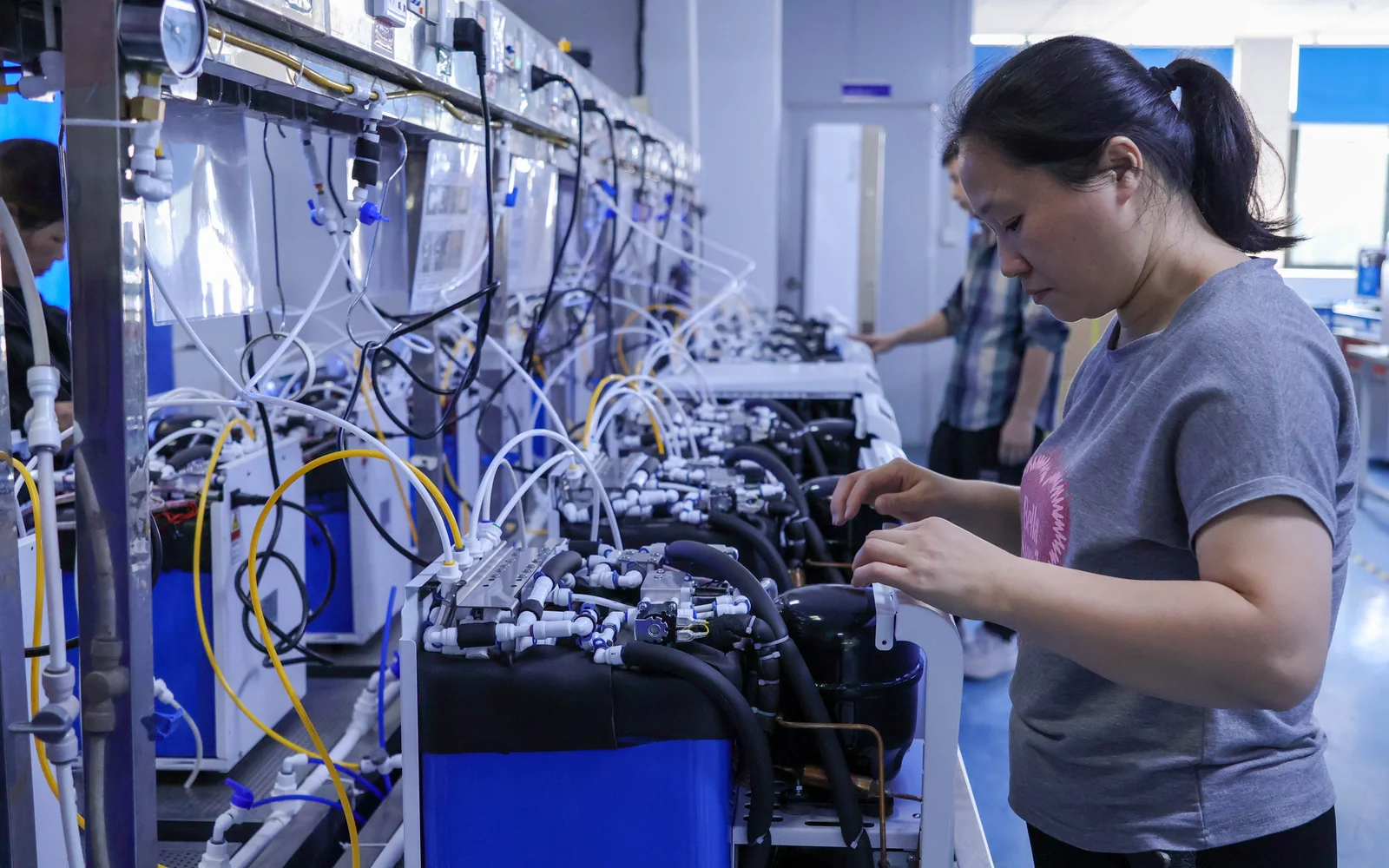
Bestware lists the G1DS-1023 with its own standalone RO unit. Its specification lists 2.6 L/min under RO Filtration Unit Water Flow. The same page separately gives a maximum sparkling-water flow of 3 L/min and a rated chilling capacity of 40 L/h. Each belongs on a different line of the quote. Ask what the RO figure represents under your inlet conditions, then time the final outlet as it will actually be used.
The installation manual shows where the standalone RO drain tube goes and says to secure it. Before ordering, agree on the drain location and how the installer will keep the unit accessible. The drawing locates the lines. It gives no measured recovery ratio or timed reserve for this installation.
Count What Leaves Each Branch
Imagine a different, hypothetical RO installation. Over the same ten minutes of steady production, its feed meter logs 28 L, the product side produces 16 L, and 12 L leave as concentrate. Storage is outside this measurement boundary and there are no flush events in that window. That is about 57% recovery and 0.75 L to drain per liter made. Put the meter points on the drawing. If you measure a complete day instead, record automatic rinses and any change in stored volume.
Would It Keep Up With the First Group?
Suppose that same hypothetical station needs 12 L of the specified treated water in four minutes. At the assumed production rate of 1.6 L/min, the RO unit makes 6.4 L in that interval. If production holds while the tap is running, the four-minute total calls for at least 5.6 L of usable reserve or a change to the service plan. This estimate uses the total for the interval. Clustered orders could need more.
If a supplier offers storage, ask how much can actually be drawn at the required outlet flow and pressure. Time the pours in their actual order, then repeat the draw after the normal interval between groups. Record whether production keeps up under flowing inlet pressure, how long usable volume takes to recover, and which other appliances were running. No tank volume or recovery time is assumed for the G1DS-1023 itself.
Close the Decision at the Finished Outlet
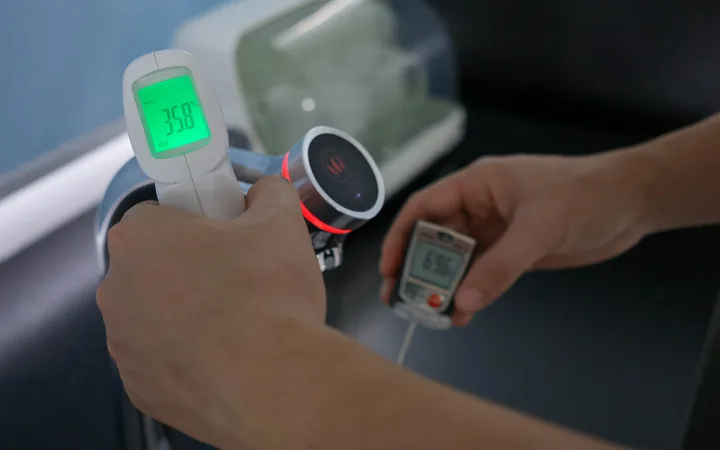
Get the installation and test conditions on the same sheet as the quote. If water is blended or further treated on its way to the tap, check the finished water against the original target. Have the supplier specify inlet conditions, any pretreatment and the parts included. Ask the installer to confirm the drain connection against local requirements. Record the approved arrangement, replacement part numbers and the person who signs off. For a chemical or safety concern, have sampling and release criteria agreed with the qualified lab or responsible authority before serving from that outlet.
Sources for This Edition
- CDC · About Choosing Home Water Filters · Choosing for your specific concern; water taste, odor and appearance do not indicate safety. Current update November 10, 2026.
- US EPA WaterSense · Point-of-Use Reverse Osmosis Systems · Treat With Efficiency and Performance. Defines permeate and concentrate; match treatment to need. This label guidance does not establish any Bestware efficiency rating.
- U.S. EPA · WaterSense Guide to Selecting Water Treatment Systems · Page 6, Table 2. Standard 42 covers aesthetic effects, 53 covers health effects and 58 covers reverse osmosis systems. Page 8 explains how to confirm an individual reduction claim.
- U.S. EPA · WaterSense Point-of-Use Reverse Osmosis Systems Specification Supporting Statement · Version 1.0, pages 4–5, General Requirements. The NSF/ANSI 58 baseline verifies total dissolved solids reduction. Other reduction claims require evidence for each substance claimed.
- NSF · Listings for Nitrate/Nitrite Reduction Under 58 · Issuer results for that specific claim. Read model and replacement module, conditions and named claim. The quoted Bestware unit has no contaminant claim asserted here.
- NSF · Standard 42 Certified Products With Chloramine Reduction · Standard 42 listings show chlorine reduction, chloramine reduction and taste and odor reduction on separate lines. Check the exact model, replacement element, service flow and capacity.
- Bestware G1DS-1023 · Factory Specification · Factory data: RO Filtration Unit Water Flow 2.6 L/min; separate Sparkling Capacity maximum 3 L/min and Chilling Capacity 40 L/h. Does not state a recovery ratio or usable reserve.
- Bestware · G1DS-123 and G1DS-1023 Installation Manual V1.2 · PDF pp. 13–14, printed pp. 22–24. RO drain tube precautions and connection diagram. On-site flow, storage and recovery must be verified independently.
- US EPA WaterSense at Work · Water Purification · Commercial and institutional WaterSense at Work, Water Purification, definition of recovery as permeate divided by feed. The document does not provide a rating for Bestware equipment.
- Illustrative Water Balance and First-Service Draw · Assumed case: 10 min, 28 L feed, 16 L permeate, 12 L concentrate. Recovery 16/28≈57.14%; 12/16=0.75 L concentrate per liter of product. If 1.6 L/min holds while drawing, 12 L needed in four minutes has a 5.6 L minimum aggregate gap. Check the actual sequence, outlet flow and pressure separately.
- Bestware · Water Equipment Pilot Acceptance · Plan an on-site trial that records actual configuration, output, supply conditions, and who clears the unit for use.
- Bestware · G1DS-1023 Model Details · Actual model page for manuals and the labeled conditions. Do not infer a full-system outcome from one rate.
- Bestware · Selecting Contaminant-Specific Filters · Match the measured contaminant and the certified performance before buying.
Continue With These Decisions
- G1DS-1023
Check the model's RO assembly, outlet and cooling specifications against the conditions of the installation.
- How to Choose a Water Filter for a Named Contaminant
Check the method and what to record.
- How to Test a Commercial Water Dispenser Before You Accept It
Check the method and what to record.