Cold Water Can Hold More CO₂ at the Same Partial Pressure
A bottle can hiss convincingly and still pour a disappointing glass. You hear gas leave the bottle. The amount left in the water is a separate measurement. At the same CO₂ partial pressure, colder water can hold more dissolved CO₂ once the gas and water have reached equilibrium.[1][2][3]
Take the curve below. In pure water at 1 bar of CO₂ partial pressure, the calculation gives 2.75 g/kg at 5 °C and 1.77 g/kg at 20 °C. That is about 36% less for the warmer equilibrium state. To compare pressures instead, keep the water at 20 °C. In the same calculation, 0.50 bar of CO₂ gives about 0.88 g/kg and 1.00 bar gives 1.77 g/kg. Neither calculation has a timer in it.[1][2]
The pressure in the calculation is the CO₂ share of total absolute pressure just above the liquid. A supply gauge elsewhere in a dispenser reads pressure at its own connection, relative to ambient pressure. The point where you read it matters as much as which units are printed on the dial. In the calculation, multiplying the temperature-dependent coefficient by the CO₂ partial pressure gives moles per kilogram of water. The chart expresses that amount in grams.[1][2]

| Water Temperature | Dissolved CO₂ |
|---|---|
| 5 °C | 2.75 g/kg |
| 10 °C | 2.36 g/kg |
| 15 °C | 2.04 g/kg |
| 20 °C | 1.77 g/kg |
Pure water at equilibrium, with 1 bar of absolute CO₂ partial pressure. The NIST WebBook calculation uses a reference coefficient of 0.035 mol/(kg·bar) at 25 °C and a 2400 K temperature parameter.[1]
What the Pressure Inside a Sealed Bottle Tells You
Researchers at UNAM recorded the pressure over one commercial diet cola at several temperatures. At 25.3 °C, their gauge read 1.2 bar. At 39.9 °C it read 1.9 bar. After adding the local atmospheric pressure measured for each reading, they obtained about 1.98 and 2.68 bar absolute. Those are pressures for the bottle experiment. The researchers estimated dissolved CO₂ by a separate method, so this pair of readings gives no direct concentration for each temperature.[6]
In a sealed bottle that warms, some CO₂ can move out of solution and into the headspace. When the bottle opens, gas in the headspace escapes and the water starts to lose more CO₂ to the air. The initial hiss tells you that gas had a way out. Its loudness and duration cannot tell you what concentration remains after the pour.[2][3][6]
In a recirculating laboratory unit, Descoins and his colleagues tested tap water at pH 7 from about 7 to 27 °C. Their chart marks four pressure levels in that apparatus, 1, 2, 3 and 6 bar. Each point they measured averaged four runs. They recorded CO₂ partial pressure and used a Henry coefficient to estimate the dissolved concentration. A separate study by Li and colleagues measured roughly 6 g/L in one bottled sparkling water by infrared absorption. They held the bottle at 4 °C for 24 hours and transferred and sealed the sample within about 30 seconds of opening. They let it warm toward room temperature for about 5–10 minutes before recording the spectrum. Transfer itself can lose gas. A sample value travels with its preparation and method.[4][5]
Measure the Outlet Before Judging the Finished Drink
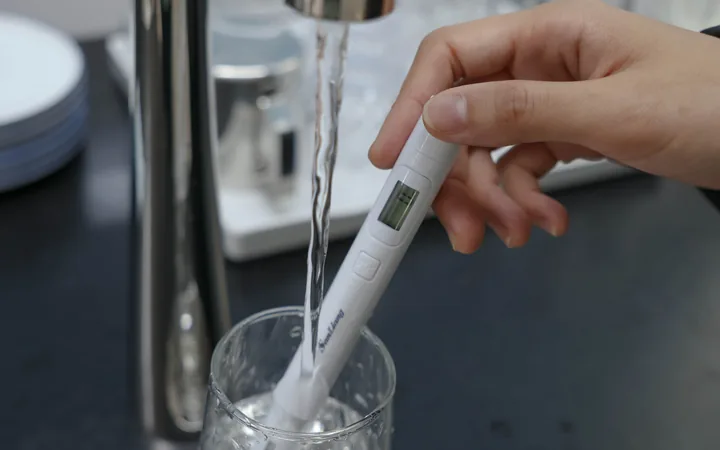
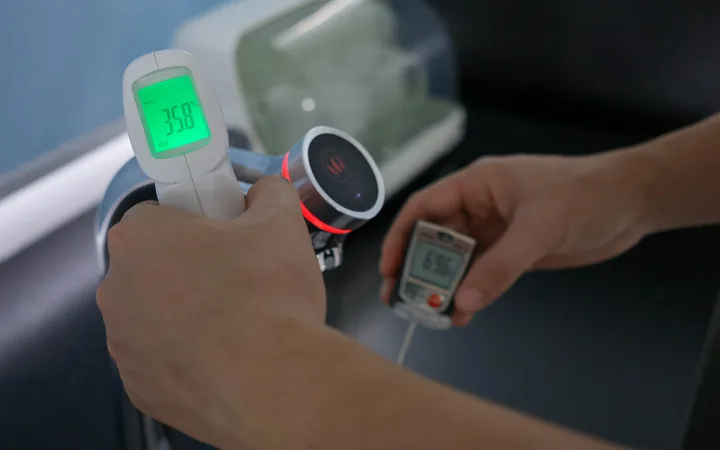
During a rush, note the plain sparkling water temperature at the outlet for the first and last orders. Use the same draw volume and sample delay. Add the time since the previous draw and time the recovery after the run. When dissolved CO₂ is part of acceptance, ask for the agreed instrument and sample method, and record its result with the outlet temperature. A taste note still helps the shift lead, with its own place on the sheet.[5][7][8]
The Bestware G1DS-110 and G1DS-123 manuals make a useful distinction here. Their pressure figures appear in model-specific gas supply commissioning. The manuals then check for bubbles and smooth flow. To sign off a numerical concentration, specify how and where the water will be sampled and agree the target separately. A supply setting or a chiller display cannot confirm the result in the glass.[7][8]
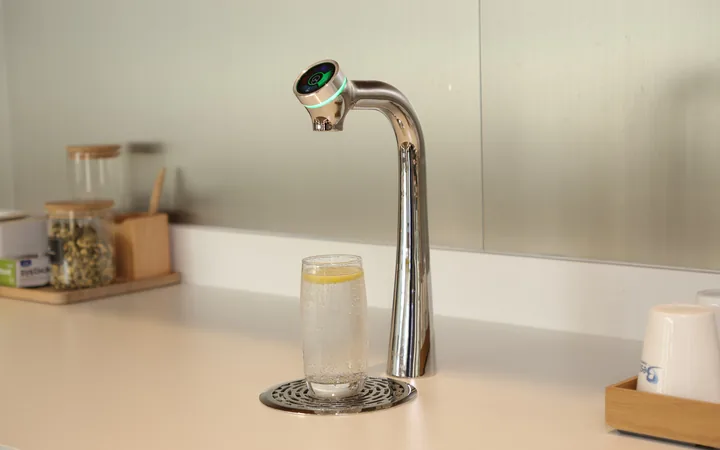
If the plain sample is consistent at the outlet, check the finished drink next. Pour the same recipe into the same glass, with the same amount of ice, and compare drinks at a fixed time to handoff. If the plain outlet sample itself changes during a run, hand those first and last readings to the installer. You will have a record that shows where the change appeared.[3][5][7][8]
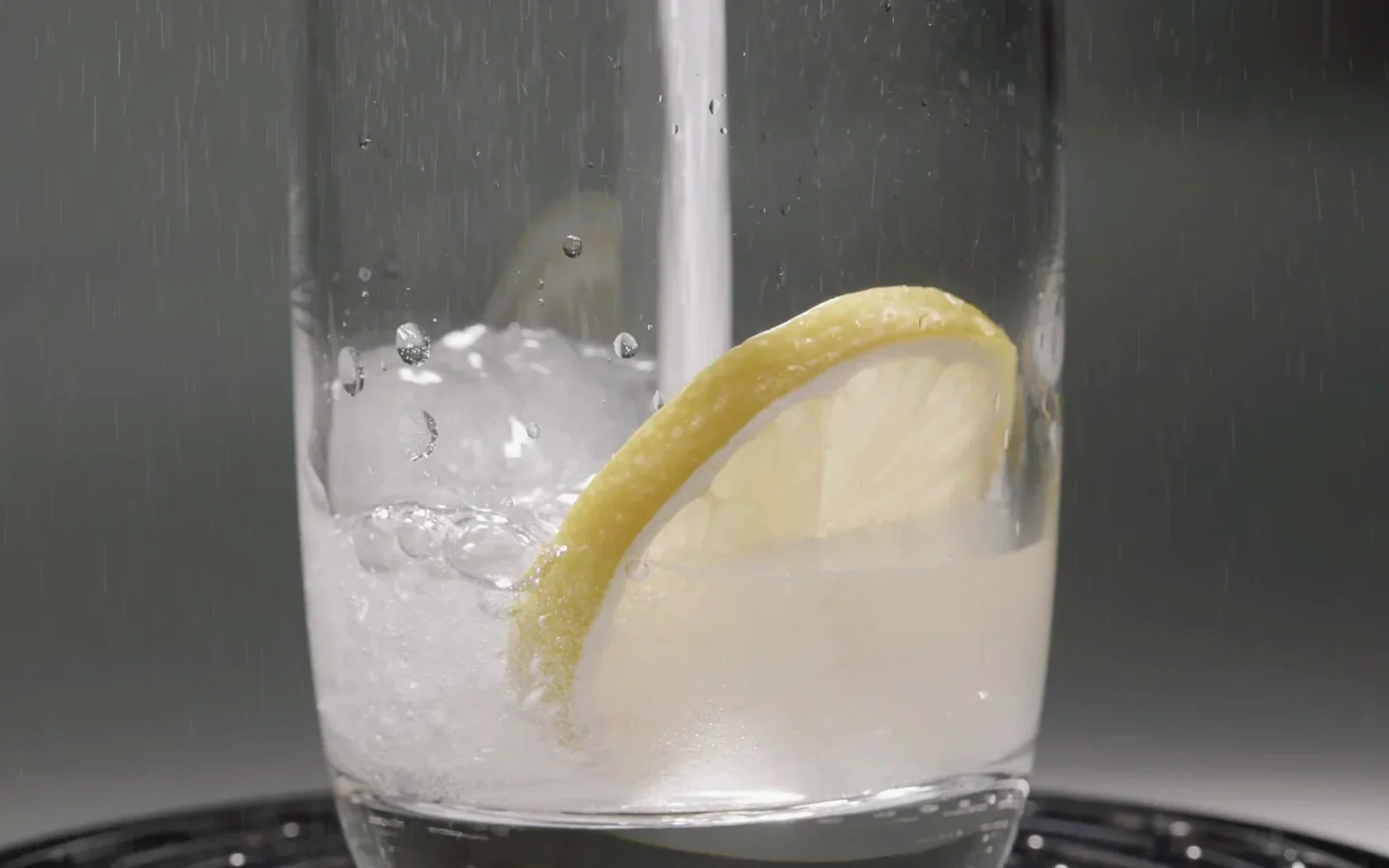
For the next shift, write the temperature, time since pouring and measurement point on the same line.
References
- NIST Chemistry WebBook — Carbon Dioxide, Henry’s Law Data · Henry’s law data for water, temperature equation and the 0.035 mol/(kg·bar), 2400 K row.
- OpenStax Chemistry 2e — Solubility · Section 11.3, solubility of gases and partial pressure at equilibrium.
- Liger-Belair (2019) — Carbon Dioxide in Bottled Carbonated Waters, J. Agric. Food Chem. · NLM text of the author abstract for J Agric Food Chem 67 (2019), pp. 4560–4567. Three bottled waters, dissolved CO₂ and gas-phase partial pressure. DOI 10.1021/acs.jafc.9b00155. PMID 30925060.
- Descoins et al. — Carbonation monitoring of beverage in a laboratory scale unit with on-line measurement of dissolved CO₂ · Food Chemistry 95 (2006), sections 2.1–2.2 and 3.1, Figure 3 on p. 545. DOI 10.1016/j.foodchem.2004.11.031.
- Li, Guo and Dai — Probing dissolved CO₂(aq) in aqueous solutions for CO₂ electroreduction and storage · Science Advances 8 (2022), original PDF pp. 3 and 7, Figure 2D and the method for commercial drinks. DOI 10.1126/sciadv.abo0399. PMCID PMC9106293.
- Hernández Segura et al. — Determinación de la constante de Henry de la disolución del CO₂ en un refresco dietético · Educación Química 35(2), 2024, printed pp. 112–114, Table 2 (PDF p. 6). DOI 10.22201/fq.18708404e.2024.2.86898.
- Bestware — G1DS-110 / G1DS-1010 Installation Manual 2026 V1.1 · PDF pages 14–15, printed pages 24–26. Model-specific initial sparkling-water commissioning and flow check.
- Bestware — G1DS-123 / G1DS-1023 Installation Manual 2026 V1.2 · PDF pages 15–16, printed pages 26–29. Initial setup and sparkling-water check for the separate chilling unit.
Continue With These Decisions
- Why Sparkling Drinks Vary Between Locations
time to handoff
- How Much Chilled Water Does Your Busiest Half Hour Need?
time the recovery