Count the Pours That Land Together
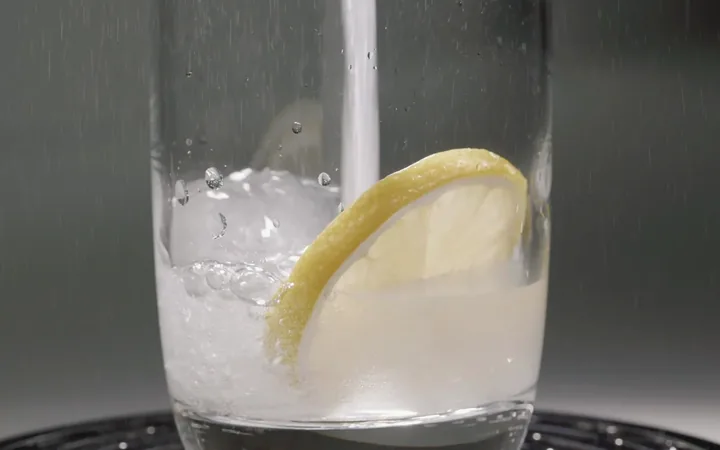
Pull the busiest half hour from a comparable seating. Record what comes from every tap served by the same machine. The glass size on the box can overstate a serving if you add ice or syrup. If the bar and dining room share a unit, put their orders on the same timeline and separate still and sparkling pours. Check each outlet’s short rush when you look at tap flow.
Suppose the first 15 minutes bring 45 orders for 200 mL of sparkling water. That is 9 L in the interval, or 0.60 L/min on average. The restaurant calculator expresses the same pace as 36 L/h. If you choose 20% headroom for extra covers, plan for 10.8 L in those 15 minutes, equivalent to 43.2 L/h. Keep the 9 L and the 15-minute window in the request so the supplier can replay the workload on the bench.
A half-hour count is useful for estimating the full seating. Keep a shorter interval as well if several tables order at once. A carafe station and a by-the-glass service can use the same total volume while placing very different demands on the tap in the first few minutes. Check till timestamps or keep a quick tally at the water station.
How Much Water Can Each Model Supply?
The G1DS-110 lists 20 L/h of rated chilling capacity and up to 1.5 L/min of sparkling water at the tap. The G1DS-123 lists 40 L/h for chilling and up to 3 L/min at the sparkling outlet. Chilling capacity helps you compare models. The maximum outlet flow describes how fast a glass can fill at peak flow. A sustained sparkling-water rate and the time needed to recover between rounds still need a timed service test.
The 36 L/h example puts the G1DS-123 on the shortlist for a timed comparison. With a 20% reserve, the 40 L/h cooling rating sits below the 43.2 L/h planning figure. Put that difference on the brief and ask how the quoted configuration will handle the first rush and the next one. The answer depends on the inlet temperature, the starting condition of the unit and when orders bunch up.
Repeat the Run With the Turnaround You Actually Have
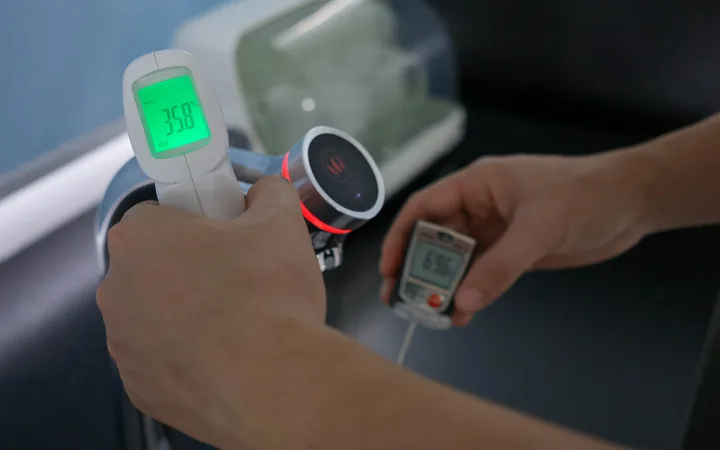
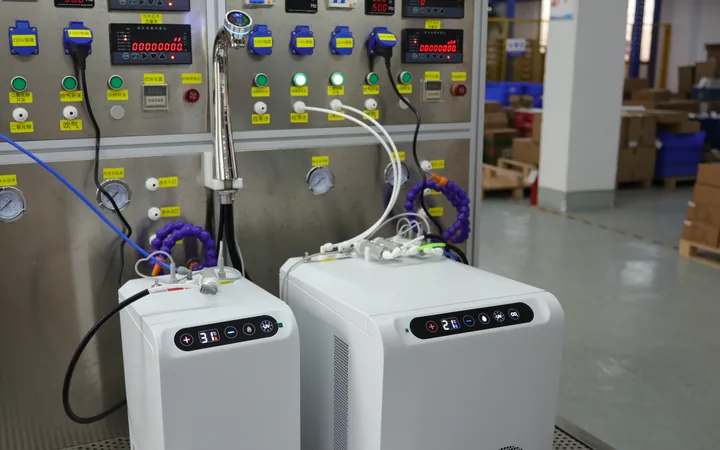
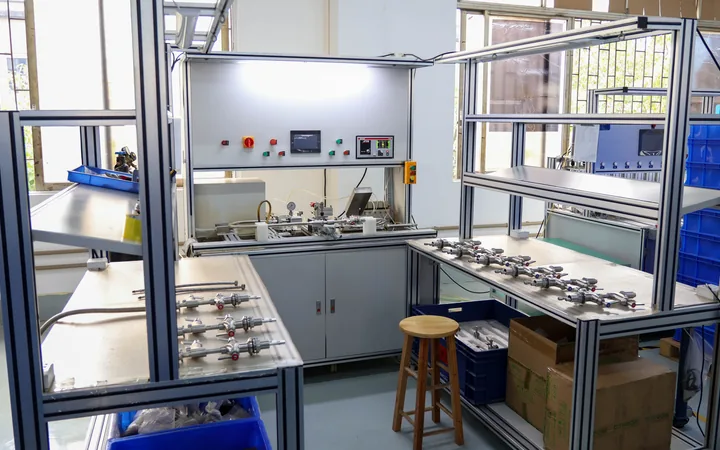
Ask for a timed trial using the restaurant’s pour pattern and agreed serving limits. Record the starting condition, room and inlet temperatures, the serving temperature, volume and timestamp of each pour, and how carbonation is checked. If the kitchen uses a tasting check, record it as a tasting observation and keep the method consistent between trials.
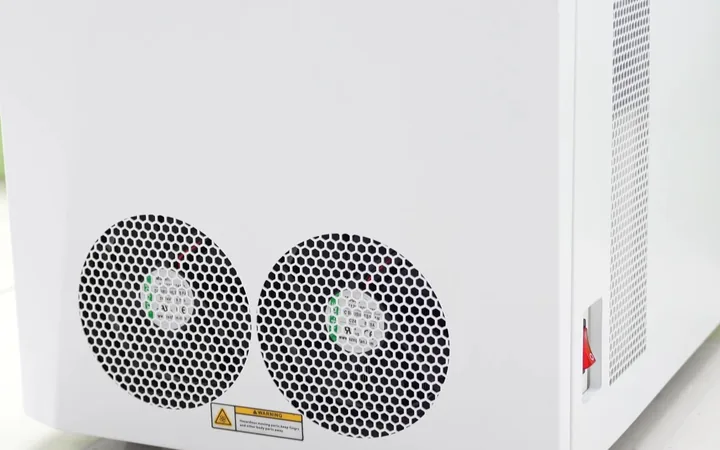
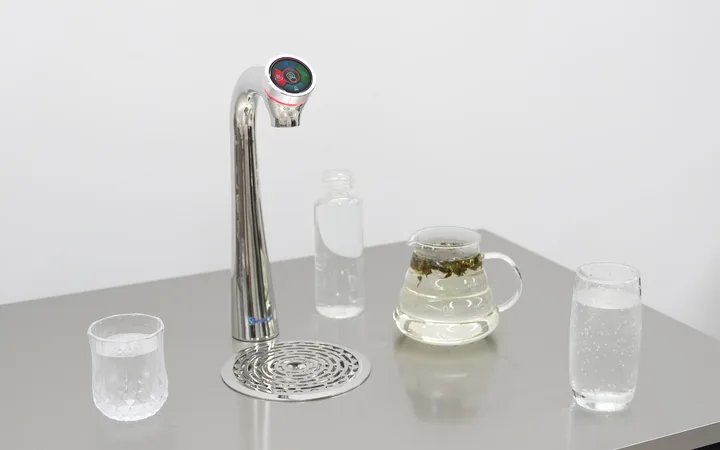
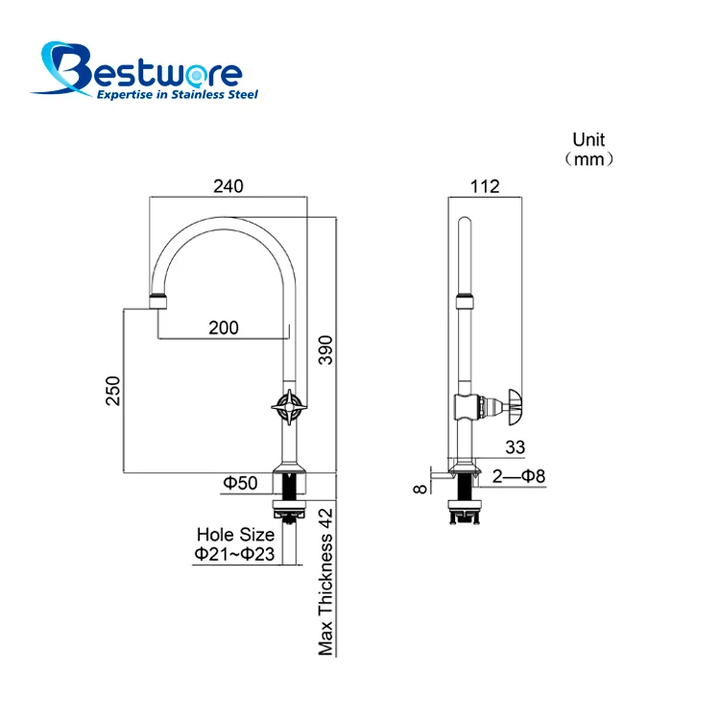
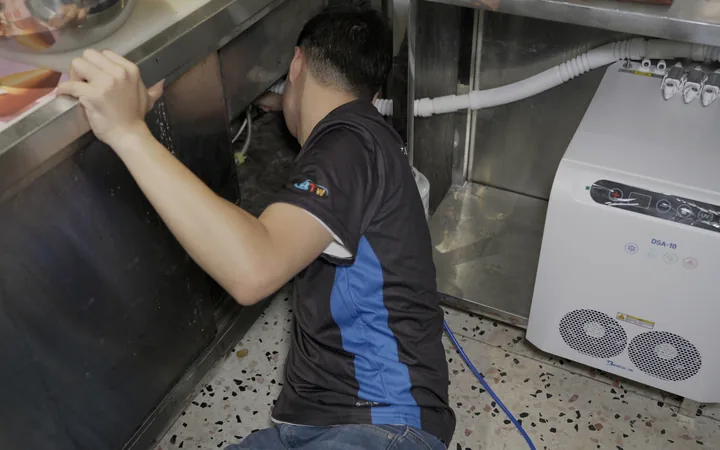
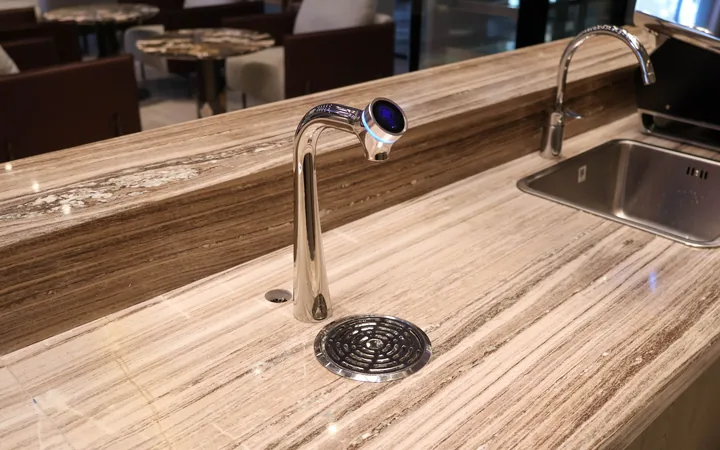
Give the machine the pause that the restaurant normally gets between rounds, then run the same series again. Record how many pours met the agreed limits, when the first miss occurred and whether the second full round passed. Use the installation drawing to check tap and drip tray fit, ventilation and service access. Send the measured plan with the timed pour record so the installer can match the tested configuration.
Sources for This Edition
- OpenStax College Physics 2e — Flow Rate and Its Relation to Velocity · §12.1, Equation 12.1, Q = V/t. Used for the stated arithmetic illustrations.
- OpenStax College Physics 2e — Temperature Change and Heat Capacity · §14.2, heat transfer and temperature change, Q = mcΔT.
- Bestware G1DS-110 manufacturer specification · Model summary — Chilling Capacity; model specification — Sparkling Capacity (Max L/min).
- Bestware G1DS-123 manufacturer specification · Model specification — Chilling Capacity and Sparkling Capacity (Max L/min). The larger collection description uses a separate hourly shorthand.
- Bestware G1DS-110/1010 Installation Manual, 2026 V1.1 · PDF pp. 9–11, site preparation, ventilation, tap and drip-tray mounting.
- Bestware G1DS-123/1023 Installation Manual, 2026 V1.2 · PDF pp. 9–11, site preparation, ventilation, tap and drip-tray mounting.
Continue With These Decisions
- Restaurant Sparkling Water Capacity Calculator
Enter your busiest service window and the share of sparkling water you expect to serve.
- How to Plan Water Service in a Restaurant
Check the method and what to record.
- Commercial Sparkling Water Dispensers for Restaurants
Check the equipment and installation conditions.