Plan One Table From Greeting to Refill
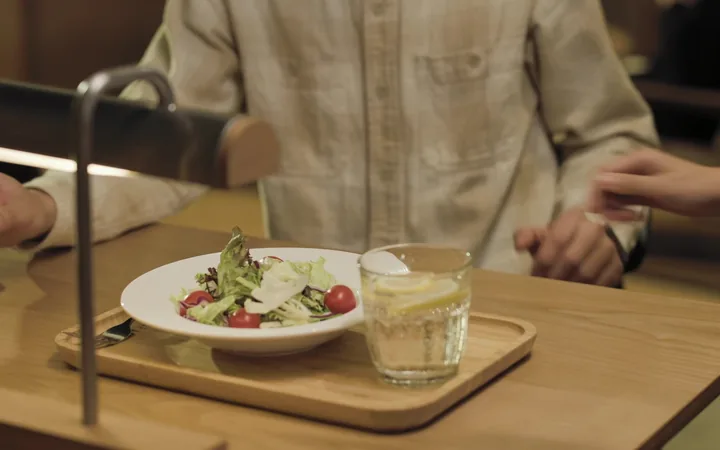
Start at a table that has just been seated. Who asks for the water order, who fills the bottles and where do they put them for pickup? Then follow that table through a refill and a reset. Write down which person owns each of those moments, including who covers it when they are taking orders somewhere else.
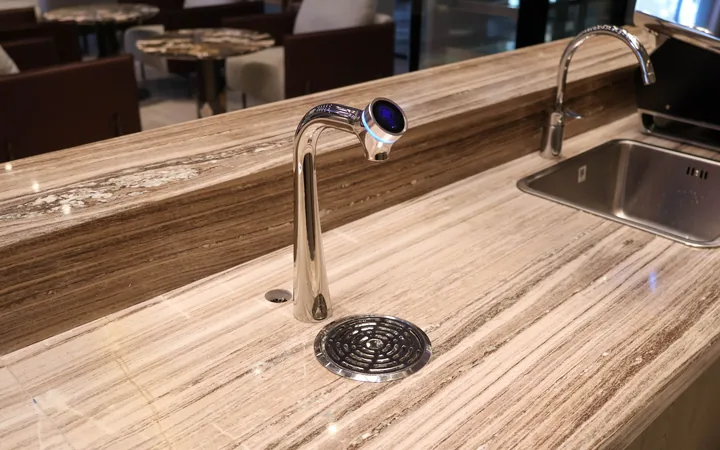
Give still and sparkling bottles a distinction staff can see on a busy tray. Keep the floor ticket or table note readable when another person runs the refill. In a short trial, write down the order time, when the bottle is ready and when it gets to the table. One long wait can come from the tap, from a shortage of clean bottles or from a bottle sitting ready at pickup.
A Refill Can Be Everybody’s Job
In his report from Kimball House in Decatur, Georgia, Gregory Emilio describes a bartender topping up his glass while working through cocktail tickets. He also recounts refills from servers and bussers as they passed. His interview with lead bartender Jakob McCabe-Johnston explains why the staff handle small service tasks when they notice them.
Lasal del Varador in Mataró takes a bottle-centered approach. The restaurant says it has offered complimentary filtered water in reusable glass bottles since its 2017 season. For your own service, decide whether a refill travels directly with the server or comes out from a pickup point in a fresh bottle. That choice tells you what needs to be on hand before the dining room fills.
Size the First Wave, Then Stage the Next One
Suppose eight table bottles of plain sparkling water have to be ready for pickup four minutes after the order, with 650 mL in each one. That is 5.2 L, so the first wave needs an average of 1.3 L/min over those four minutes. Count the still orders separately. Once the first wave ends, wait three minutes and then ask for six more of the same sparkling fill. If none of the first eight bottles returns ready for reuse, the two waves need fourteen clean bottles between them.
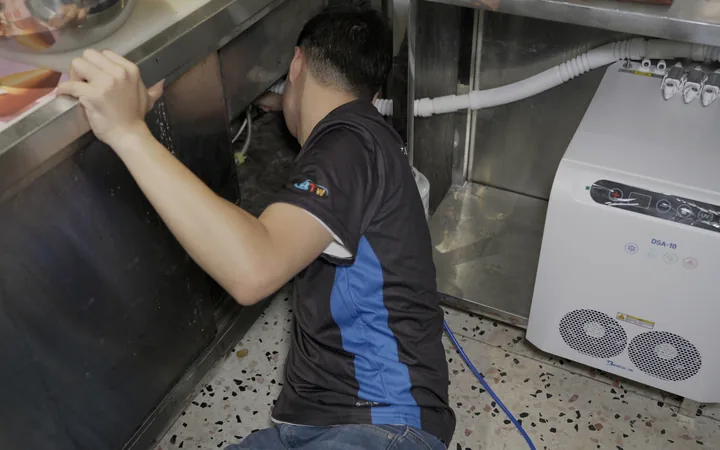
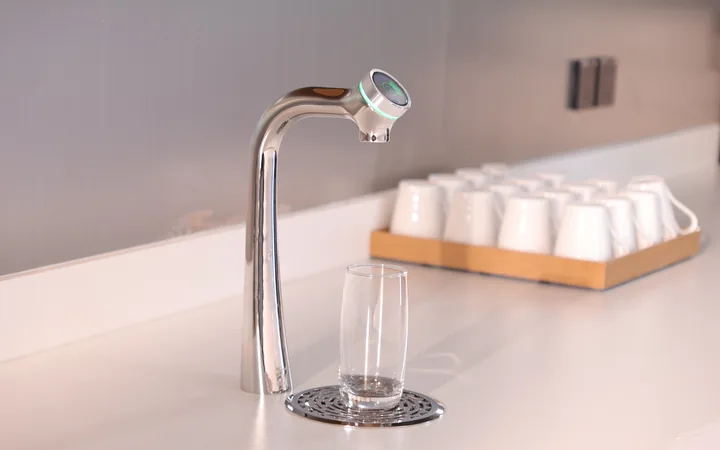
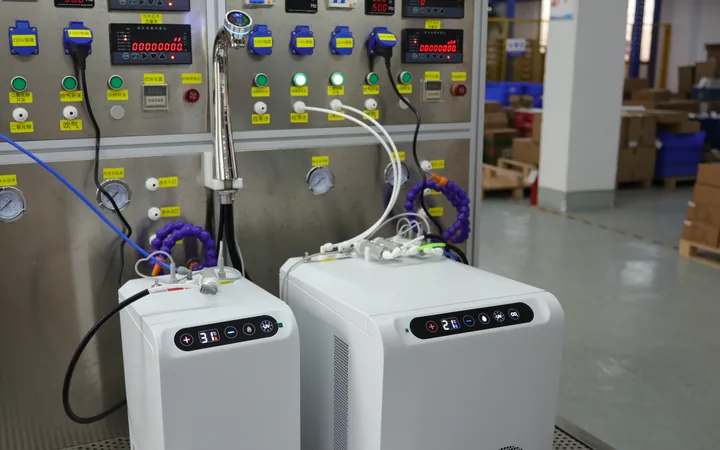
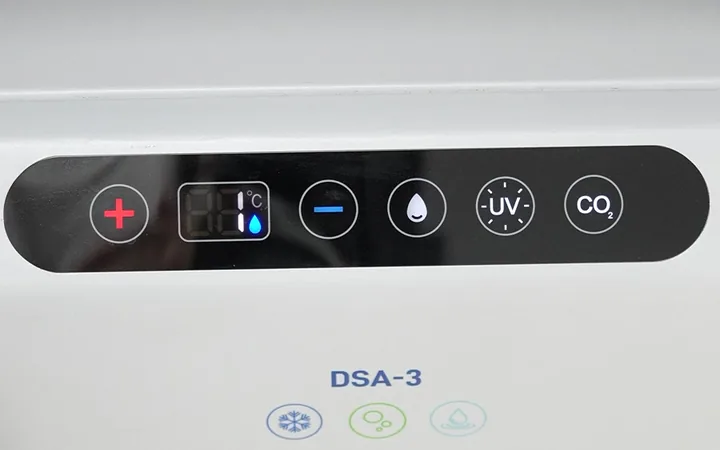
A Bestware G1DS-110, for example, lists 20 L/h of chilling and a sparkling outlet maximum of 1.5 L/min. Even if it could flow at that ceiling throughout the first fill sequence, 5.2 L alone would take at least 3 minutes 28 seconds of water-on time. That leaves at most 32 seconds of the four minutes for every other step. Rated chilling and a short-pour ceiling give you two separate checks. Use a live trial to find out what temperature and flow the second group receives.
Work out the busiest half-hour using your own bottle and refill counts
Keep a Clean Bottle Ready for the Next Table
Mark a return spot away from the ready-to-fill stock. Ask the person who handles dishwashing to check how long it takes for a bottle to go from cleared to clean, sanitized and ready under the site’s hygiene procedure. Put that time alongside the order-to-table time. If the next table is waiting on a bottle, check the return route and batch size before shopping for a faster tap.
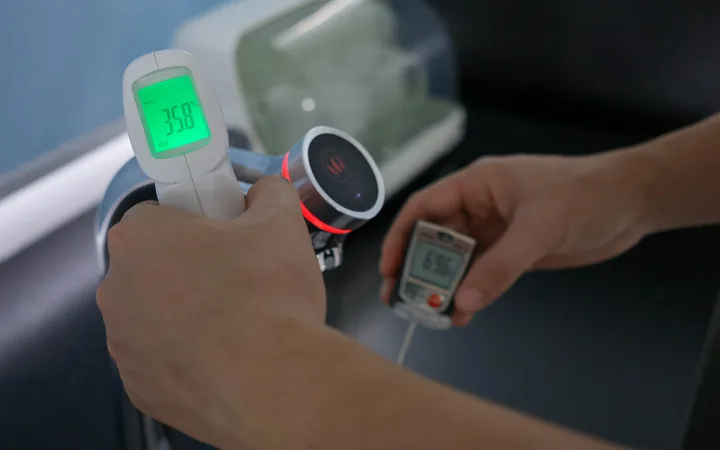
Run the two waves with staff in their ordinary roles. Record first and last fill volume, temperature, and time to pickup for each wave. Include bottles delivered in the wrong water mode and how often someone had to leave the station to find a clean bottle. Then hand the record to the person who owns the fix and repeat under the same conditions.
Put the first wave and the repeat wave into the acceptance test
Sources for This Edition
- Gregory Emilio · The Longevity of the Project, Southern Foodways Alliance · Kimball House, Decatur. First-person account of table/bar refills, followed by the interview with lead bartender Jakob McCabe-Johnston and founding partners. Bartender, server or busser refilled in the writer’s observation; no volume, timing result or water equipment specified.
- Lasal del Varador · Uso sostenible del agua · Restaurant’s own Agua filtrada paragraphs, Mataró. Says that since the 2017 season it has provided complimentary filtered water in reusable glass bottles. Does not specify still or sparkling service, hourly demand or verified savings.
- Bestware · G1DS-110 manufacturer specification · Specifications table, Chilling Capacity 20 L/h and Sparkling Capacity Max 1.5 L/min. Separate nameplate-type figures. The ceiling yields an idealized water-on time only, with no demonstrated multi-wave sparkling capacity, draw temperature or recovery for the restaurant.
- Illustrative restaurant trial · two waves of sparkling bottle orders · Sample brief only: 8 × 650 mL = 5.2 L in 4 min, average target 1.3 L/min. Under a purely theoretical constant 1.5 L/min, water-on time at least 208 s = 3 min 28 s, leaving at most 32 s of the four minutes. Second wave after a 3-minute gap: 6 × 650 mL = 3.9 L, 9.1 L combined. Fourteen clean bottles needed across both when none return cleaned in time and one per fill is used.
- GOV.UK · Food Hygiene for Businesses, Cleaning · Cleaning schedule and regular cleaning of utensils and dishes. Use for the return/wash/reissue workflow principle; the site uses applicable hygienic procedures for its vessels and equipment.
- Bestware Wiki · Size for Peak Demand · Translate service windows and actual vessel volumes into a half-hour demand profile that can be compared with equipment capacity.
- Bestware Wiki · Plan Water Equipment Pilot Acceptance · Prepare a first-pour, peak-period and restart test for the actual configured equipment and the site’s service decision.
Continue With These Decisions
- How Much Chilled Water Does Your Busiest Half Hour Need?
Check the method and what to record.
- How to Fit a Water Station Into a Small Bar
Check the method and what to record.
- Restaurant Sparkling Water Capacity Calculator
Put your serving pattern into the calculator.