Work Back From the Service Pass
Suppose the dining room needs water in ten minutes. There are eight 750 mL table bottles and sixteen 250 mL glasses to fill, and one person is working the tap. Can they get all 24 to the pass on time? Start by checking whether the tall bottle sits upright under the spout. Then time the order from the first empty bottle picked up to the last glass handed over.
In his New York restaurant fieldwork, Liviu Chelcea observed staff sometimes filling glasses at a counter and sometimes setting pitchers on tables before guests arrived. At your bar, mark where empty bottles are picked up and where the server takes the filled ones before deciding where to put the tap.
Measure From the Tray to the Outlet
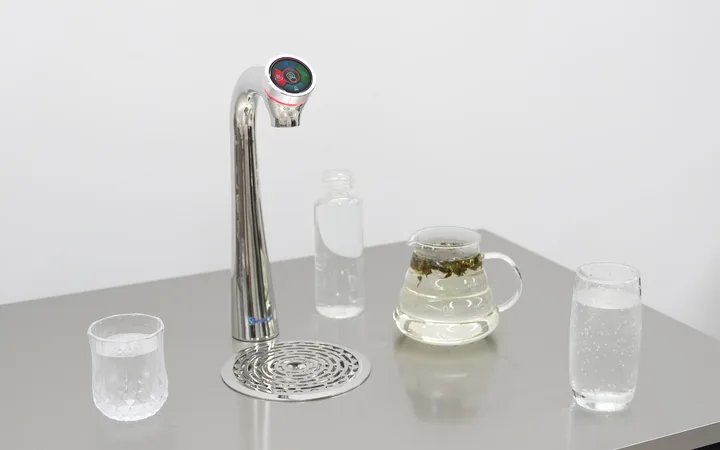
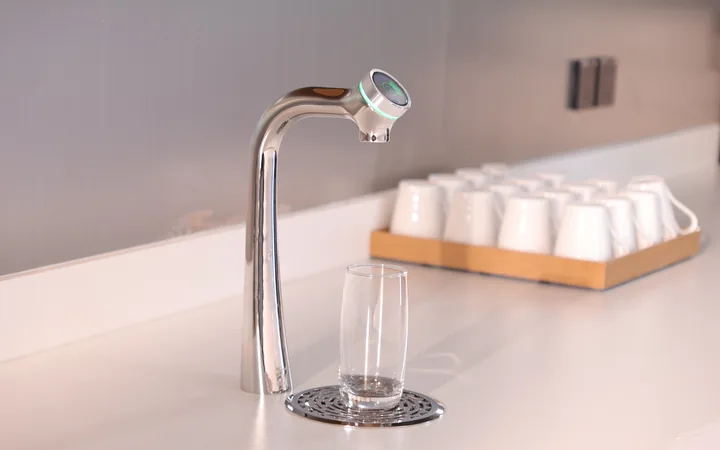
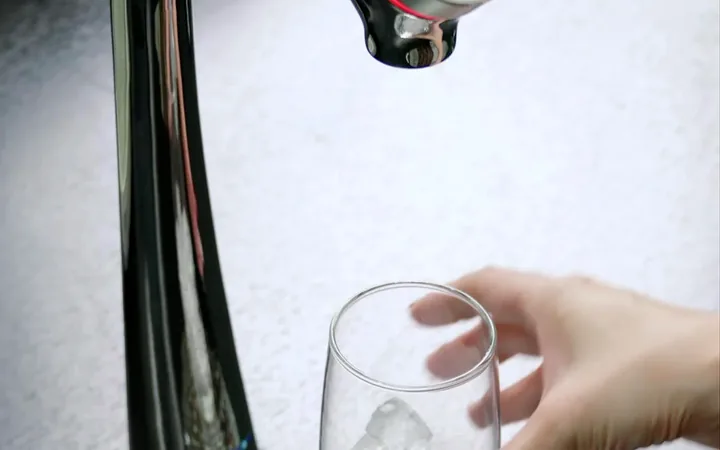
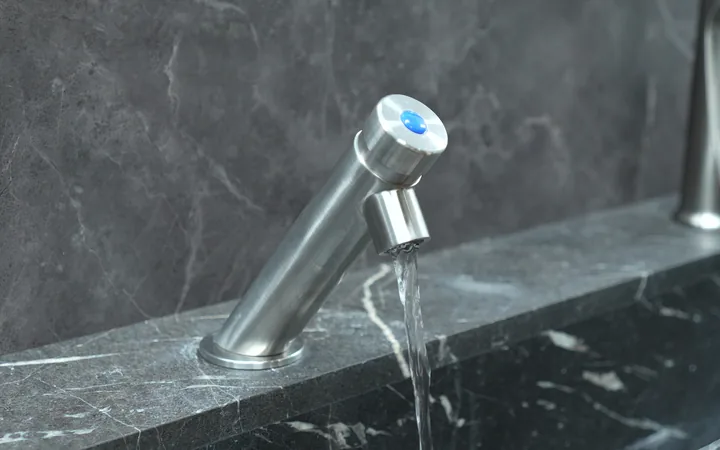
Use the support surface the bottle will actually sit on. Measure up to the lowest part of the outlet and look for anything that gets in its way as it moves in or out. Try the tallest bottle, the narrowest mouth and the glass or handled jug people use every day. You need room to line up the stream without touching the nozzle, stop the water with one hand and move a full vessel away without tipping it.
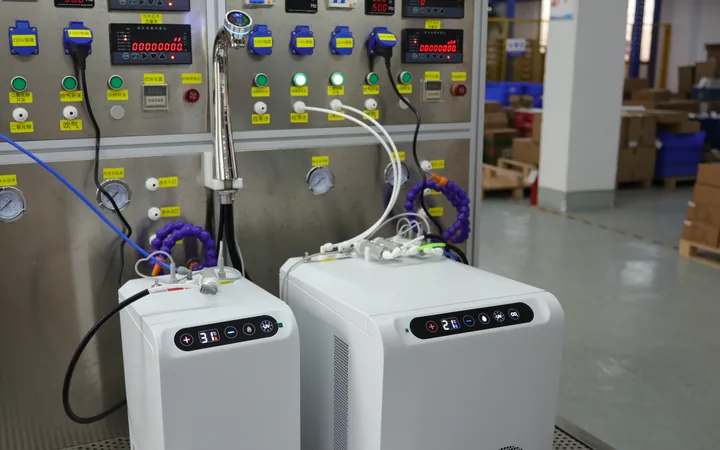
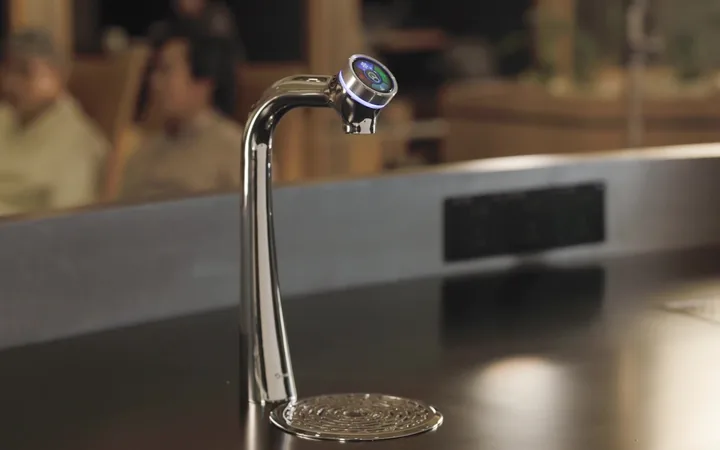
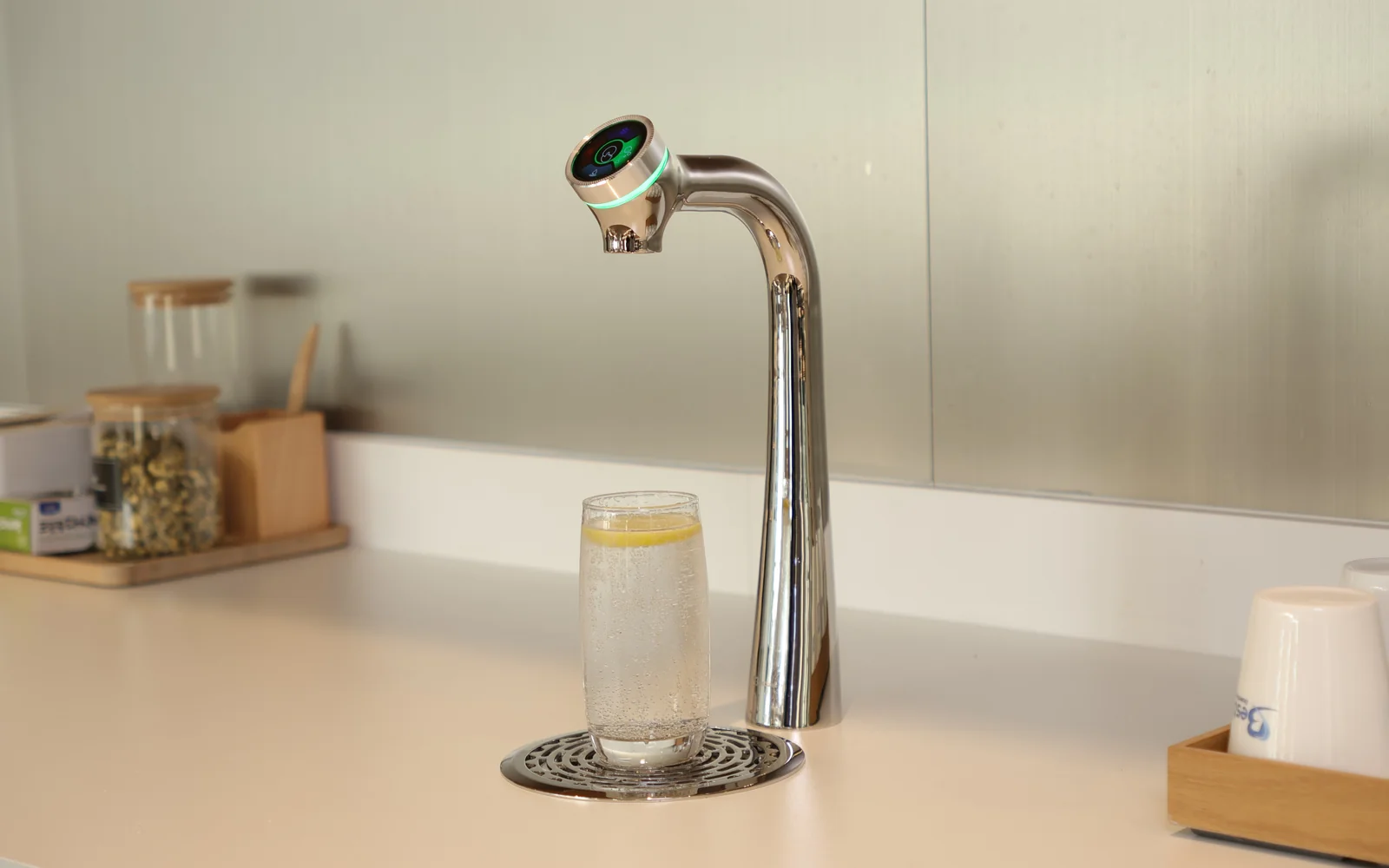
Suppose there is 280 mm from the tray to the outlet. A 285 mm bottle will not stand upright in that gap. Bestware lists a tap-and-tray envelope of 158 × 223 × 332 mm for both the G1DS-110 and G1DS-123. The 332 mm is the assembly height. Ask for the installed outlet-to-tray dimension or set the bottle under a fitted sample before you order.
Use the Timer and Measure the Pour
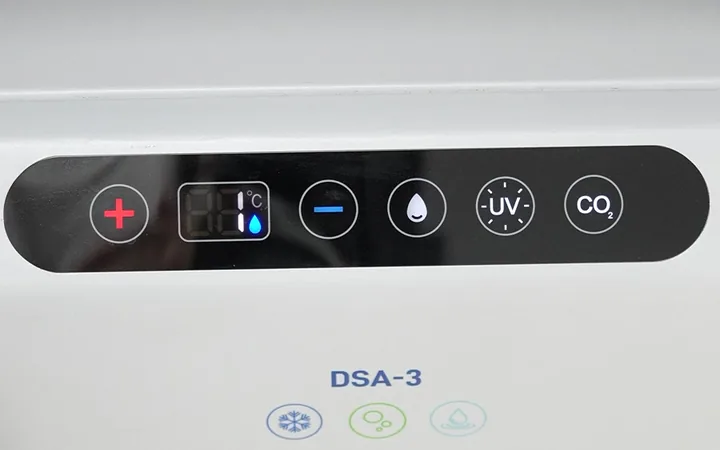
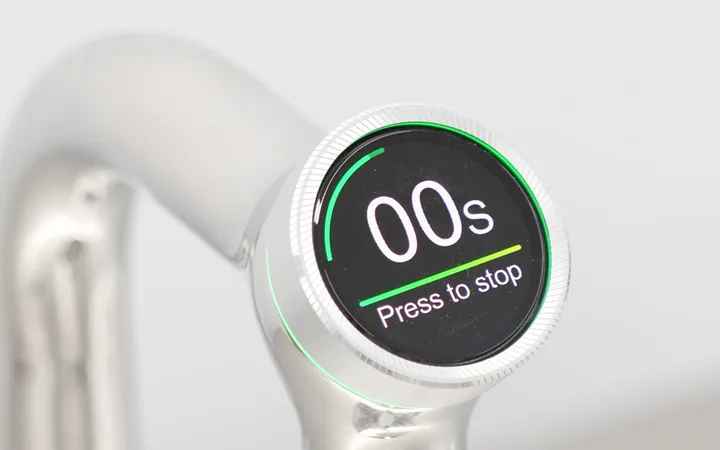
On both Bestware models, each water mode has its own 1–60-second timer. The tap remembers the setting after power-off and lets staff stop a pour early. Mark the target volume with a measuring jug, then run the same setting through a few bottles. Log actual fill volume at a fixed interval after the last pour, once initial foam has settled enough to read it. Count any pause and top-up in the complete turn.
Bestware lists a maximum sparkling flow of 1.5 L/min for the 110 and 3 L/min for the 123. The separate rated chilling capacities are 20 and 40 L/h, respectively. Use those figures to compare spec sheets. Ask the supplier to demonstrate how many servings stay within your volume and temperature limits over consecutive pours at the installed tap.
Count What Gets to the Pass
The mixed order is 10 L. To see what handling can do to the schedule, compare two hypothetical layouts with the same tap. In A, each bottle takes 45 seconds including a top-up and a longer move to the pass, and each glass takes 14 seconds. In B, the bottle sits comfortably under the tap and the pass is close. Each bottle takes 33 seconds and each glass takes 17. Add two 20-second pauses to clear the tray in both runs. They occupy the same person, so nothing is filled during the pauses.
Multiply each time by its order count. A takes 10 minutes 24 seconds and misses the service window. B takes 9 minutes 36 seconds, with 24 seconds to spare. These are example timings for two ways to work. If you mainly serve the smaller glass, run that mix too. An advantage on eight bottles can disappear when the order changes.
Set a Pass Condition Before You Pay
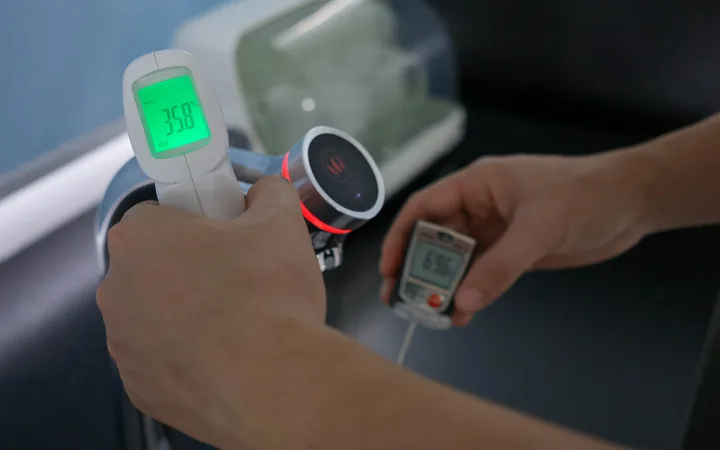
Put the bottle and glass sizes, water mode, fill-volume and temperature tolerances, and maximum time on the supplier's test sheet. Run the opening pour, then take readings mid-order and at the end. If two taps share a supply, include a run with both open. Record the number of usable servings at the pass, and whether a different bottle or tray position needs a repeat test before acceptance.
Sources for This Edition
- Bestware G1DS-110 — Tap and All-in-One Unit Specifications · Tap Size (Tap+Drip Tray) is 158 × 223 × 332 mm (W × D × H). Under All-in-One Unit, Chilling Capacity is listed as 20 L/h and Sparkling Capacity as max 1.5 L/min. The size is the tap and drip-tray assembly envelope.
- Bestware G1DS-123 — Tap and Chilling Unit Specifications · Tap Size (Tap+Drip Tray) is 158 × 223 × 332 mm (W × D × H). Under Chilling Unit, Chilling Capacity is 40 L/h and Sparkling Capacity is max 3 L/min. Confirm clearance and consecutive service on the selected installation.
- Bestware G1DS-110 / G1DS-1010 Installation and User Manual, 2026 V1.1 · Physical PDF p. 3, printed pp. 01–02. Dispenser Tap Operation Instructions shows manual stop. Setting Dispensing Time lists a separate 1–60 second setting for each mode and retention after power-off. PDF p. 10 shows installation of both the drip tray and tap.
- Bestware G1DS-123 / G1DS-1023 Installation and User Manual, 2026 V1.2 · Physical PDF p. 3, printed pp. 01–02. The tap stops manually and retains separate 1–60 second dispensing-time settings by mode after power-off. PDF pp. 10–11 show mounting of the tray and tap.
- OpenStax College Physics 2e — Flow Rate and Its Relation to Velocity · Section 12.1, Equation 12.1. Volume divided by time defines average volumetric flow rate. A time estimate at an assumed constant flow does not establish the amount a particular outlet will deliver.
- Liviu Chelcea — Hydraulic Hospitality and the Waters of New York City Restaurants · Current Anthropology, December 2, 2024, DOI 10.1086/732112. Text around Figure 2 and the paragraph on narrow- and wide-necked vessels. Qualitative restaurant fieldwork in 2018 and 2022 describes where pitchers were staged and whether staff filled glasses directly or delivered a pitcher. It covers working practices.
- Bottle Clearance at an Installed Tray — Worked Example · A hypothetical 285 mm bottle needs more upright clearance than the 280 mm measured between the tray support and outlet. Verify hand space, nozzle contact and the real insertion and removal paths. Dimensions are examples, not Bestware measurements.
- One Employee and a Mixed Ten-Minute Restaurant Order — Worked Example · Eight 750 mL bottles and sixteen 250 mL glasses total 10 L. Setup A has 45 s and 14 s per finished item; setup B has 33 s and 17 s. Add two 20 s nonoverlapping tray interruptions to each sequential workload. A totals 624 s, B totals 576 s. Both are hypothetical workflows with the same job and no assumed equipment rating.
- Bestware — Restaurant Sparkling Water Capacity Calculator · Estimate restaurant water demand from actual counts, volumes and service windows. Use the project test to verify the installed equipment and handling.
- Bestware — Plan a Water Equipment Pilot and Acceptance Test · The same-language acceptance guide documents the first serve, consecutive pours, recovery and sign-off.
Continue With These Decisions
- How to Check a Preset Pour for Consistent Portions
Check whether repeated fills reach the same measured volume.
- How to Plan Gym Bottle-Filling Stations Around Class Changeovers
Test the bottle and the queue together at a gym changeover.