Start at the Tap You Actually Use
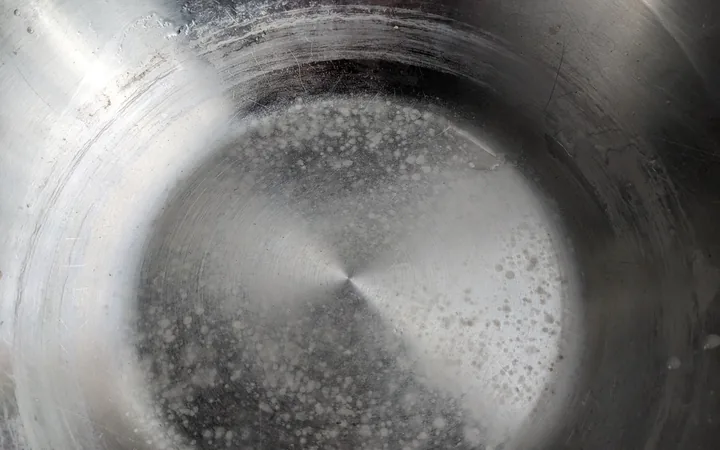
Someone wants the chlorine taste gone from the drinks tap. The engineer is trying to keep scale out of a heater. Those requests can concern the same water and still need different checks. Start with the supply report, the actual inlet and what the equipment needs in the busiest part of service. Ask whether the taste or particles show up at the whole site or only at that outlet.[1][7]
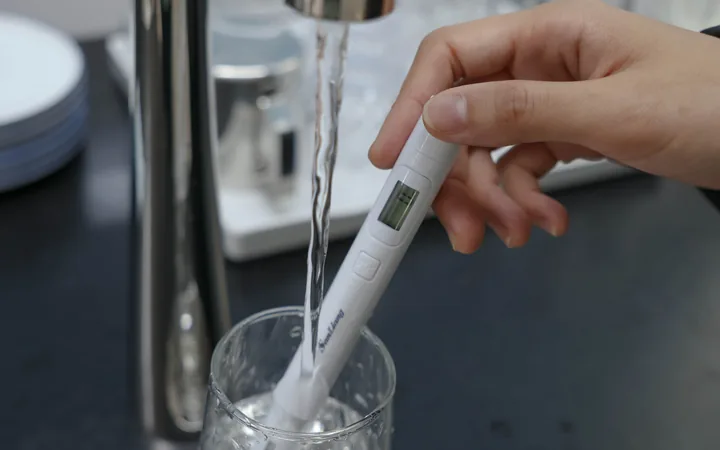
For a U.S. community system, the utility’s Consumer Confidence Report is a starting point for the supply. If a current local advisory restricts drinking or making ice, take the affected outlet or equipment out of that service and use the water source the authority allows for it. If the source is unknown or building plumbing may be affecting that tap, ask the utility, local authority or a qualified laboratory where and what to sample. A clear glass or a low reading for total dissolved solids (TDS) leaves that question open. If the water at the intended point of use is confirmed suitable and meets the equipment’s inlet requirements, keep the existing setup when there is no separate treatment objective.[1][10][16]
Choose the Treatment Location
POE means point of entry; POU means point of use. The position of the treatment changes which outlets it serves.
At the Building Entry
- Incoming Supply
- POE Treatment
- Connected Building Outlets
Treatment is upstream of the building’s distribution pipework.
At a Drinking Outlet
- Incoming Supply
- Building Pipework
- POU Treatment at Outlet
Other outlets do not receive this outlet’s treatment.
Concept redrawn from EPA WaterSense, Figure 1. This shows treatment location, not a complete installation design.[7]
Give Each Cartridge a Job
For particles in a confirmed supply, look for a defined retention rating and ask for pressure loss at the flow you need. For a taste complaint, find out whether the utility uses chlorine or chloramine and ask for the corresponding claim. A cartridge with separate sediment and chlorine taste and odor claims can cover both requests at one outlet. If the actual jobs and rated conditions match, one stage can be enough.[1][9][11]
For hardness, start with dissolved calcium and magnesium and the heater’s inlet limits. A sediment filter can collect pieces that have already formed. For the minerals still dissolved in the water, look separately at the stated scope of scale inhibition, softening or a membrane system. If the issue is a named contaminant or unknown water safety, have the relevant source and treatment independently assessed before deciding what to serve.[1][11][12]
| Concern | Function to Examine | What to Check |
|---|---|---|
| Chlorine Taste or Odor | Adsorption, often using activated carbon. | The specific chlorine or chloramine reduction claim; they are not interchangeable labels. |
| Particles or Sediment | Mechanical filtration with a defined retention rating. | Particle rating, nominal or absolute specification, and pressure loss at the required flow. |
| Hardness and Scale | Cation-exchange softening where appropriate. | Hardness reduction, regeneration and salt requirements; this is not general disinfection. |
| A Named Dissolved Contaminant | A filter, adsorptive medium or reverse osmosis (RO) system with the relevant reduction claim. | The exact substance and model listing. A TDS reduction claim is not a test for every contaminant. |
| A Microbial Concern | A validated membrane or disinfection process suited to the concern. | Which organisms are addressed and the required feed-water, flow and maintenance conditions. |
Adapted from EPA WaterSense Table 2, CDC treatment guidance and NSF claim categories. It is a selection guide, not a statement that every product using a process has every claim.[1][2][3][7][9]
Read the Exact Performance Claim
On the quotation, put the system model and the replacement cartridge beside the result you want. Ask for the actual reduction claim, feed limits, rated flow and service life behind it. A taste claim belongs on the taste line. If the job requires certification, use the certifier’s current listing to match the system, cartridge and specific reduction claim. Keep the accepted performance data sheet with the order so the next cartridge can be checked against it.[1][4][9]
Keep the Evidence With the Installation
The 2016 Flint field study measured filtered and unfiltered water on documented faucet setups. The share of filtered samples below a reported lead concentration belongs to that study. It gives a buyer a model for asking what was tested and under which conditions before using a result from another site.[6]
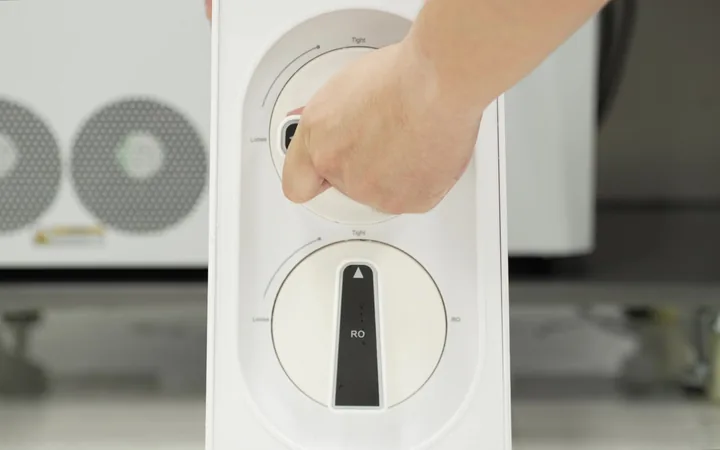
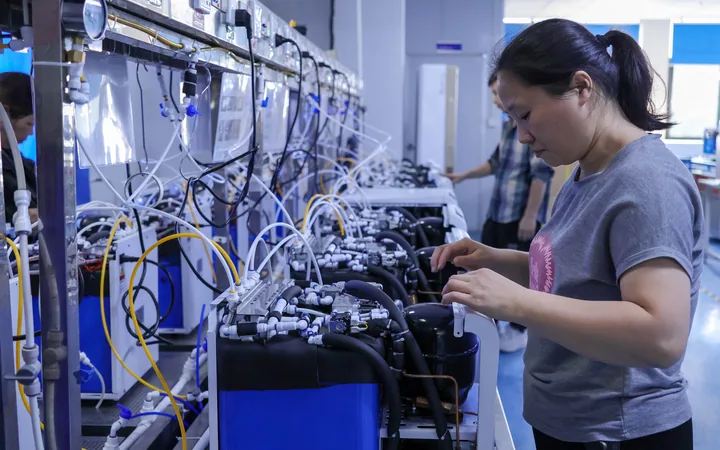
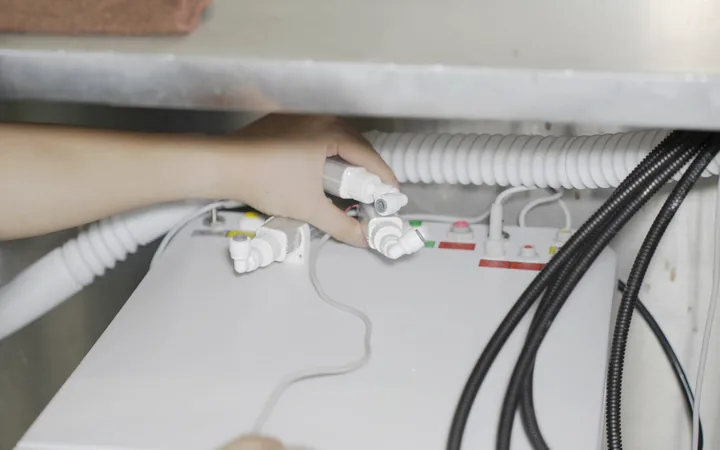
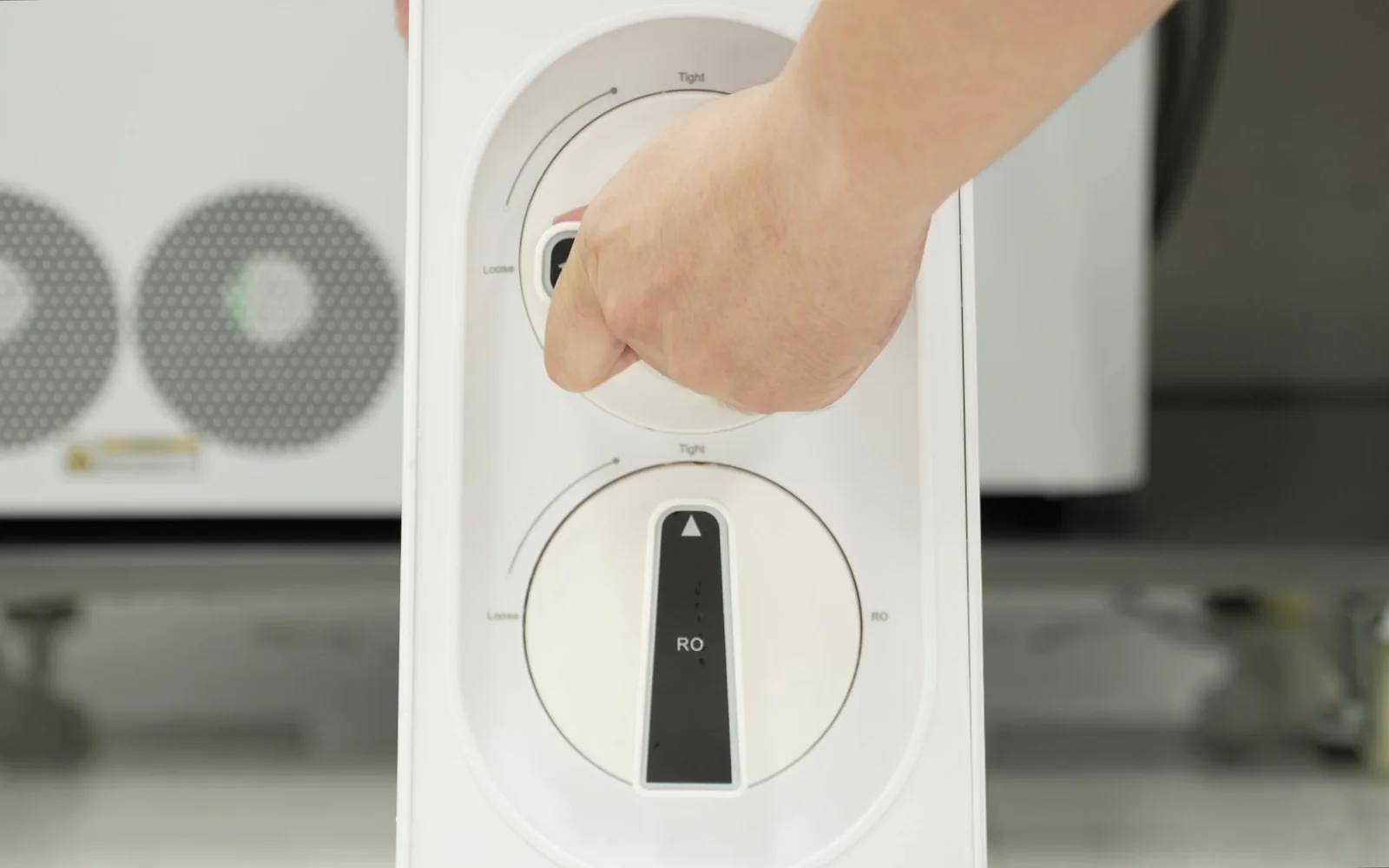
For a Bestware project, the G1DS-123 specification has no standalone RO module and lists 0.15–0.6 MPa for the chiller’s water side with a ¼-inch PE connection. The G1DS-1023 has a standalone RO unit, whose own flow field reads 2.6 L/min. The shared V1.2 manual shows the RO drain and connection. Record which configuration is quoted and where water and waste lines go. The flow at the installed tap still belongs on the site test.[13][14][15]
Test the Filtered Branch While the Other Equipment Runs
Suppose the counter needs 8 L in five minutes, an average of 1.6 L/min. On an example sheet the filtered test point supplies 2.0 L/min alone. With the ice maker on the same branch drawing, the example reading is 1.4 L/min. If that draw lasts the full five minutes and there is no usable storage, the filtered point supplies only 7 L. The counter is a liter short even though the single-outlet test looked fine.
Have the installer measure and record inlet temperature, flow and upstream and downstream pressure during the same draw, first alone and then with normal shared uses. Compare pressure drop at the same flow when comparing filter configurations. Test the installed outlet separately at its actual serving temperature. If you rely on storage, check how much is usable and how long recovery takes. An RO system also needs its own check of treated and reject water. The published point-of-use ratios illustrate what to ask about.[7][8]
The Water Budget for 10 L of Treated Water
The same output makes the published ratios easier to compare. Teal represents treated water; gray represents reject water.
Typical POU RO: EPA Description
10 L treated water + ≥ 50 L reject water
WaterSense-Labeled POU RO: Limit
10 L treated water + ≤ 23 L reject water
Arithmetic illustration from EPA’s ratios: 10 × 5 = 50 L and 10 × 2.3 = 23 L. Bars mark those bounds on the same 0–60 L scale; actual volumes can lie beyond or below them. This is not a commercial-system sizing test.[8]
Leave a Record the Next Shift Can Recreate
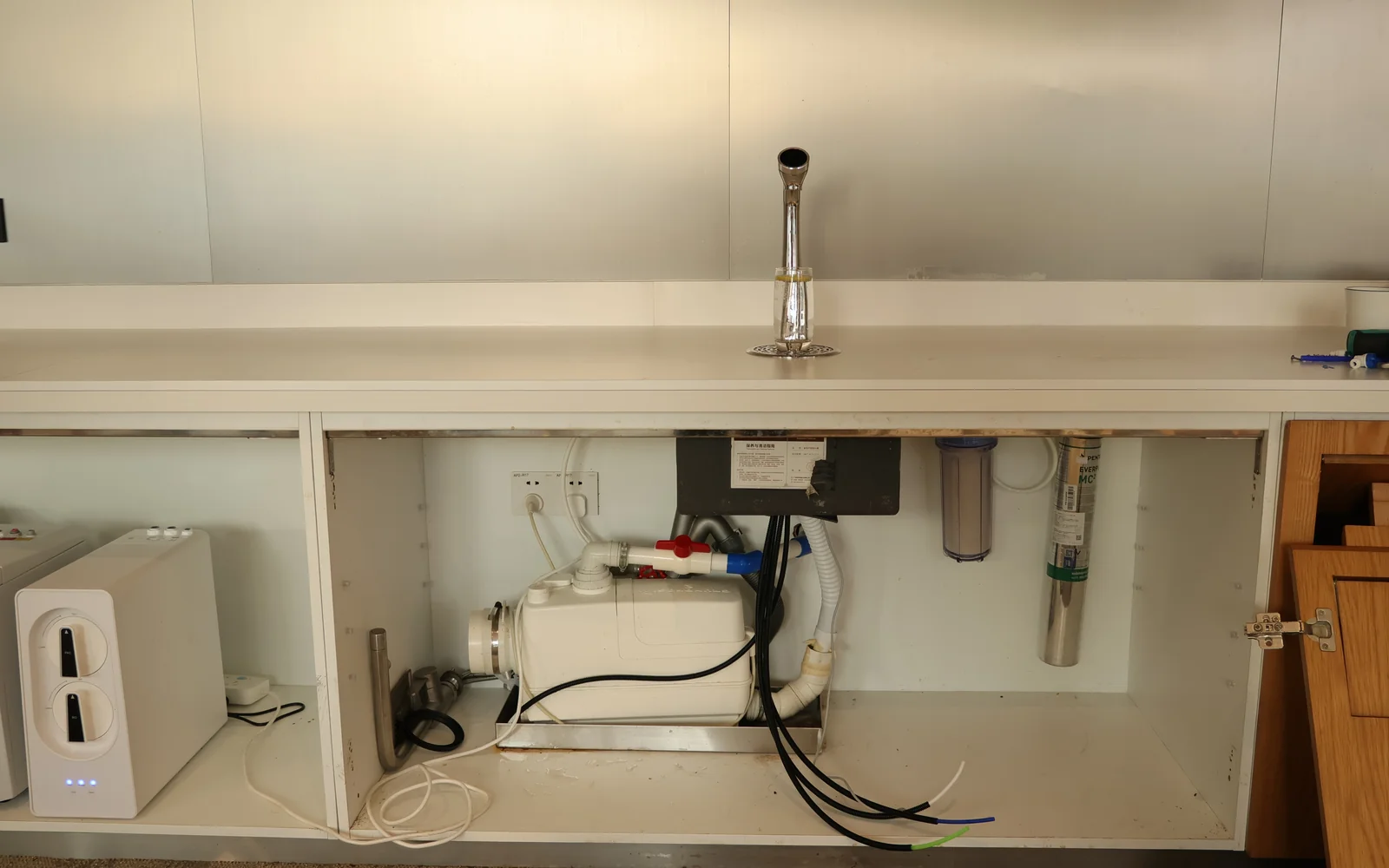
Keep the source report, sampling point, part numbers and date of acceptance together. Add the selected outlet, tested conditions, measured flow, the replacement trigger and the person who will keep a spare. Check that a technician can reach the housing and drain connection without moving unrelated equipment.[1][15]
After a cartridge or supply change, use the manufacturer's commissioning procedure and repeat the checks that depend on the change. Record which water result and which service flow were accepted. The next operator can then see whether the original choice is still working under the same conditions.[1][15]
Record inlet conditions and consecutive service in the pilot.
What to Keep in the Site Record
- Concern and Outlet
- The problem to address, sampling point and outlet to be served.
- Configuration
- System and cartridge references, claim evidence and operating limits.
- Service and Review
- Accepted flow, relevant water results, replacement criteria and change history.
If you are comparing treatment options for a drinks counter, use those records to review the water requirements for your site.
References
- CDC — About Choosing Home Water Filters
- CDC — About Home Water Treatment Systems
- Health Canada — Buying a drinking water treatment device, NSF/ANSI performance standards
- NSF official listings — NSF/ANSI 53 lead reduction example, model and replacement
- EPA (2024) — Consumer Tool for Identifying Point-of-Use and Pitcher Filters Certified to Reduce Lead in Drinking Water
- Bosscher et al. (2019) — POU water filters effectively reduce lead in drinking water: a demonstration field study in Flint, Michigan. DOI: 10.1080/10934529.2019.1611141; EPA research record
- EPA WaterSense (November 2024) — Guide to Selecting Water Treatment Systems, Figure 1 and Table 2
- EPA WaterSense — Point-of-Use Reverse Osmosis Systems
- NSF official listings — NSF/ANSI 42 examples of separate chloramine, chlorine and particle claims
- U.S. EPA, Consumer Confidence Reports
- Drinking Water Inspectorate, Domestic Water Filters and Softeners
- U.S. Geological Survey, Hardness of Water
- Bestware G1DS-123 Technical Data
- Bestware G1DS-1023 Technical Data
- Bestware — G1DS-123 and G1DS-1023 Installation Manual V1.2; PDF pages 13–14, printed pages 22–24
- U.S. CDC, Drinking Water Advisories: An Overview
Continue With These Decisions
- Does a Point-of-Use Water Filter Need NSF 61?
Match the filter, replacement cartridge and claim in the issuer's record.
- How to Check Inlet Pressure and Flow for a Water Dispenser
Measure the inlet while the shared branch is serving both loads.