Start With the Mineral Number
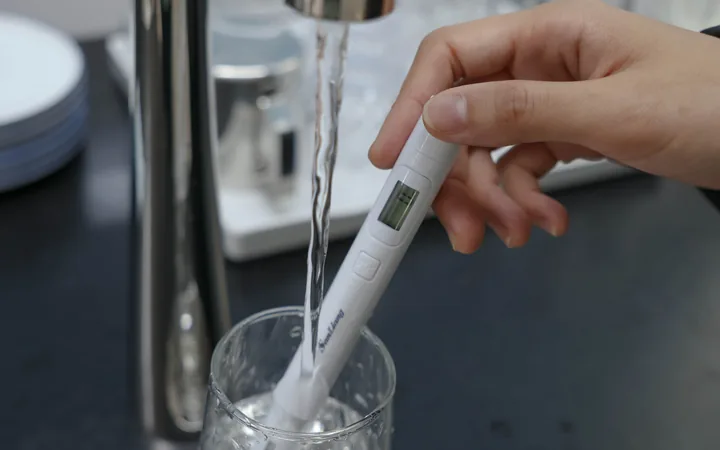
For a water softener quote, start with total hardness at the equipment feed. Hardness mostly reflects dissolved calcium and magnesium. The notation mg/L as CaCO₃ expresses the combined hardness on a common reporting basis. The same report may list calcium on its own, or total dissolved solids, which also include constituents such as sodium and chloride. Ask which number the quote is using before comparing two pieces of equipment.
On a conventional sodium-cycle softener, the resin exchanges sodium for calcium and magnesium. To size it, bring the measured feed hardness, the outlet requirement and the expected water use. Keep a separate test if you also need to verify alkalinity. A hardness reading only verifies the hardness part of that job.
Read Alkalinity as a Measure of Buffering
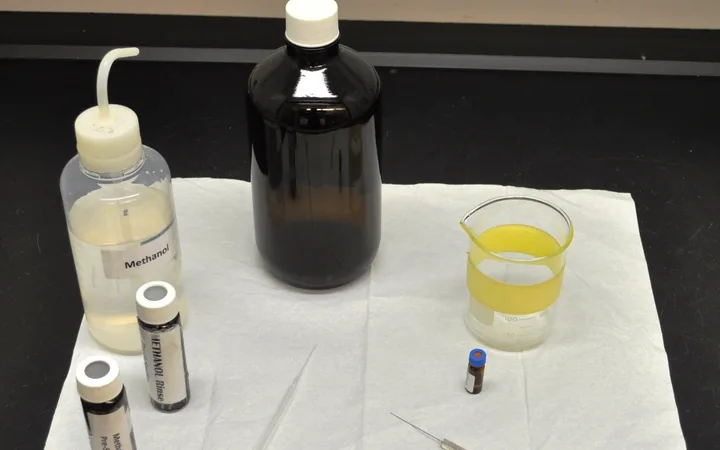
Alkalinity tells you how much acid a sample can neutralize. In many waters, bicarbonate accounts for much of it. The lab can add acid in measured amounts and track the response. The pH measured at the beginning and the amount of acid used tell you different things. Two samples that start at much the same pH can take different amounts of acid to reach the same endpoint.
The phrase ‘as CaCO₃’ can appear on this line too. Keep the test name with the number when you copy it into a supplier brief. Record separate requirements for the hardness and the alkalinity if your process calls for both.
Read Two Columns From an Actual Water Plant
A Greater Cincinnati Water Works report makes the distinction easy to see. Its Richard Miller plant recorded FY2024 averages of 124 mg/L total hardness and 73 mg/L total alkalinity in raw water. The treated-water averages were 127 and 80 mg/L. All four use the same CaCO₃ reporting basis. Meanwhile, the reported average pH values were 7.8 and 8.8.
Look at the column heading before copying those numbers. The report summarizes a plant from July 2023 through June 2024. It gives separate raw- and treated-water averages and ranges. A change in the pH column does not tell you what happened to hardness or alkalinity. For a restaurant, use those averages as background and ask for readings at the actual equipment feed.
Write Down Which Water You Measured
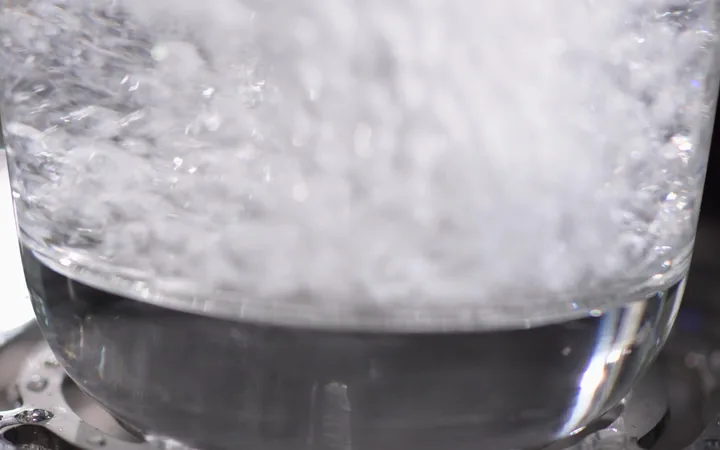
pH records the acidity or basicity of the sample when measured. It is logarithmic and is entered separately from results in mg/L. For a meaningful comparison, agree on a pH method and record the sample temperature. A glass left open on the counter can exchange CO₂ with the air, which can change its pH. The time after pouring matters if you plan to compare two glasses of sparkling water.
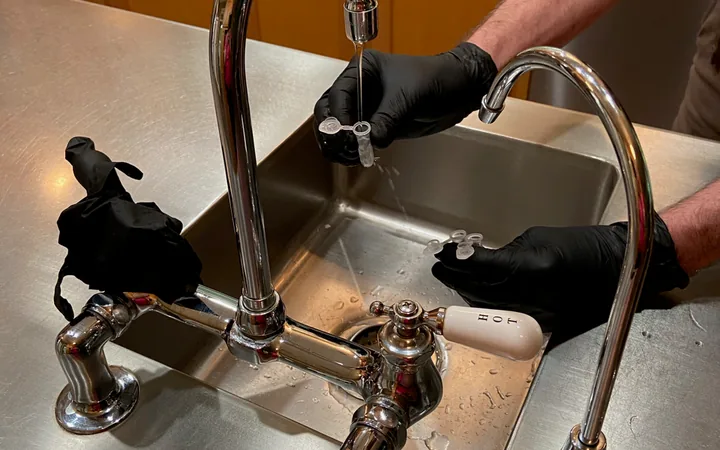
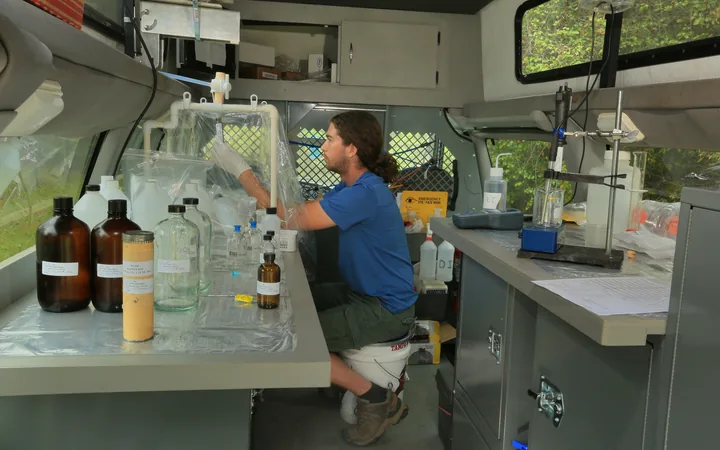
Keep a feed-water check and a beverage check on separate lines. You may need feed-water values to review equipment specifications and a water sample at the counter to investigate what guests receive. Mark that sample as incoming, treated still or finished sparkling, with the time, temperature and handling.
Give the Installer Two Identifiable Sample Points
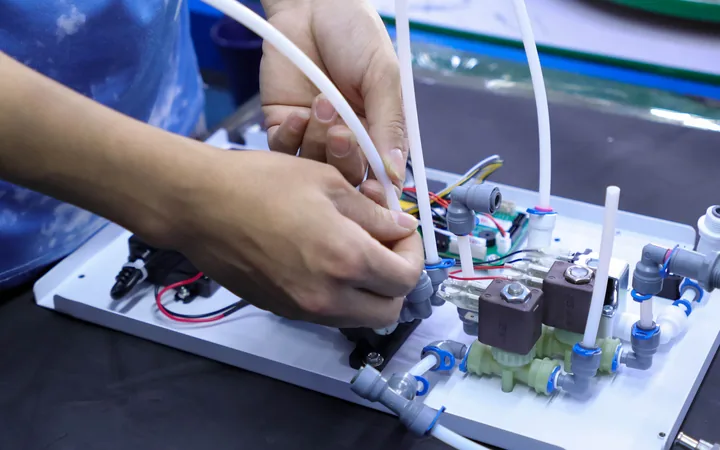
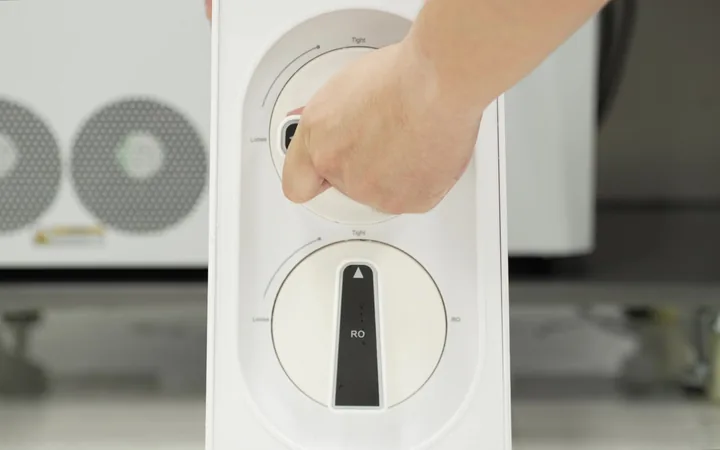
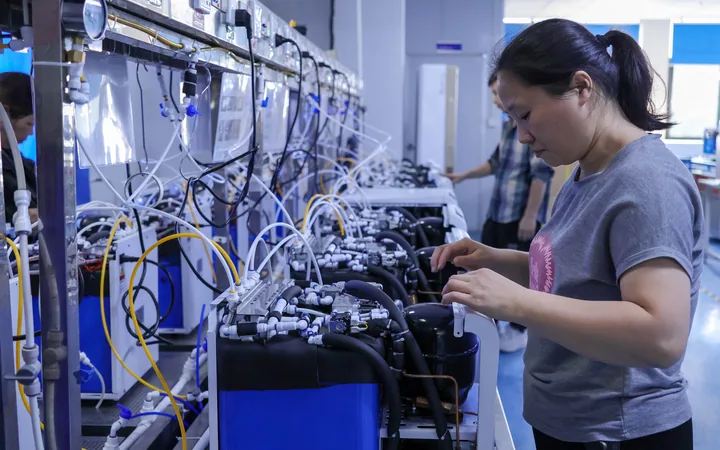
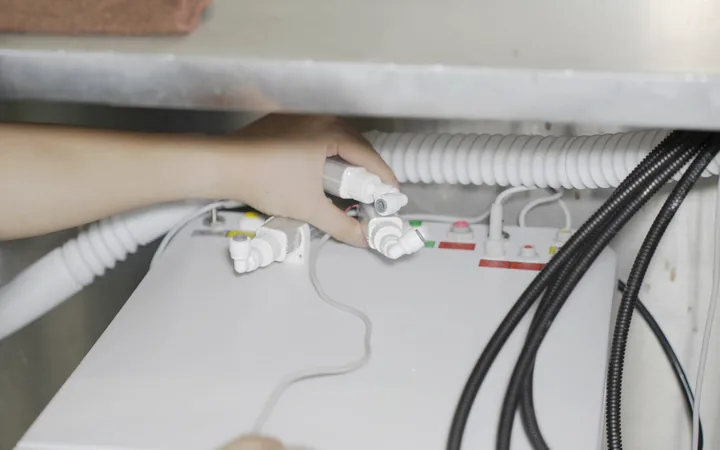
On a counter installation with a treatment stage, start by marking the feed and the treated still-water path on the connection drawing. For example, the diagram for the reverse-osmosis configuration in the Bestware G1DS-123 / G1DS-1023 V1.2 manual separately identifies the RO unit and the dispenser. Have the installer identify approved, accessible sample points on the actual system. The drawing alone gives you no measured water quality for that site.
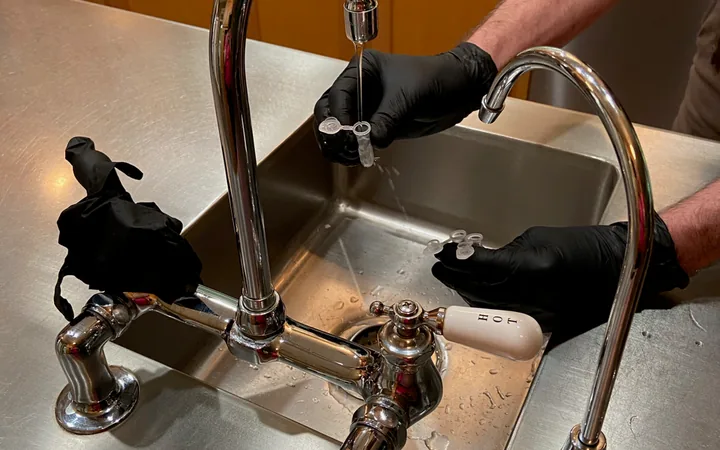
For a purchasing or handover check, label the two samples by point and treatment state, and put the test name, result and unit on the same line. If the system was on bypass, write that beside the sample name. Send the results and the current equipment water requirements together. A city average is useful for context when those checks are still being arranged.
Sources for This Edition
- Greater Cincinnati Water Works · Miller Plant Water Quality FY2024 · PDF p. 1, Table 5, FY2024 Average column, Raw Water and Treated Water. July 2023–June 2024. Total hardness 124 and 127 mg/L as CaCO₃, total alkalinity 73 and 80 mg/L as CaCO₃, pH 7.8 and 8.8. Separate annual summaries at one plant.
- U.S. Geological Survey · Water-Quality Parameters · Alkalinity, Dissolved Solids, Hardness and pH entries. Calcium and magnesium dominate hardness, while total dissolved solids cover a wider set of constituents. Both hardness and alkalinity can be reported as CaCO₃ equivalents.
- U.S. Geological Survey · Alkalinity and Acid Neutralizing Capacity · Version 4.0, printed pp. 3–4, definitions and initial discussion. Defines alkalinity by acid-neutralizing capacity, commonly dominated by bicarbonate and carbonate in water. The national field method determines it by acid titration.
- U.S. Geological Survey · Measurement of pH · Techniques and Methods 9–A6.4, §§1.1 and 5.1, and §7 Reporting. Hydrogen-ion activity is measured on a logarithmic scale. Temperature and dissolved gas affect sample conditions. Record temperature and measure at the field site or promptly after sampling under this field protocol.
- U.S. Environmental Protection Agency · WaterSense at Work, Water Purification · Section 7.1, printed p. 4, Water Softening. Exchange of calcium and magnesium for sodium ions; incoming hardness, water use and removal capacity matter for regeneration planning.
- Bestware · G1DS-123 / G1DS-1023 Installation Manual, 2026 V1.2 · PDF p. 14, printed p. 24, Connection Diagram, configuration with RO. The drawing shows the RO filtration unit and the water path to dispensing equipment. It supplies no site chemistry or approved sample locations.
- Bestware Editorial · Example Sampling Request for a Beverage Counter · Illustrative selection and acceptance plan. Identify secured and authorized points for incoming water and treated still water. If checking the finished beverage separately, document pour age, temperature and gas state. Test parameters and sample handling are agreed with the equipment supplier and laboratory.
- Bestware Wiki · Size a Commercial Water Softener · Use the measured feed hardness, required outlet and demand to check equipment capacity.
- Bestware Wiki · Plan a Water Treatment Bypass and Service · Identify which outlet receives treated water in ordinary service and how a service bypass changes the route.
Continue With These Decisions
- How to Size a Commercial Water Softener
Use the measured hardness to size a commercial softener
- How to Plan a Water Treatment Bypass for Maintenance
Map the normal treated-water route and the service bypass