Follow the Water to Where It Is Used
Use separate acceptance checks for the espresso machine, the tea station and the ice maker. At espresso, start with the water entering the machine. At tea, take the temperature where the leaves meet the water. For ice, check the feed while the machine fills, then follow the ice through the bin and scoop. These points can share a potable supply if each meets its own requirements under normal service.
Write the measurement and its location together. Hardness describes mainly calcium and magnesium. Alkalinity measures the water’s ability to neutralize acid. A TDS reading does not tell you either value independently. If you sample at the treatment outlet as well as at the equipment, keep separate labels for the two bottles.[1][2]
| Use | Main Question | What Is Not Enough |
|---|---|---|
| Coffee | Does this water produce the intended cup while meeting the brewer’s water requirements? | A hardness result alone, without alkalinity or a controlled brew comparison. |
| Tea | How does the water affect this tea’s taste, color and clarity under the chosen brewing conditions? | A clearer infusion or a higher measured catechin concentration alone. |
| Ice | Are the source water, machine, bin and handling suitable for ice that will enter a drink? | Clear cubes, a pleasant taste or a low TDS reading alone. |
This is a map for an acceptance visit. Put the actual equipment limits and drink recipes on your own worksheet.[3][4][7]
Pull Two Samples Before the First Shot
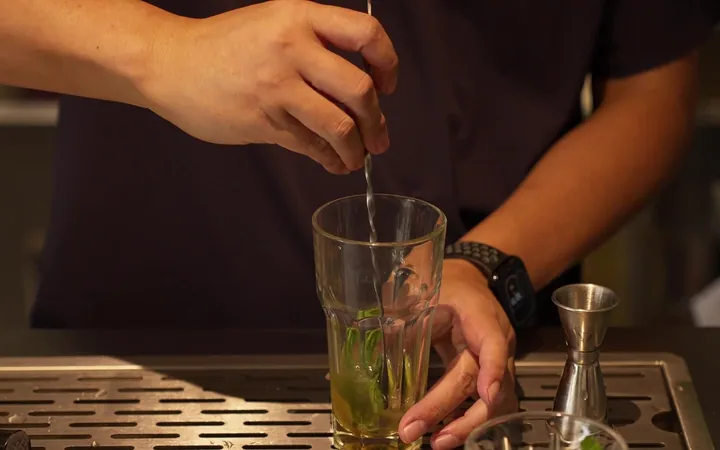
Take one sample from the incoming supply and the other from the treated feed to the espresso machine. Look up the maker’s test basis before comparing the numbers. For example, the La Marzocco GB5 V1.1 manual specifies feed hardness above 70 and below 100 ppm, pH 6.5–8.5 and chloride below 30 mg/L in the Water supply connection section (PDF page 15). Chloride is a separate measurement from the disinfectant chlorine.
Say the treated feed in a café handover reads 52 ppm hardness as calcium carbonate. On the same basis, that falls below the GB5 manual’s lower bound. Record the actual reading, have the installer confirm the method and check pH and chloride separately before signing off the setup. A balanced espresso would still leave the inlet specification unresolved.
For a cup comparison, keep beans, dose, grind and recipe fixed long enough to see what changing the water does. Record that result in the coffee recipe sheet, separate from the installer’s feed-water record.
Check Tea Water Where You Brew
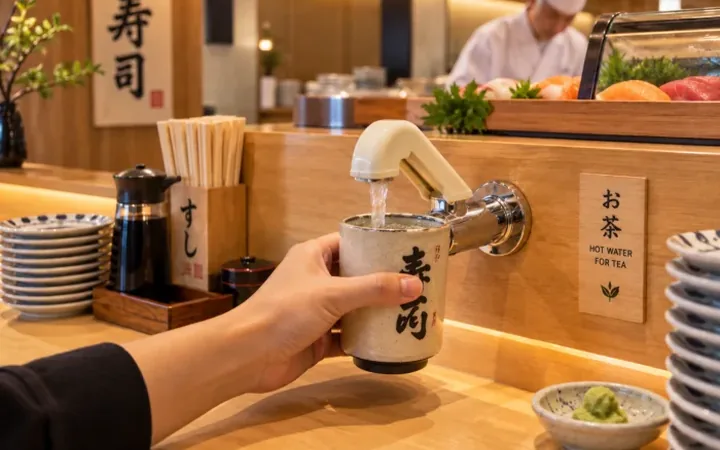
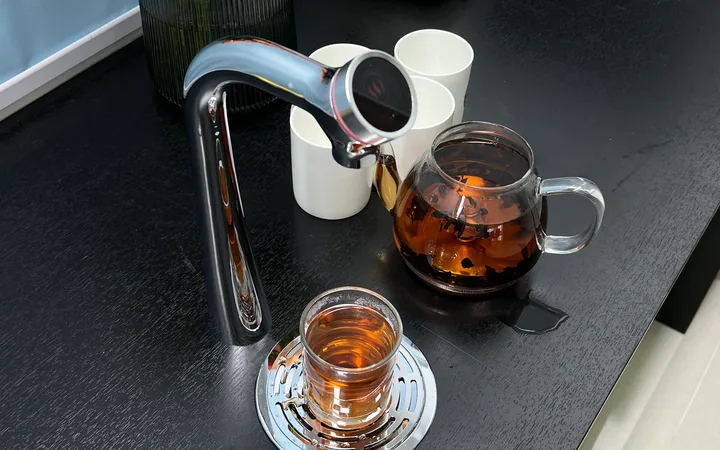
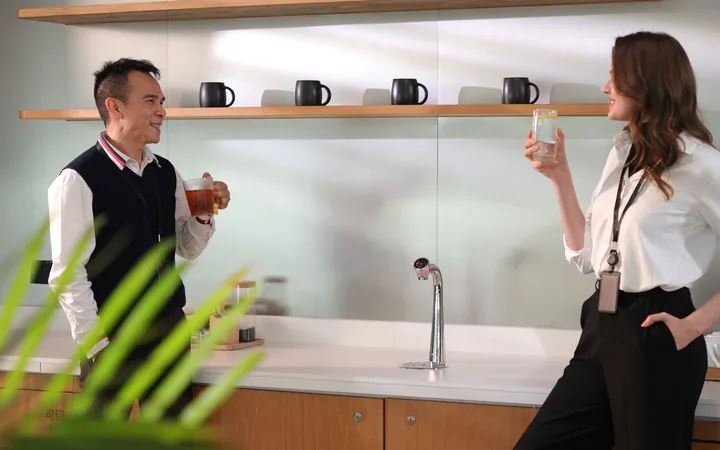
At the same hypothetical café, the hot-water outlet is set to 80°C. The barista reads 77°C at the point of brewing, immediately before adding the leaves. The G1DS-1023 hot-water settings list an adjustable range of 45–98°C. That is a manufacturer’s setting range. The 77°C in this example is a hypothetical measurement at the vessel.[9]
Before comparing two waters, bring them to the same measured brewing temperature. Use the same tea, vessel, leaf dose, water volume and steep time. In the small-batch preparation used by Franks and colleagues, 2.5 g of green tea steeped in 125 mL at 80°C for three minutes. For tasting they used 10 g in 500 mL at the same temperature. Their waters had different calcium and magnesium levels, shown below.[4]
| Mineral, mg/L | Study Tap Water | Study Bottled Water |
|---|---|---|
| Calcium | 53.6 | 8.0 |
| Magnesium | 9.46 | 1.37 |
Source: Franks et al., Table 1. Values are concentrations of the individual minerals, not total hardness expressed as CaCO₃. All bars use the same 0–60 mg/L scale.[4]
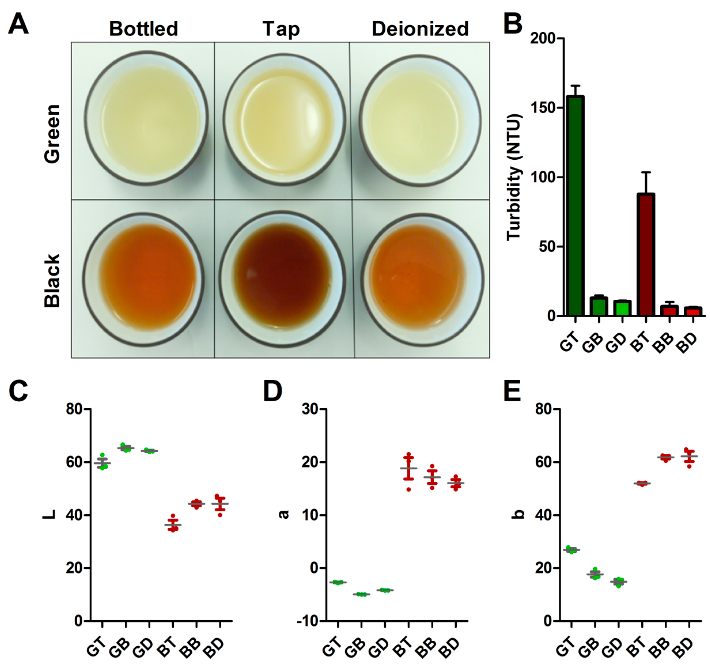
Figure 1 from the 2019 study: tea appearance (A), turbidity (B), and color measurements L, a and b (C–E). The pictured infusions were study samples, not Bestware tests.
G = green tea; B = black tea. The second letter identifies tap (T), bottled (B) or deionized (D) water. In panel A, the columns follow bottled, tap and deionized water from left to right.
Reproduced unchanged from Franks et al. (2019), Figure 1, under CC BY 4.0.[4]
In that study, the green tea brewed with bottled or deionized water yielded more EGCG than the sample brewed with the study’s tap water. The panel found the tap-water green tea less bitter than both of the others and liked it better overall than the one brewed with bottled water. Cabrera and colleagues separately observed more browning and oxidation of some catechins under alkaline conditions in their synthetic-water experiments. These results give you reasons to record color and taste separately.[4][5]
For a café menu, serve the two samples at the same temperature and use separate notes for bitterness, astringency and appearance. Write down the water and recipe you would actually serve. That gives the next shift a comparison it can repeat.
Watch the Gauge During an Ice Fill
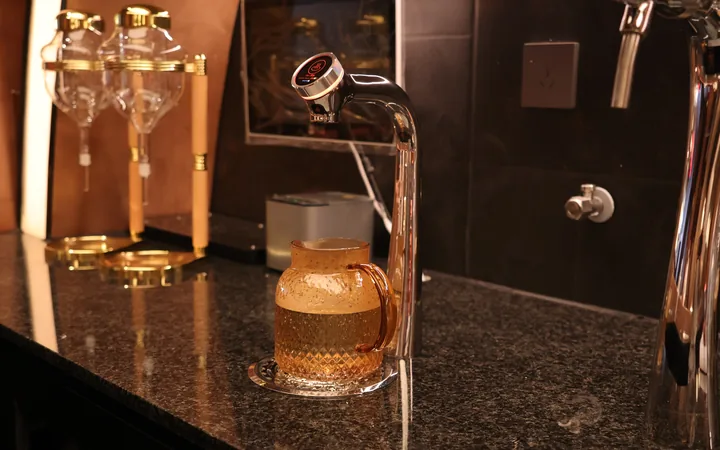
In the same handover example, a Scotsman C0322 E-series ice maker reads 30 psi while the machine is idle and the other outlets are closed. During a refill while drinks are being made, the inlet reads 16 psi. The E-series manual specifies 20–80 psi under Environmental Limitations (printed page 2). Have the installer repeat the busy-service check and compare pressure before and after the treatment or supply restriction. Preserve both readings in the handover record.
Finish at the scoop your staff actually use. Ice made on site falls under the establishment’s applicable food rules. In the US, the FDA Food Code is a model for those rules. The FDA’s separate guidance for packaged ice deals with a different route to the customer. The Canadian Food Inspection Agency also treats water source, handling and storage as separate points to control.[10][6][7]
- Feed
Confirm the machine receives water suitable for this food use. Write down inlet pressure during the fill and which other outlets were drawing.
- Machine and Bin
Check the maker’s cleaning instructions. Include the storage bin and enclosed parts the ice touches, and record who does the work.
- Service
See how a batch is collected on shift. Check the normal bin and clean, dedicated scoop separately from the machine reading.
Decide Which Treatment Can Be Shared
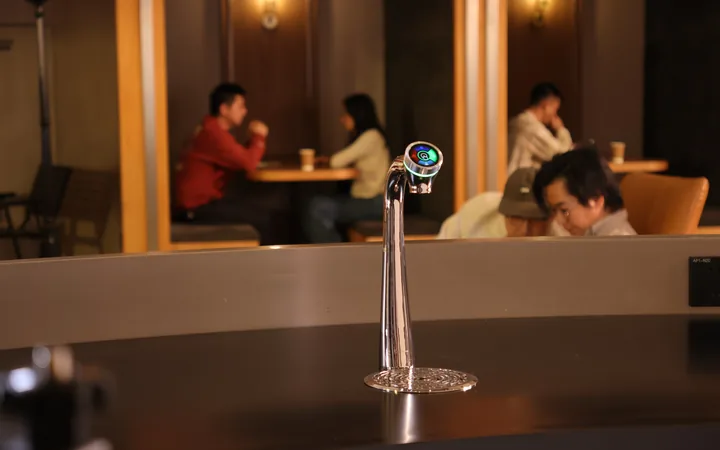
Put the three records on one sheet with a line for the source, treatment outlet, equipment inlet or point of use. The espresso reading needs a feed-water investigation. The tea reading needs a recipe trial at a matched temperature. The ice reading calls for a repeat pressure check during service.
Keep shared treatment where it meets the selected equipment limits, your drink targets and peak flow. Specify local treatment where one branch needs something different. Use the water-equipment pilot acceptance checklist to note who retests after a cartridge, recipe or equipment change.[8]
- Before Installation
Put the exact model and manual revision next to each inlet limit. Identify the tap or gauge the installer will use.
- On a Service Trial
Record the coffee feed results, the brewed tea recipe and the ice refill conditions on separate lines.
- Before Sign-Off
Assign any open item to the installer, bar lead or sanitation lead. Write which observation or number closes it.
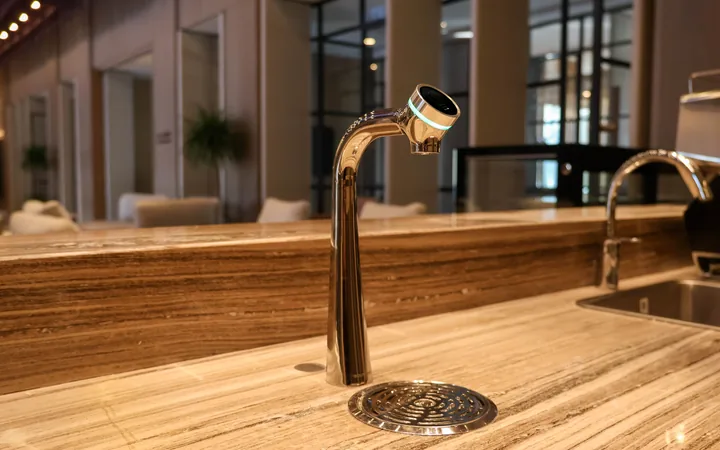
If you are planning a café, restaurant or shared drinks counter, use these outlet details to prepare a water-treatment brief for your project.
References
- USGS — Hardness of Water
- USGS — Alkalinity and Water
- Rune et al. (2026) — Impact of Water Composition on Coffee Sensory Properties: A Comprehensive Analysis. Journal of Food Science, 91, e71434
- Franks et al. (2019) — The Influence of Water Composition on Flavor and Nutrient Extraction in Green and Black Tea. Nutrients, 11(1), 80
- Cabrera et al. (2021) — Effect of Water Hardness on Catechin and Caffeine Content in Green Tea Infusions. Molecules, 26(12), 3485
- FDA — FDA Regulates the Safety of Packaged Ice
- Canadian Food Inspection Agency — Ice used in the preparation of food
- CDC — About Home Water Treatment Systems
- Bestware · G1DS-1023 model specifications, heating unit
- FDA · 2022 Food Code, §§3-202.16 and 4-602.11(E)(4)
Continue With These Decisions
- G1DS-1023
Check the published hot-water setting and measure the temperature at the vessel used on site.
- How to Test a Commercial Water Dispenser Before You Accept It
Check the method and what to record.