Write the Order for the Fruit You Need
If a replacement arrives marked “strawberry,” read past the fruit name before it reaches the bar. Whole fruit has to be prepared. A purée may arrive ready to use or concentrated for reconstitution. A juice or syrup can bring a different amount of water, sweetness and pulp to the same recipe. The order should say which form you want, whether it has added sweeteners or acid, and whether it needs to be seedless.
The USDA aseptic fruit purée purchasing specification is a useful example of how precise an order can be. Its strawberry row lists a minimum of 7.5 °Brix for single-strength purée and 28 ± 0.5 °Brix for concentrated purée when those contract defaults apply. It also lets the order distinguish sweetener, acidification and seeds. Keep the supplier’s product code, lot information and storage instructions beside the ingredient name.
Keep the Acidity Number Beside the Brix
In a 2011 cultivar study, researchers reported 8.22 °Brix for Sweet Bliss strawberry purée and 7.88 °Brix for Pinnacle. The titratable acidity measured in those purées was 11.63 and 7.68 g/L respectively, both expressed as citric acid. The samples came from an Oregon trial. The two soluble-solids readings are close, while the acidity readings give a buyer another reason to taste both ingredients in the drink. The study gives no acceptance range for your deliveries.
Ask whether a supplier reports titratable acidity and on what basis. Record that separately from pH and Brix. Before agreeing to replace a fruit base, compare the same dose in the glass, then see how the fruit aroma, tartness and pulp come through at the time a guest would actually receive it.
Try the New Lot in the Glass You Serve
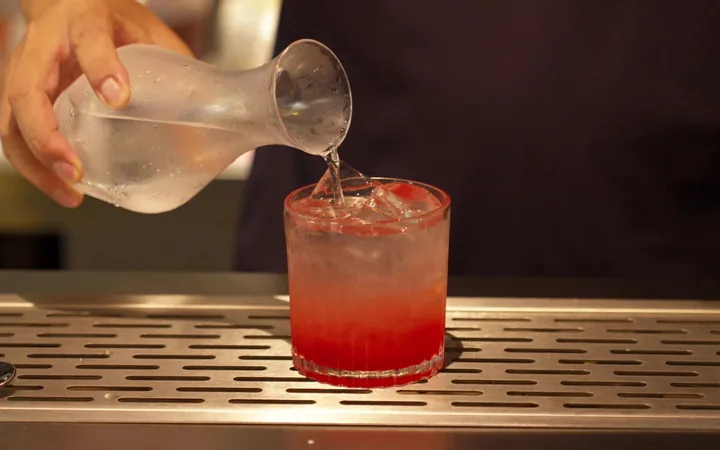
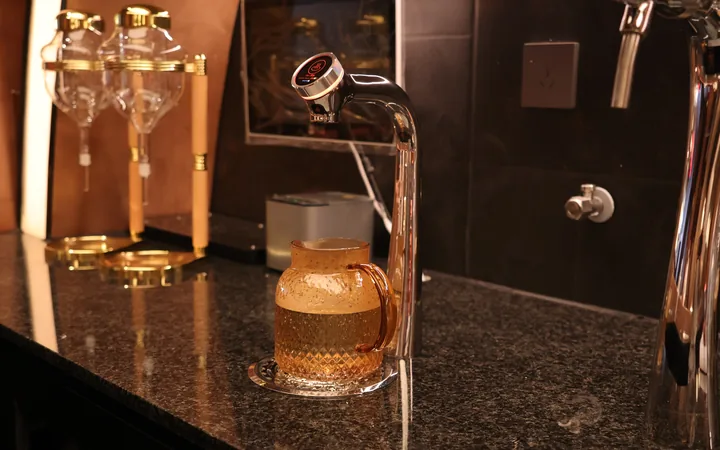
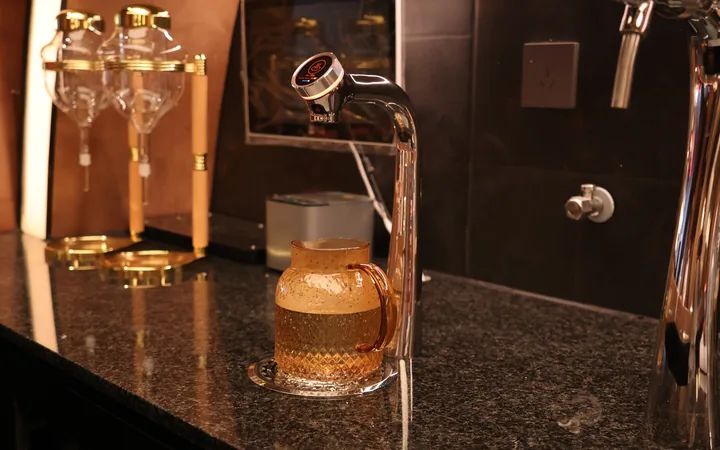
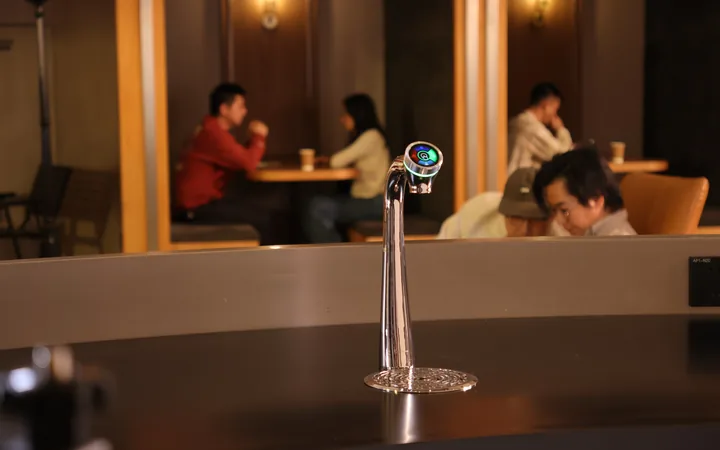
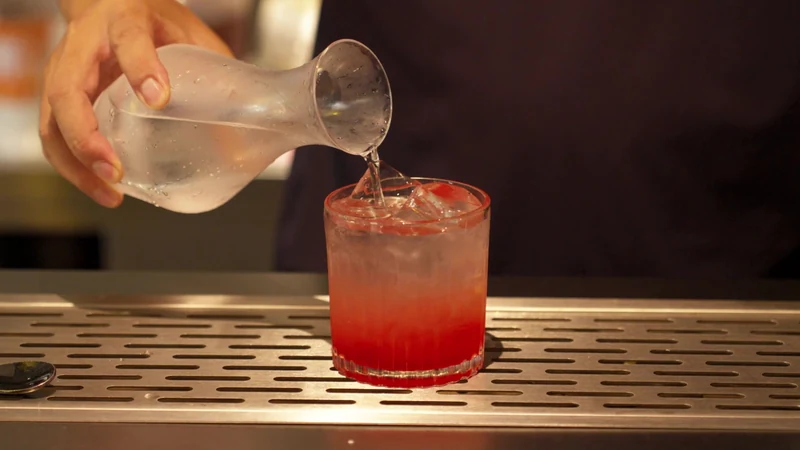
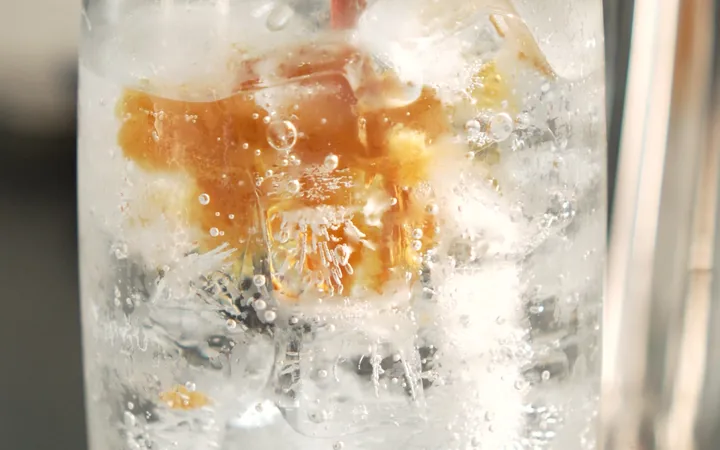
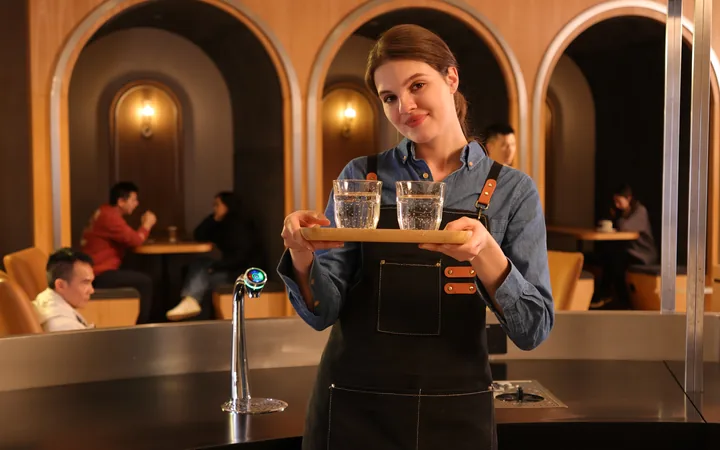
Use the current lot beside the proposed lot. For a sample run, suppose the drink uses 30 g of ready-to-use strawberry base and 150 g of plain sparkling water. Use the same glass size, ice amount and wait before tasting. If the bar already draws sparkling water from a Bestware G1DS-110, keep that water constant between tests and add it to the fruit base in the glass. If there is a concentrate in the comparison, prepare it to the supplier’s instructions before weighing the 30 g.
Look for changes your guests might notice by the time the drink reaches the table. Does the fruit still come through after the ice has started to melt? Does pulp collect at the bottom by the time the server reaches the table? If the fixed comparison is out of balance, change one part of the next trial and keep the amounts. Have another shift prepare it from those notes.
Count Whole Servings and Clear the Switch
Suppose two 1 kg packs each cost US$12. After normal prep, one leaves 900 g usable and the other 800 g. At 30 g per drink, those are 30 and 26 full fruit portions, or about US$0.40 and US$0.46 in fruit cost per serving if the remainder has no other use. Put the usable weight on the record before comparing pack prices. The calculation leaves out labor, water and the other ingredients.
Before the new lot goes into service, match its code, ingredient list, relevant allergen information and after-opening instructions to what the bar will use. In the US, FDA guidance treats an advisory label and controls for allergen cross-contact as distinct. If a supplier’s formula or allergen information changes, hold the substitution until the responsible person can check what needs to change in handling, the recipe and what staff tell guests. Note the first service shift that uses it.
Track the new ingredient, staff instructions and first service shift
Sources for This Edition
- USDA · A-A-20252B Aseptic Fruit Purées · Purchasing specification dated August 29, 2018. Sections 2.1, 3 and 6.3.1 list the purchase options and purée forms. Section 7.3.2, Table II, printed page 8, gives strawberry single-strength minimum 7.5 °Brix and concentrated 28 ± 0.5 °Brix, subject to the contract or order.
- Finn et al. · ‘Sweet Bliss’ Strawberry, HortScience 46(12), 2011 · Table 7, PDF page 4, printed page 1704. Purées from cultivars grown in Aurora, Oregon, 2001–2008. Sweet Bliss: 8.22 °Brix, 11.63 g/L titratable acidity as citric acid. Pinnacle: 7.88 °Brix, 7.68 g/L on the same basis.
- US FDA · Questions and Answers Regarding Food Allergen Labeling, Edition 5 · January 2025 final industry guidance, questions D.12 and D.15 on advisory statements and controlling allergen cross-contact. Scope the relevant labeling and handling requirements to the product and selling market.
- Bestware · G1DS-110 and G1DS-1010 Manual, 2026 V1.1 · Cover identifies both models. PDF page 3, printed page 01, shows the sparkling-water mode. PDF page 13, printed page 22, shows Water In and CO₂ In in the connection drawing.
- Worked Example · Two Fruit Lots and Usable Servings · Hypothetical same-glass trial: 30 g of each ready-to-use base and 150 g of plain sparkling water. Hypothetical equal US$12, 1 kg packs yield 900 g and 800 g usable fruit base after prep. At 30 g each, that is 30 and 26 full servings, about US$0.40 and US$0.46 per serving in fruit cost.
- Bestware Wiki · Making a Consistent Nonalcoholic Sparkling Drink · Run a reference glass and carry its proportions and serving delay to the next shift.
- Bestware Wiki · Beverage Ingredient Changes · Track a replacement’s label, recipe, first use and the staff responsible for updating the shift.
Continue With These Decisions
- How to Make the Same Alcohol-Free Sparkling Drink Each Shift
Set up a reference glass the next shift can repeat
- How to Approve a Beverage Ingredient Substitute
Track the new ingredient, staff instructions and first service shift