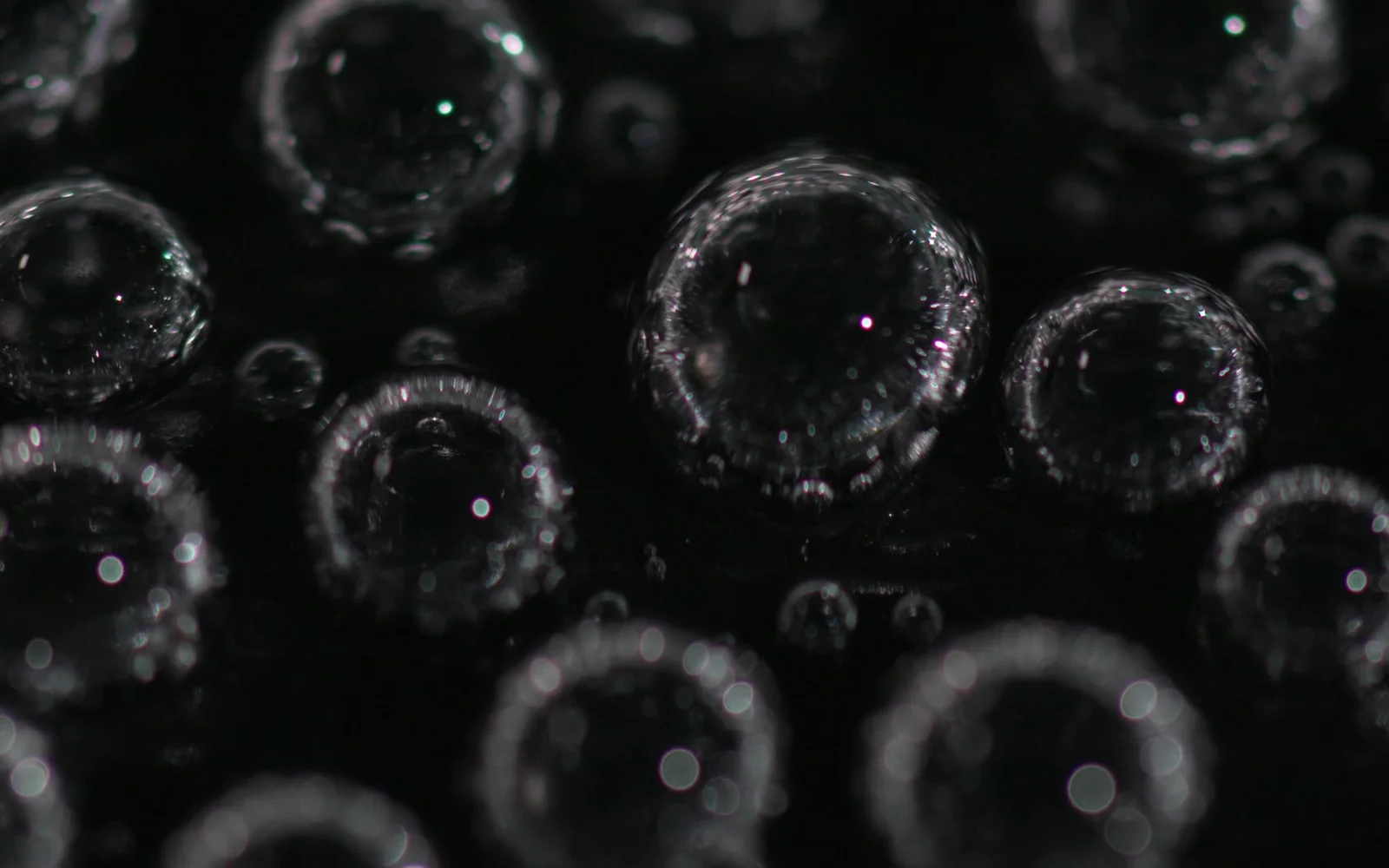
Watch Where the Bubbles Start
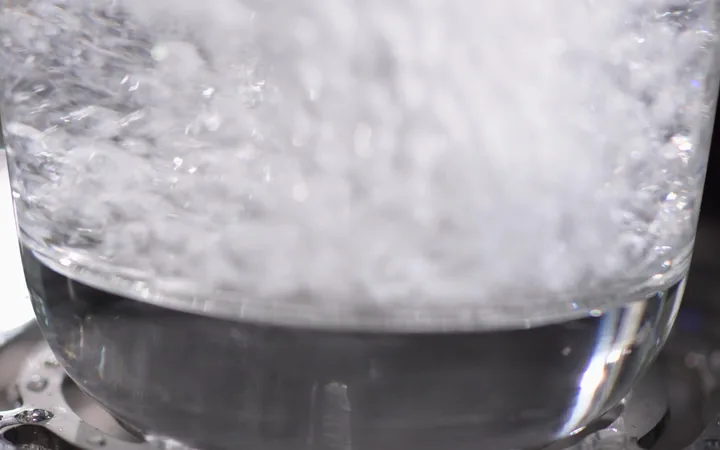
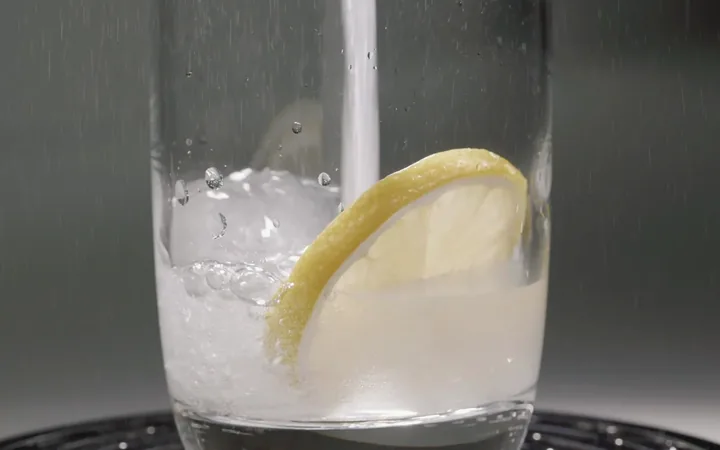
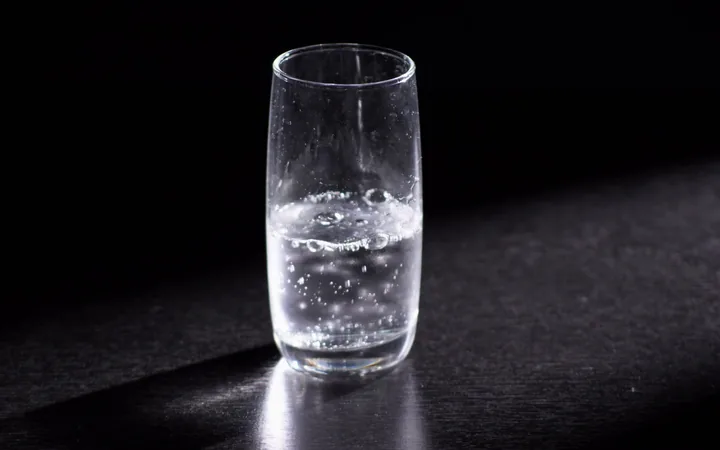
Look at the base of a glass a few seconds after you pour sparkling water. If several bubbles start from the same pinprick, you are probably seeing a spot that can hold a tiny pocket of gas. Dissolved carbon dioxide moves from the water into that pocket. The bubble grows until it breaks free, and gas left in the pocket can start another one. That is why a whole trail can lead back to one point.
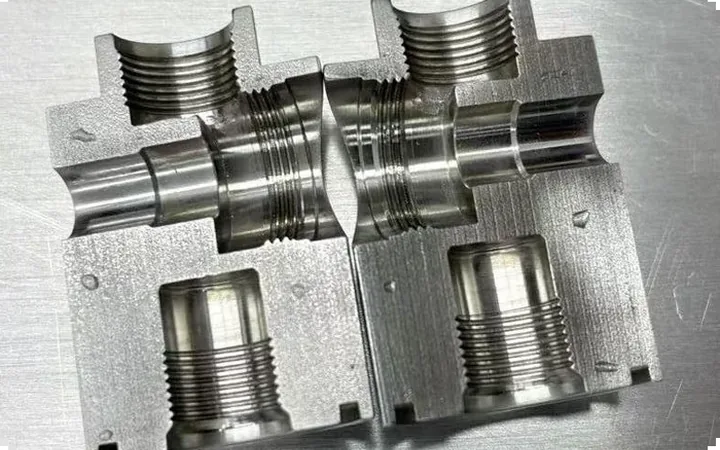
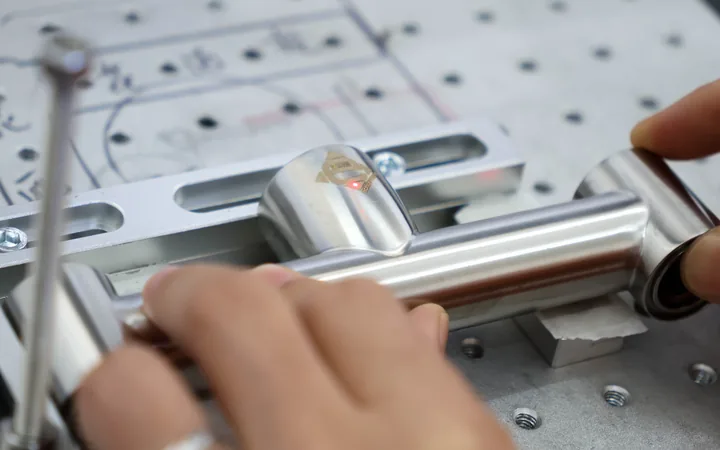
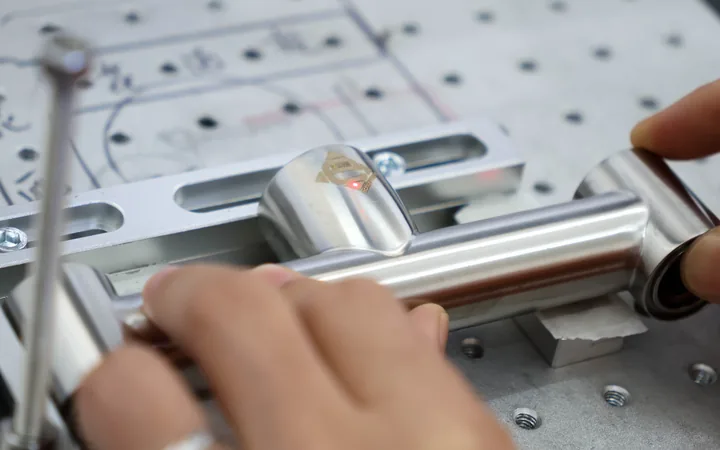
Scientists call this heterogeneous nucleation. In a 2002 close-up of Champagne, Gérard Liger-Belair and Philippe Jeandet photographed a particle on the glass wall with the trapped gas visible inside it. Hollow fibers were common at the sites they examined. A later paper puts two images side by side. One shows grooves cut by a glassmaker’s laser, and the other shows a particle carrying its own little pocket of gas. Both can provide a starting point.
An incidental scratch can become an active spot if its shape and how well water wets it let it hold gas. The grooves in the photo were deliberately cut to do that.
Let the Cloud From Pouring Clear
A pale cloud can fill a glass during the pour and vanish, leaving a few streams at the wall. Researchers timed that cloud in three bottled sparkling mineral waters. In their upright flutes at a room temperature of about 20 °C, its mean lifetime after the pour was 0.95 seconds for the most carbonated water and 2.57 seconds for the least carbonated one. Those times describe the cloud in that test. The trails at the wall were a separate observation.
There is also gas transfer at the exposed surface. A quiet-looking glass can still contain dissolved CO₂, and a busy one can be losing it quickly. In a separate experiment with laser-etched Champagne glasses, dissolved CO₂ fell faster after pouring in the glasses with more active bubbling. That finding belongs to the wine and glass set they tested. For a water comparison, the practical lesson is to note when and where you looked.
Put Two Glasses Side by Side
For a short counter trial, take two clean, intact glasses of the same shape and volume. If the supplier offers one with a factory-etched base and one without, use that pair. Take a bottle of plain sparkling water and put 200 mL in each glass, using the same angle and pouring speed. Bring both glasses to the same temperature first, and leave them side by side under the same light. Give each glass its own timer from the end of the pour.
At 15 and 60 seconds, mark the spots at the base or wall that send up more than one bubble. It takes less guesswork to use a fixed phone shot than to remember which glass looked livelier. Repeat with a second sealed bottle from the same batch at the same starting temperature, reversing which glass gets filled first. If the glasses differ in shape, include both model names in the notes. The trial will compare each glass as supplied.
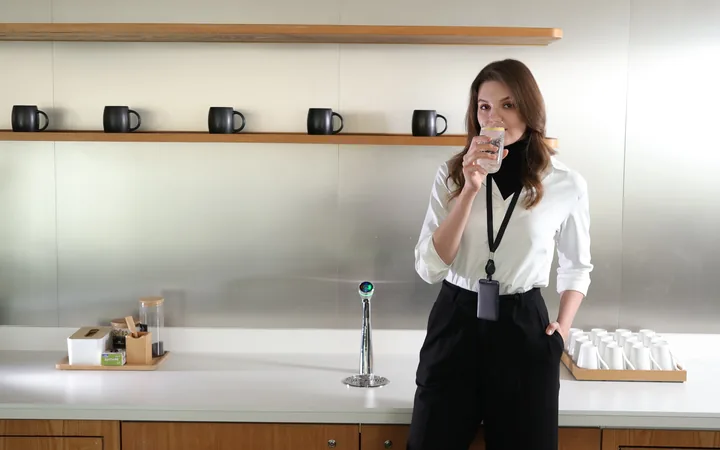
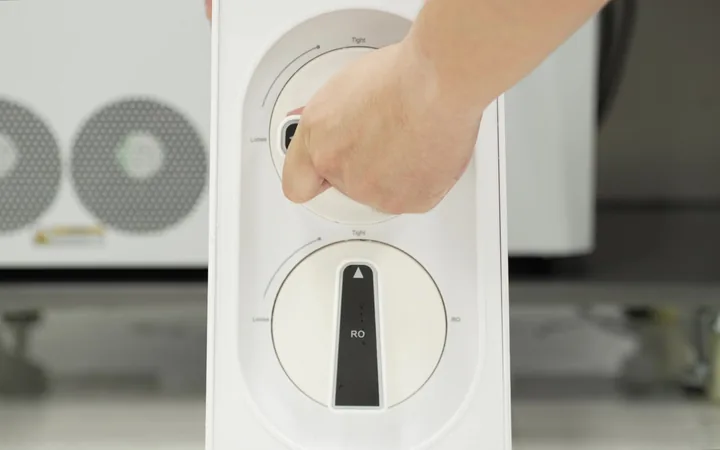
In a venue with a Bestware G1DS-110, you can do the same comparison using one unit in sparkling-water mode. Empty and prepare both glasses again for the second round, then reverse the order. If a trail keeps appearing over the etched area in the same glass, you have an observation you can use when choosing how to present the drink in those glasses. Keep both glasses clean and use them with the surface as supplied.
Find the Starting Point Before Studying the Trail
Bubbles can leave one spot and fan out on their way up. A 2023 fluid-mechanics study varied bubble size and surface chemistry separately and found that both can change how closely the bubbles follow one another. For the counter trial, write down “same origin, scattered above” if that is what you see. A straight line is a different question from a repeatable point of origin.
It also helps to keep a second note for what you taste at the same interval. Beer foam, a line of bubbles and the prickling of plain sparkling water give you different observations. Give each its own field in a drink check when it applies.
See what the dispenser does before the water reaches the glass
Use a CO₂ Measurement for an Equipment Decision
If a customer says that two outlets taste different, start with matched glasses and record the water temperature and time since serving. Use the glass trial to see whether the visible difference travels with the cup. When a purchase order sets a dissolved CO₂ target, collect the samples the same way and use the agreed measuring method. Keep the result with the serving conditions so another shift can repeat it.
Sources for This Edition
- Liger-Belair and Jeandet · Effervescence in a glass of champagne: A bubble story (2002) · Europhysics News 33(1), DOI 10.1051/epn:2002103. Figure 1 and Bubble nucleation, PDF pp. 1–2. A hollow particle and its trapped gas in a flute of commercial Champagne.
- Liger-Belair and Cilindre · How Many CO₂ Bubbles in a Glass of Beer? (2021) · ACS Omega 6(14), 9672–9679. PMCID PMC8047704, DOI 10.1021/acsomega.1c00256. Figure 4a, laser-etched microcrevices; Figure 4b, a particle containing a gas pocket in Champagne.
- Liger-Belair et al. · Bubble dynamics in various commercial sparkling bottled waters (2015) · Journal of Food Engineering 163, 60–70, DOI 10.1016/j.jfoodeng.2015.04.016. §§2.3, 3.1–3.2, Table 2 and Figs. 1 and 4. Pouring cloud, wall nucleation and gas transfer at the exposed surface.
- Gérard Liger-Belair · Carbon Dioxide in Bottled Carbonated Waters and Subsequent Bubble Nucleation under Standard Tasting Condition (2019) · J. Agric. Food Chem. 67(16), 4560–4567, DOI 10.1021/acs.jafc.9b00155. Abstract. Temperature and gas-pocket size and the threshold for bubble formation in three bottled waters.
- Liger-Belair et al. · Monitoring the losses of dissolved carbon dioxide from laser-etched champagne glasses (2013) · Food Research International 54(1), 516–522, DOI 10.1016/j.foodres.2013.07.048. Abstract, INAO tasting glasses with differing laser impact points and their progressive losses of dissolved CO₂.
- Atasi et al. · Presence of surfactants controls the stability of bubble chains in carbonated drinks · Author preprint arXiv:2211.02253 (2022), Introduction and Figure 2. Final publication in Physical Review Fluids 8, 053601 (2023), DOI 10.1103/PhysRevFluids.8.053601.
- Khaireh, Liger-Belair and Bonhommeau · Toward In Silico Prediction of CO₂ Diffusion in Champagne Wines (2021) · ACS Omega 6(17), 11231–11239, DOI 10.1021/acsomega.0c06275. Abstract, CO₂ diffusion and molecular simulations for Champagne and water/ethanol mixtures.
- Gonzalez Viejo et al. · Bubbles, Foam Formation, Stability and Consumer Perception of Carbonated Drinks: A Review of Current, New and Emerging Technologies for Rapid Assessment and Control (2019) · Foods 8(12), 596, DOI 10.3390/foods8120596, §§3–5. Review of bubble imaging, foam behavior and sensory assessment.
- Bestware editorial example · matched glasses and reversed pouring order · Suggested comparison. Two 200 mL pours per bottle, separate 15 s and 60 s observations, and a second matched bottle for the reverse order.
- Bestware · G1DS-110 / G1DS-1010 installation manual v1.1 · Physical PDF p. 3, sparkling-water mode. The model illustrates holding the outlet mode fixed.
- Bestware · Verifying dissolved CO₂ in a carbonation comparison · Taking samples in the same way and recording conditions and the instrument method.
- Bestware · How carbonation works in sparkling-water equipment · Water, equipment gas supply and the carbonation process before the pour.
Continue With These Decisions
- How a Four-in-One Dispenser Makes Sparkling Water
See what the dispenser does before the water reaches the glass
- How to Check the CO₂ in Sparkling Water Before You Sign Off
Read the sampling and dissolved CO₂ measurement guide