Read the Meter Over a Day
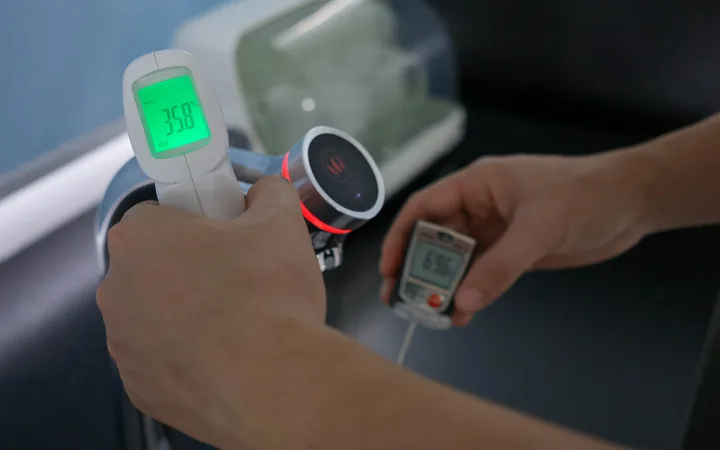
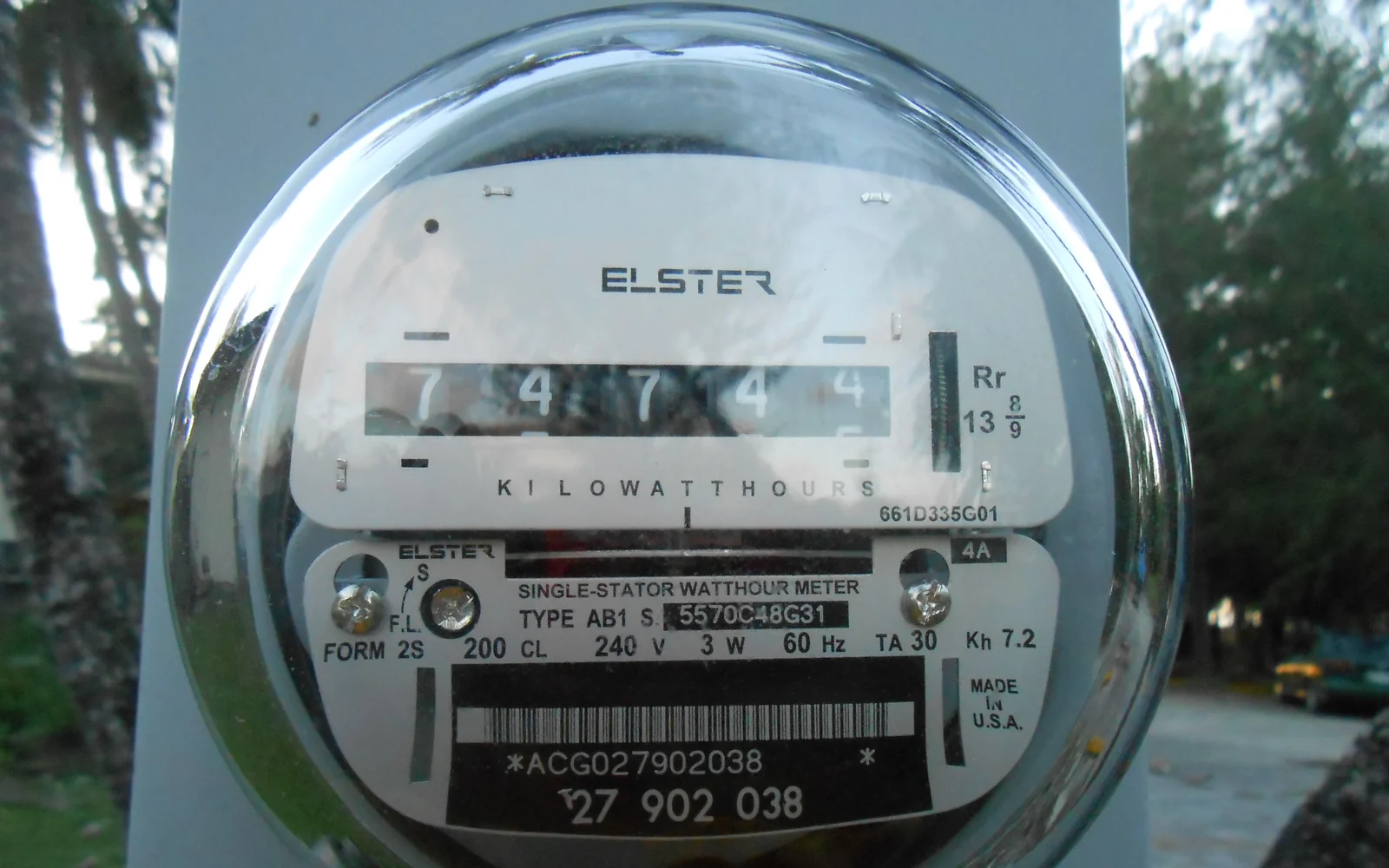
Take a starting kWh reading once the dispenser is at its normal serving temperatures. Watts tell you the electrical load at a moment, or the rated load printed on a specification sheet. A constant 2.1 kW draw for one hour would use 2.1 kWh. In daily service the equipment can cycle, so record the difference between the start and end readings on the energy meter.
Write down what the meter covers. Include the chiller, heater and any external pump or UV unit in use for this setup. For separate feeds, start and end the readings at the same times. Keep the voltage, inlet temperature, cabinet airflow and hot and cold settings on the sheet. Have the installer arrange the measurement if the unit is hardwired or its electrical rating exceeds the meter’s capacity.
Count Only the Liters You Could Serve
Start with a 24-hour window with the unit powered and no water drawn. Record the operating mode and the state of the heater and cooler at the start and end. Then measure a comparable 24-hour day with normal service and the same settings. During the rush, tally chilled still, sparkling, hot and ambient water separately. Note which pours met your temperature and carbonation targets. Keep the meter running after the last large draw until the unit recovers and mark the recovery interval. Record extra observation time separately if it falls outside your daily window.
Here is a worked example for the log. The powered day with no draws uses 1.2 kWh. The service day uses 3.6 kWh and the tap dispenses 67 L, of which 60 L meet the agreed limits. Divide 3,600 Wh by those 60 L to get 60 Wh per qualifying liter for the whole setup. The two days differ by 2.4 kWh. Keep that difference next to the settings and water mix. For the no-draw day, leave the energy-per-liter field blank.
Check Which Part the Wattage Refers To
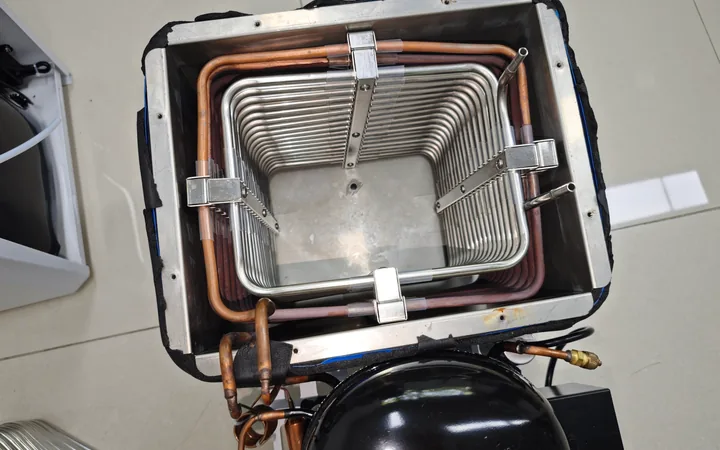
The Bestware G1DS-110 specification lists 2,100 W for the all-in-one unit. The G1DS-123 lists 520 W for the chilling module and gives the heater its own rating, 1,200 W for 110 V or 1,500 W for 220 V. An earlier Bestware 2025 V1.0 catalog lists 450 W for the G1DS-123 chilling module. On a fitted system, check the sticker on the module and the order version. If you need the compressor specifications, ask for the part number and whether it uses fixed or variable speed.
The model pages give rated cold-water capacities of 20 L/h for the 110 and 40 L/h for the 123. Use your counted liters during the trial to compare energy per qualifying liter. The rated output helps set up the trial and choose the peak draw to try.
Keep the Trial Running Until the Next Opening
Both Bestware manuals describe the heating modes on page 5. P1 is the default and stops heating after 24 hours of inactivity. P2 drops to 65 °C after three hours with no draw and stops heating after 24 hours. P3 stops heating after three hours of inactivity. According to both manuals, heating resumes toward the set temperature when dispensing resumes.
For a P1 and P3 comparison, use the same system and close at a similar hour. Begin with comparable actual water temperatures and the same temperature settings. Pour the same first-cup volume on both days and start timing with the first request at opening. Log the overnight kWh, the wait for that cup at serving temperature and the energy through recovery.
Use the Laboratory Test for the Right Product Category
U.S. ENERGY STAR Water Coolers Version 3.0 uses distinct tests for powered no-draw energy and applicable draws and recovery. The lab method disables certain optional timers or sensors where possible. Its eligibility rules exclude non-freestanding units that supply pressurized water, including under-sink and other building-integrated installations. For a plumbed undercounter installation, borrow the observation windows and record the modes configured at the site. Use your own temperature and serving targets to sign off the installed system.
Sources for This Edition
- U.S. Energy Information Administration — Measuring Electricity · Power in watts or kilowatts and accumulated consumption in kilowatt-hours. A hypothetical 2.1 kW for one hour uses 2.1 kWh at constant draw.
- Two 24-Hour Meter Readings — Worked Example · Hypothetical same-boundary readings. A powered 24-hour no-draw window uses 1.2 kWh. A separate 24-hour service window uses 3.6 kWh with 67 L dispensed and 60 L within the site's agreed limits. 3,600 Wh ÷ 60 L = 60 Wh per qualifying liter. The windows differ by 2.4 kWh. No model performance is inferred.
- Bestware G1DS-110 — All-in-One Unit Specifications · Specifications > All-in-one Unit. Power Rating 2,100 W, supply variants 110 V/60 Hz or 220 V/50 Hz, published chilling capacity 20 L/h. Match the installed unit and its plate.
- Bestware G1DS-123 — Chilling and Heating Unit Specifications · The current Chilling Unit block gives 520 W and 40 L/h. The Heating Unit block gives 1,200 W (110 V) or 1,500 W (220 V). These are manufacturer ratings for the named modules.
- Bestware Catalog 2025 V1.0 — Earlier G1DS-123 Chilling Rating · Technical Data table with the G1DS-123 model identifies 450 W as the chilling unit power rating in this edition. Check the installed module plate and order revision when a source differs. PDF page 53, Technical Data table on the right.
- Bestware G1DS-110 Installation Manual — 2026 V1.1 · Physical PDF p. 5, printed p. 05, All-in-one Unit Energy-saving Mode Setting. P1 default stops heating after 24 h of inactivity, P2 drops to 65 °C after three hours without dispensing and stops heating after 24 h, P3 stops heating after three hours of inactivity. Heating restarts to the set temperature when dispensing resumes. Physical p. 6 gives meter and circuit guidance.
- Bestware G1DS-123 Installation Manual — 2026 V1.2 · Physical PDF p. 5, printed p. 05, Heating Unit Energy-saving Mode Setting. Same P1/P2/P3 heating timing and 65 °C P2 point as the G1DS-110 manual. Cooling and accessory power are separate measurements.
- ENERGY STAR Water Coolers Version 3.0 — Scope · Current specification effective March 23, 2022. Eligible freestanding bottled or POU coolers can have supplemental sparkling functions. The category excludes pressurized units that are not freestanding, including under-sink and building-integrated forms.
- ENERGY STAR — Water Coolers Final Specification and Test Method · Version 3.0 final specification §2.B and May-2013 Test Method §§5.3, 6.1–6.3, 7.1 and 7.6. Stabilization, no-draw energy and cycle-end handling, treatment of timers, applicable draws and recovery, and the formal water-draw performance metric.
- U.S. DOE FEMP — System-Level Measurement and Verification · Option B describes system- or component-level measurement of relevant operational and performance factors to support comparative estimates.
- Bestware — Plan a Water Equipment Pilot and Acceptance Test · Same-language guide for documenting the first glass, consecutive pours, recovery and follow-up tests.
Continue With These Decisions
- Restaurant Sparkling Water Capacity Calculator
Use the busiest service window to set a repeatable test draw.
- How to Read a Water Chiller’s Refrigerant Label
Match the fitted chilling module and its nameplate before comparing readings.