Can the Repaired Machine Still Cover Your Rush?
Repair makes sense when a technician can explain the fault, get the right part in time, and put the dispenser back in service at the output you need today. Look at a refurbished or new unit when parts are unavailable, the same fault keeps returning, or a healthy machine of this capacity would still fall behind. Check the site first. A new chiller in the same poorly ventilated cabinet may have the same problem.
If there is a suspected leak, an electrical hazard, or reason to doubt the drinking water, keep the affected outlet out of service and arrange a safe water supply while it is assessed. For an ordinary loss of cooling, tell service when it happens and what still works. The first bottle at opening and the last bottle of a lunch rush give very different clues.
Ask What the Service Visit Actually Proved
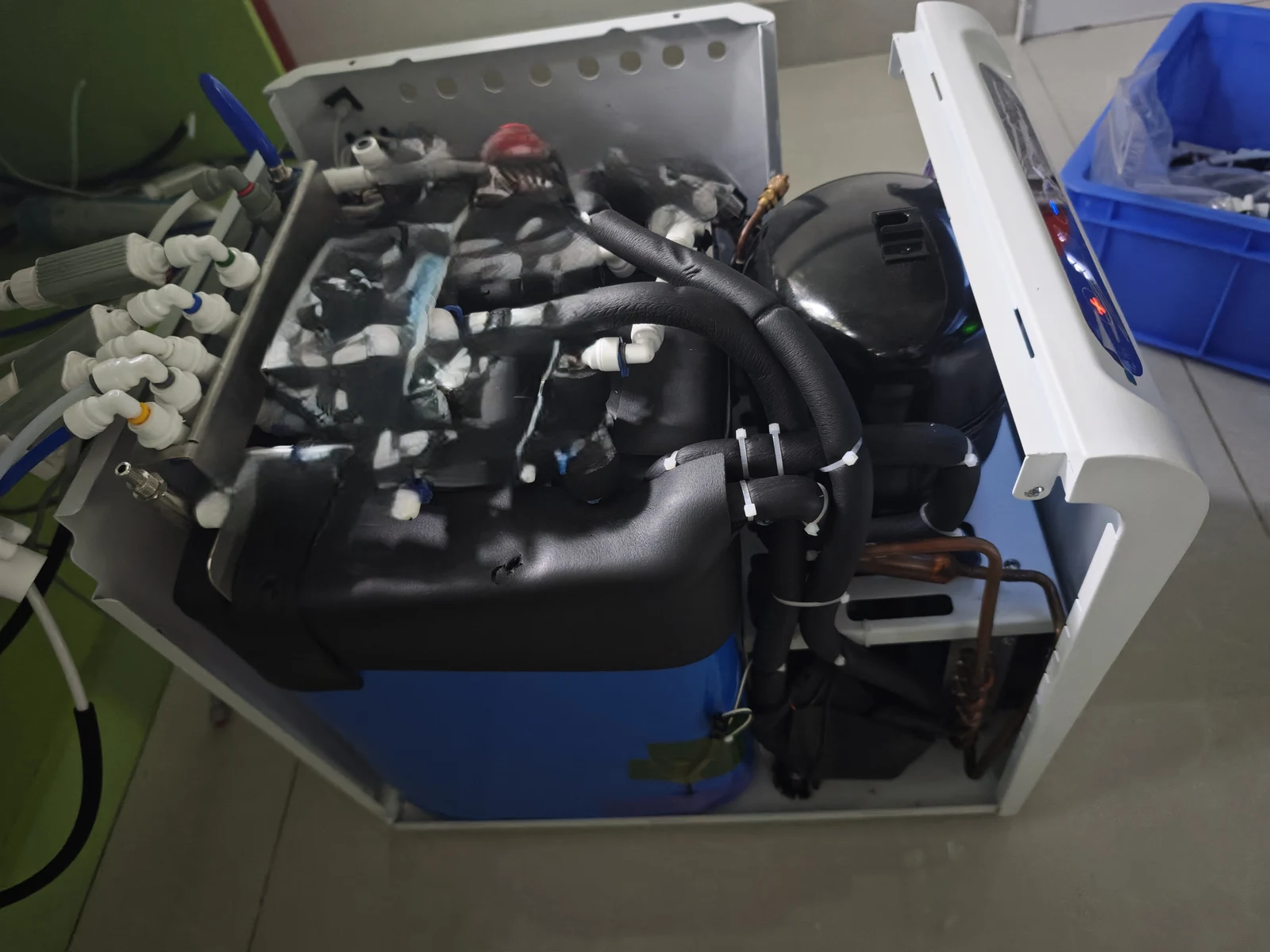
The Bestware G1DS-123 / 1023 manual offers an example. Its 2026 V1.2 chilling-system table lists obstructed air inlets, inadequate hot-air escape and a fan issue among the possible causes beside E3. Ask which cause the technician found and how they checked it against the model’s ventilation drawing. Give them the unit serial number and operating mode, previous tickets and anything that has changed in the cabinet or the route to the water outlet.
Put the diagnosis, part or module number, stock date, labor and scope of the repair warranty on the quote. Ask who supplies water until the unit passes its check. The amount already spent belongs in the service history. A repeat call for the same symptom belongs in your estimate of another interruption.
A Loan Unit Can Change the Repair Decision
A 2025–26 public tender for 14 water coolers at the Accountant General’s office in Chandigarh shows how a buyer can spell this out. Its maintenance terms required an equipment history sheet. If a major fault sent a machine to the workshop, a temporary unit was to be supplied if the office requested it. The terms also provided for pulling a cooler out of the maintenance contract when obsolescence or unavailable parts made it unserviceable or uneconomic to repair.
Write down when your own fallback can arrive and what it can supply. A basic cooler might keep plain drinking water available while the bar still has to buy sparkling water separately. For a refurbished unit, ask for the actual serial number, work performed, a test record, warranty scope and who handles a failure in the first week.
Compare the Next 24 Months From the Same Starting Day
Take an illustrative bar that needs the same volume and temperature on both routes. Repairs cost $900, five days of safe temporary supply cost $300 at $60 a day, and planned upkeep for the next 24 months is $480. That adds up to $1,680. A new unit at $1,950, installation and old-unit removal at $500, two days of temporary supply at $120 and the same $480 upkeep total $3,050. These are assumed U.S. dollar amounts with no discounting or tax.
One more $1,200 breakdown repair and four more days at $60 would put the repair route at $3,120, holding the replacement estimate fixed for that comparison. Get actual lead times and include any material differences in filters, energy, or staff handling. Price the delay you can actually cover before you take the cheaper quote.
Use the Same Reopening Check for Either Choice
Have the qualified service team confirm the drinking-water and installation checks relevant to the work. Then run the same container sequence you use in service. Agree in advance on volume, outlet temperature and how to judge recovery between rounds. Record which outlet was tested and who released it for use.
If the old unit leaves the site, record the model and any refrigerant on its nameplate. Ask who takes the equipment and what handoff record applies. U.S. EPA Section 608 guidance distinguishes equipment dismantled on site from equipment that enters the waste stream with its refrigerant charge intact. Your service provider or recycler can confirm the route for the unit and jurisdiction.
Sources for This Edition
- Bestware · G1DS-123 / 1023 Installation Manual, 2026 V1.2 · Physical PDF p. 7, printed pp. 09–10, Error Codes and Troubleshooting, 1. Chilling Unit, row E3 Cooling Fault. See pp. 9–10 for installation and ventilation.
- Accountant General (A&E), Punjab & UT, Chandigarh · Water Cooler Maintenance Tender 2025–26 · PDF pp. 1 and 3, scope of 14 water coolers and intended April 2025–March 2026 period. PDF p. 7, §5 items 2–4, withdrawal, service history and temporary unit upon request. Tender terms.
- NIST Handbook 135, 2025 · Life Cycle Costing · August 2025, §§2.4 and 2.4.1, printed p. 15. Common study period and base date under the U.S. federal program.
- U.S. EPA · Stationary Refrigeration Safe Disposal Requirements · Section 608, disposal headings for equipment dismantled on site and equipment entering the waste stream with its charge intact. U.S. federal scope.
- Illustrative 24-month interruption and cost comparison · Fictional USD, same outlet and service, no taxes or discounting. Repair $1,680 versus replacement $3,050. One extra $1,200 repair plus four days at $60 adds $1,440 and takes repair to $3,120.
- Bestware · Reporting Dispenser Faults · Record the mode, exact display, time and safe external observations before requesting service.
- Bestware · Plan Water Equipment Pilot Acceptance · Turn the site’s acceptance sample, limits and sign-off into a short written plan before reopening.
Continue With These Decisions
- How to Report a Water Dispenser Fault
Send a fault report the technician can use
- How to Test a Commercial Water Dispenser Before You Accept It
Write the checks that release the machine for service