Read the Display, Then Check the Delivery Dock
At the end of a busy week, a refill display makes an easy photograph for a campus newsletter. To find out whether the building bought fewer bottled waters, ask the stockroom for the same week’s delivery and issue records. People may have moved from another fountain or topped up the bottle they already carry. Those uses turn the counter as readily as a refill made instead of a purchase.
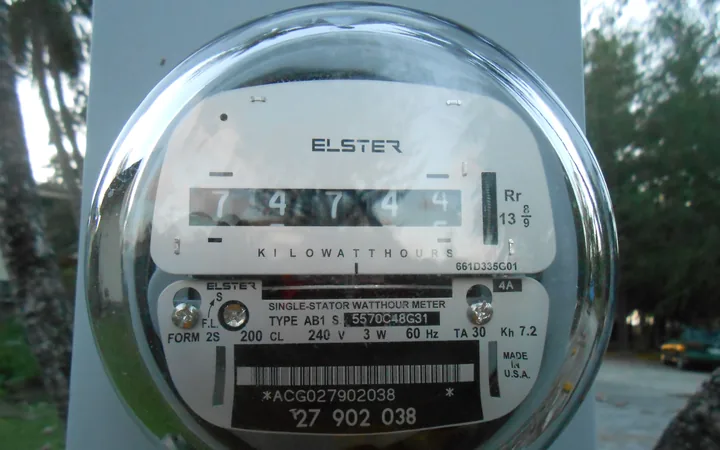
Write down what the equipment tracks, whether it is liters, fill activations or a display based on a fixed bottle size. Record opening and closing readings, resets and outage times. This gives you a useful record for placing or servicing a station. The purchase comparison starts with receipts and stock counts.
Two Campuses Used Two Different Records
At Washington University in St. Louis, Purchasing Services recorded 6,162 cases of bottled water in academic year 2008–09 and 845 in 2014–15. At 24 bottles per case, that is 127,608 fewer bottles in the later year. The sales policy began in January 2009, partway through the first year, and three academic years are missing between the reported points. The later purchases were for the School of Medicine and certain events. The same report describes fountain retrofits and other support and says the records cannot isolate the effect of any one change.
The team at Taisho University in Japan counted another thing. They recorded 774 L replenished in the tank during a three-week dispenser trial in July 2023, equivalent by volume to 1,548 half-liter bottles. Monthly vending records actually showed 21,686 PET-bottled drinks sold in July 2022 and 21,703 in July 2023. Their separate campus bottle-waste audit did not demonstrate a reduction. The top-up record told them how much water went into the dispenser, while the sales totals put the proposed bottle reduction in context.
Follow an Actual Case of Bottled Water
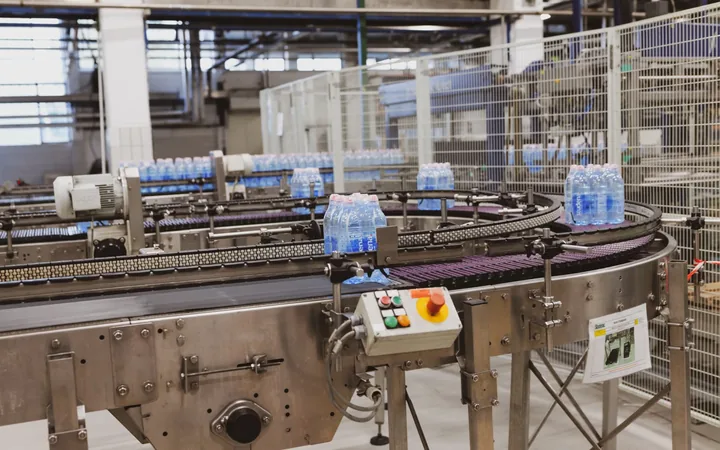
Pick one building or one service, then name who draws from its stock. A training room, reception desk and emergency reserve can share a loading dock and still get through their deliveries at very different rates. Count cases as bottle units using the recorded pack size. Put the order date and receipt date in separate columns so a delivery that crosses the cut-off will be visible.
To estimate issues, add opening stock, receipts and inbound transfers. Subtract closing stock, outbound transfers and any logged losses. Use the same storage boundary in both periods. A carton shifted from reception to the meeting floor counts as a transfer in departmental books; at whole-building level both entries cancel out. Check for other packaged drinks going the other way when that is part of the purchasing decision.
Compare Stock With the Number of People Served
Here is a hypothetical office stock sheet. There were no recorded transfers or losses. Issues fell from 400 to 300 bottles, but attendance also moved from 1,000 to 800 person-days. One employee present on two days counts as two person-days. That makes the comparable rate 40 and 37.5 bottles per 100 person-days. The store took in only 20 fewer bottles because part of the first period’s service came out of opening stock.
At the former issue rate, 800 person-days would have meant 320 bottles. The office issued 300 in this scenario, a difference of 20 from the attendance-adjusted illustration. Carry the check through enough delivery cycles to see stock levels settle. Record attendance, event bookings and exceptional reserve use while you do it.
| Period Data | Before → After |
|---|---|
| Opening stock | 160 → 80 bottles |
| Deliveries received | 320 → 300 bottles |
| Closing stock | 80 → 80 bottles |
| Bottles issued | 400 → 300 bottles |
| Attendance (person-days) | 1,000 → 800 |
| Bottles issued per 100 person-days | 40 → 37.5 bottles |
Make Refilling an Option at the Point of Need
Walk a meeting corridor during the break. Start the test where the group already reaches for a sealed bottle. Put an accessible drinking-water point and clean cups there, keep reserve stock for outages or guests who need it, and change one room’s service together with the staff who issue the bottles.
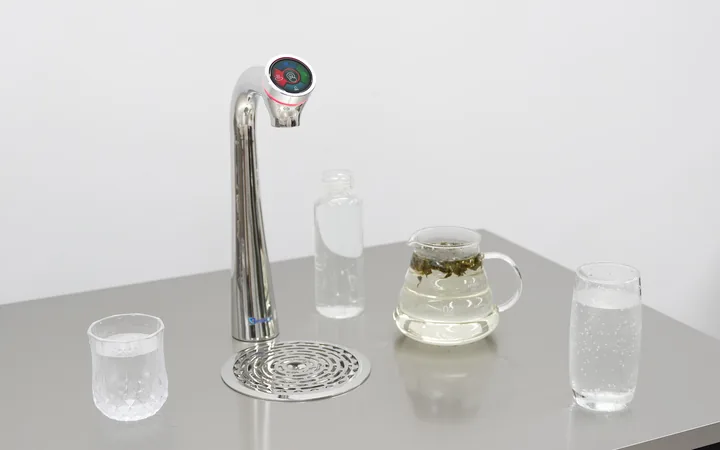
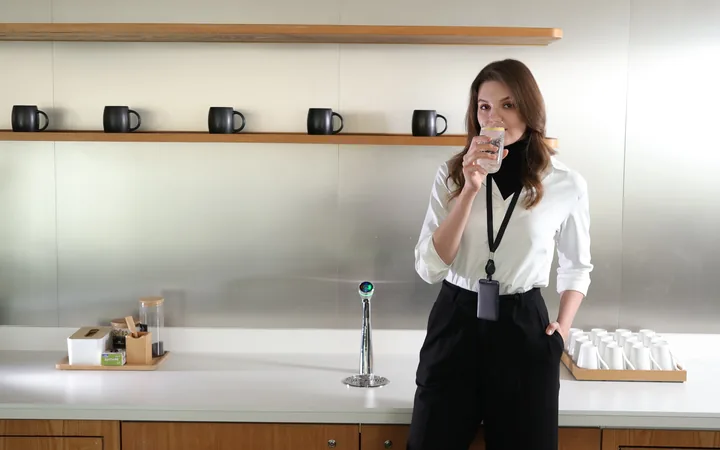
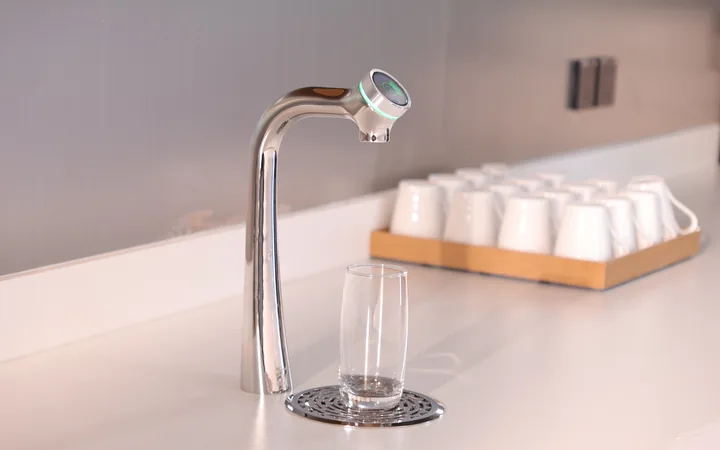
A Bestware G1DS-123 drawing shows separate installation of the countertop tap and drip tray. If that model is at the new service point, put the bottles and cups used on site under the spout at handover. Check that people can position and remove them and can use another approved water point when service is interrupted. Put those dates alongside the actual issue figures before changing the next order.
Sources for This Edition
- WashU Office of Sustainability, Bottled Water Ban: Update 2015 · PDF p. 1, Bottled Beverage Purchases, 6,162 cases of 24 (2008–09) and 845 cases (2014–15). January 1, 2009 policy and exceptions; p. 3, supporting initiatives and limits.
- WashU Sustainability, Taking a Stand: WashU’s Bottled Water Ban · Opening, purchase-order history and later support for refilling; original 2015 report linked by WashU’s newsroom.
- Okayama and Yoneno, Reduction of Plastic Bottle Wastage on University Campus Through the Introduction of a Water Dispenser · 2024 J-STAGE proceedings, PDF pp. 1–2, sections 3.1–3.2 and Table 2. Temporary setup, total tank top-ups and monthly vending sales use separate intervals.
- US EPA WaterSense at Work, Section 2.3, Benchmarking · PDF p. 5, Collecting Additional Facility Information, operating days and facility occupancy. The stock exercise is an adaptation.
- Illustrative office bottle and stock reconciliation · Existing worksheet, two hypothetical periods with zero transfers or losses. 160 + 320 − 80 = 400 issued; 80 + 300 − 80 = 300; 1,000 and 800 person-days.
- Bestware G1DS-123/G1DS-1023 Installation Manual EN V1.2 · PDF p. 11, printed p. 17, steps 2–3 show the countertop tap and drip tray. Service-vessel clearance check is illustrative.
- Measure Water and Energy per Serving · Log water and electricity in a shared time window.
- Plan School and Campus Water Access · Walk campus routes and check the outlets that really serve each group.
Continue With These Decisions
- How to Measure Water and Energy per Glass Served
Keep a separate log of metered water and energy
- How to Plan Drinking-Water Access at School
Check which campus routes still need a working water point