Take a Clean Glass Away From the Sink
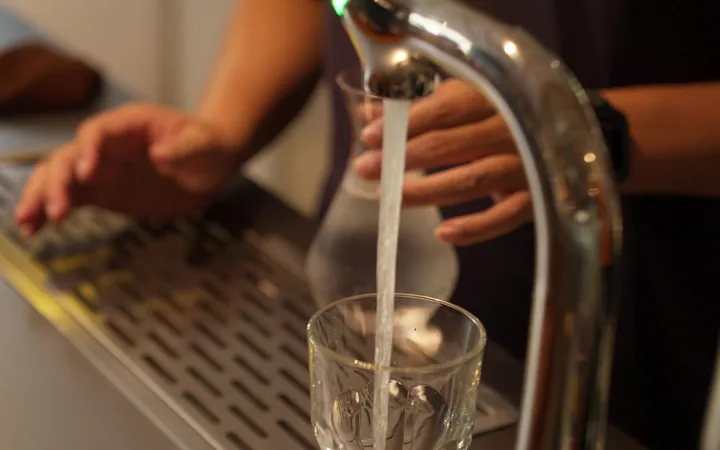
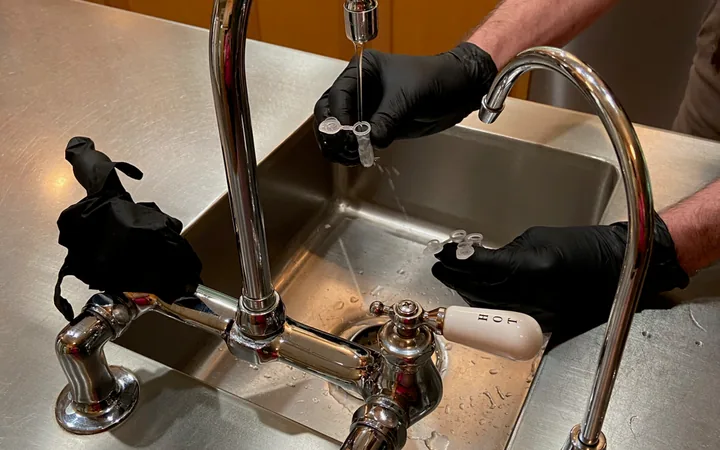
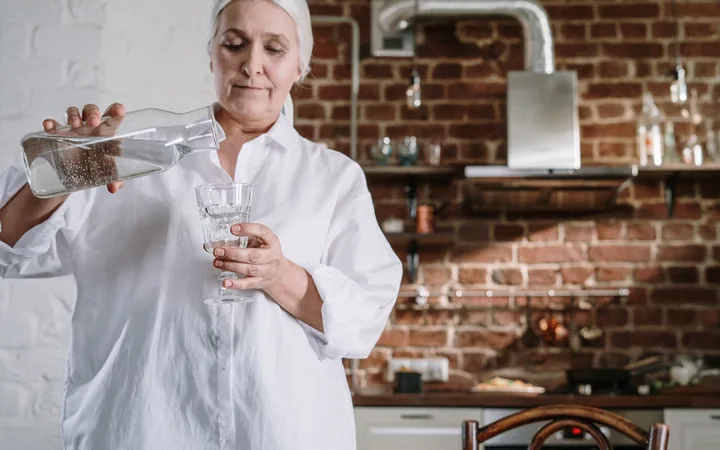
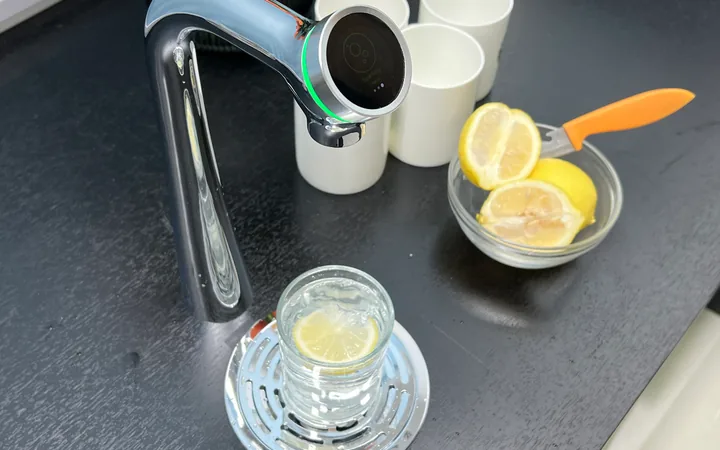
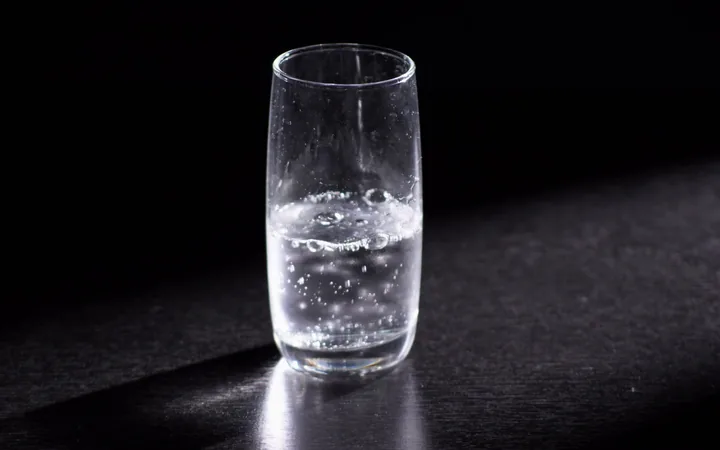
If the opening crew smells something like a pool by the bar sink, check for a water advisory. If none is in effect, fill a clean, detergent-free glass at the cold tap and take it away from the sink. If the smell stays by the sink, ask maintenance to look at the drain. If only hot water has the odor, tell them that too. The heater or hot-water piping may need its own check. There’s no need to taste the water during this comparison.
If there is a drinking-water advisory, follow the issuing authority’s instructions for service, ice and connected equipment. A water filter gives you no permission to serve water during an advisory. For a sudden odor that persists, let the supplier know even if you haven’t seen a notice.
Compare the Cold Supply and the Dispenser
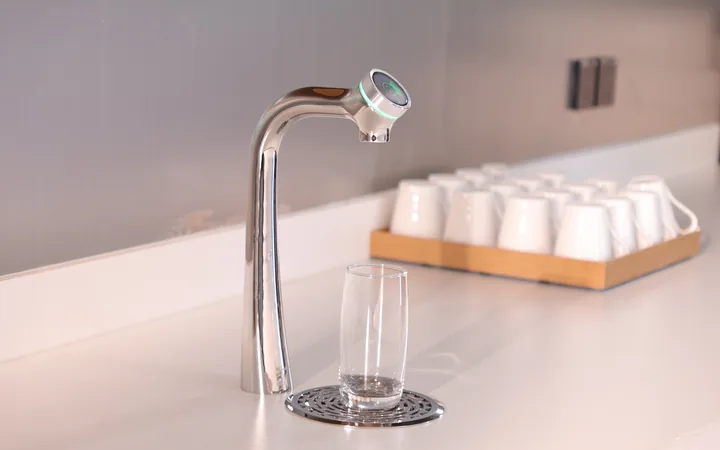
If the odor follows the glass, get samples at comparable times from an ordinary unfiltered cold tap, a cold tap on a different branch, and the dispenser’s plain-water outlet. Label the glasses. Where there is a service sampling point upstream of the cartridge, have authorized maintenance staff check it too. Record any difference in temperature or recent use. That gives the next person useful context if one outlet is chilled and the others are not.
For example, suppose neither cold tap changed, but a dispenser began to smell different after a cartridge service. Put the time of the service, the installed cartridge number and the affected outlet in the equipment ticket. Ask the technician to check the feed and the outlet separately. The observations let maintenance start in the right place. They leave the cause open until the feed, cartridge and branch have been checked.
Ask What the Utility Used at Your Address That Day
When several unfiltered cold taps change together, ask the utility and building maintenance about the service address, the date and any work or active notices. A chlorine-like smell cannot tell you whether the disinfectant was free chlorine or chloramine, or whether a concentration was in range. Odor alone cannot determine whether the water is safe to drink. For a real example, Round Rock, Texas, announced a temporary switch from chloramine to free chlorine from August 3 through September 3, 2026. Its notice said neighbors could notice a change in taste or odor. That time window explains why the date belongs in the call. Address and date still matter if another utility serves a nearby site.
Match the Filter Claim to the Disinfectant
Once the water supplier and site team have confirmed the supply conditions, decide if the goal is better taste at that outlet. Under NSF/ANSI 42, chlorine reduction and chloramine reduction are separate claims. Ask for the listing or performance sheet for the system and its replacement cartridge. Check the named claim, rated service flow and treatment capacity. Treat any change at the building inlet as a facilities decision. That line can serve equipment and fixtures beyond the drink station.
Sources for This Edition
- Portland Water Bureau · Taste and Odor Issues in Drinking Water · Troubleshooting steps 1–3 cover hot versus cold water, moving a clean glass away from the sink, and confirming whether more than one faucet is affected.
- CDC · Water Disinfection With Chlorine and Chloramine · The sections on chlorine and chloramine explain why utilities use residual disinfectants and how they may change taste or smell.
- US EPA · Chloramines in Drinking Water · EPA’s explanation of chloramines as secondary disinfectants. Local disinfectant use should be confirmed with the water provider.
- CDC · Monitoring Building Water · Measure Disinfectant Residual section. Building monitoring can compare incoming and point-of-use values. The guidance does not diagnose odor by smell.
- CDC · Drinking Water Advisories: An Overview · Local authorities can give different instructions for drinking-water advisories. CDC addresses filters and appliances connected to the water line.
- City of Round Rock, Texas · Chlorine Rinse · The city gives its temporary shift from chloramine to free chlorine as August 3 through September 3, 2026. What to Expect addresses possible changes in taste and odor.
- San Luis Obispo County Public Works · Lopez Water Project Temporary Disinfectant Switch · October 21, 2026 bilingual notice. The Lopez Water Project window is November 4 through December 2, 2026. The notice lists recipients and directs customers to their water providers.
- 深圳市南山区卫生健康局 · 南山区2026年第三季度用户水龙头水质报告 · Published August 10, 2026. The district reports samples from July 6–8, covering 20 network endpoints and three secondary-supply samples.
- NSF · NSF/ANSI 42, 53 and 401 · The NSF/ANSI 42 table identifies chlorine, taste and odor and chloramine as distinct claims.
- NSF · Product Label and Literature Claims · Product Data Plate and Performance Data Sheet sections identify the system, replacement part, service flow, service cycle and verified claim.
- Bestware Wiki · Read the Local Water Quality Report · How to find the report for the correct supplier and check the sampling area, date and parameters.
- Bestware Wiki · Check a Filter’s Verified Reduction Claim · Find the verified claim for the exact system and replacement cartridge before a purchase.
Continue With These Decisions
- How to Read a Local Water Quality Report for Your Tap
Use the utility report to identify the disinfectant, then check the service area and dates in the specific notice.
- How to Choose a Water Filter for a Named Contaminant
Check the method and what to record.