Put the Drinking Line and the Drain on the Drawing
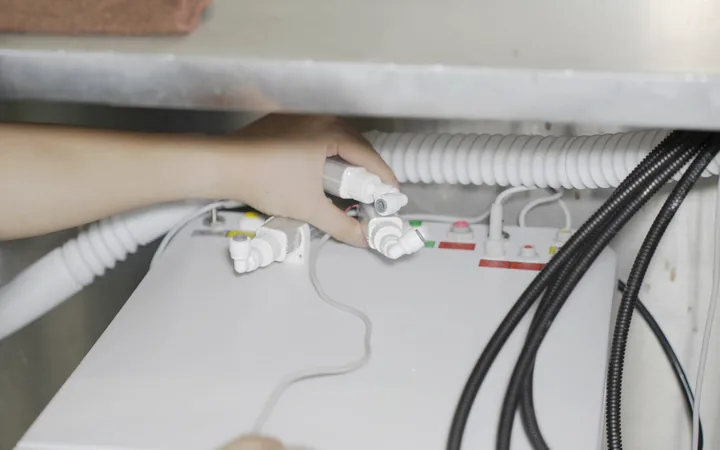
On a service visit, start at the point where the dispenser takes its water. Mark the building branch, shutoff, treatment stages and each tube that carries drinking water to the nozzle. Include any reservoir or other water-holding part shown for the installed equipment. Then draw a separate line from the drip tray to its drain. Staff looking at the diagram should be able to tell where the water they serve passes and where spills go.
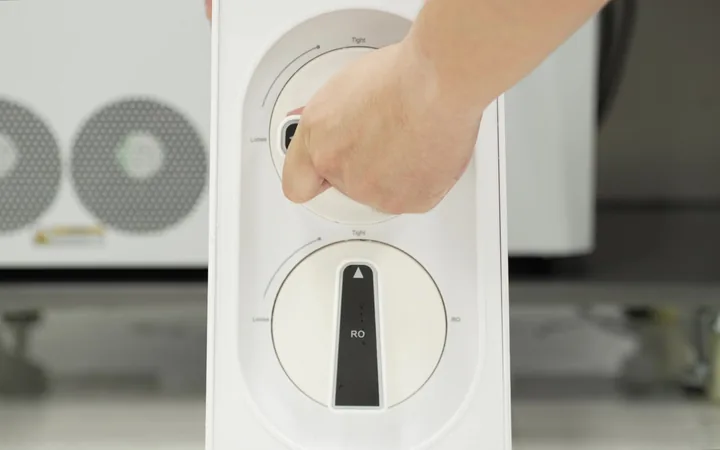
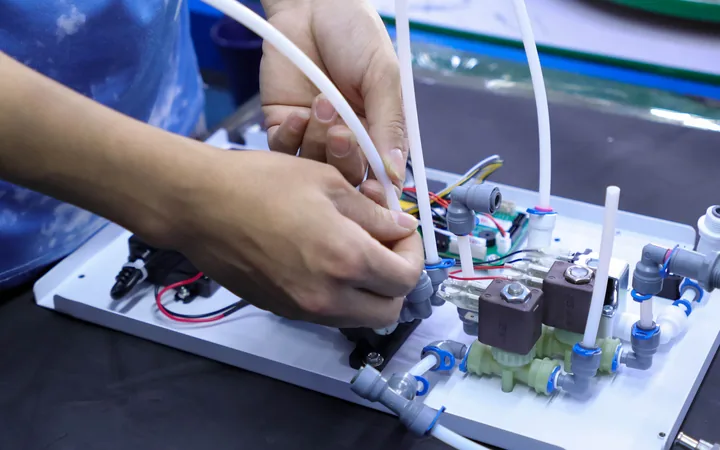
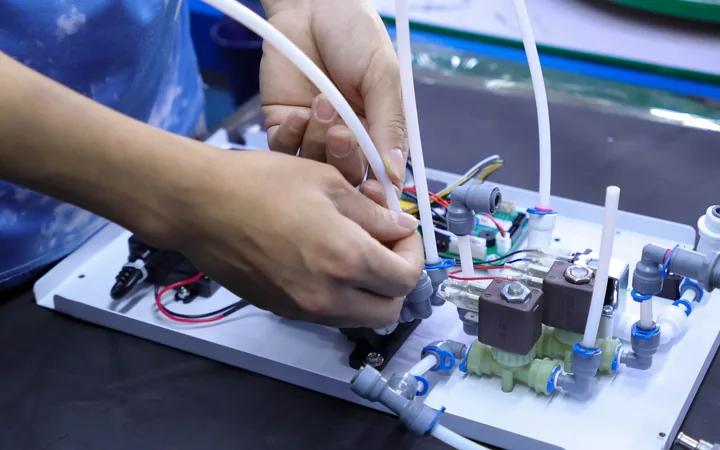
The Bestware G1DS-123/1023 V1.2 manual makes the distinction visible. The tap-installation pages show the tray with its own drain hose. The connection drawing for the configuration with reverse osmosis shows the water line through the equipment to the tap. Use both drawings in the handover and label the actual version under the counter.
- Building SupplyFind the feed and any branch that sees little use.
- FilterCheck what it is documented to reduce and its replacement requirements.
- Internal WaterwayLocate tubing, connections and any parts that hold water.
- Dispensing OutletIdentify the nozzle and its cleaning and inspection requirements.
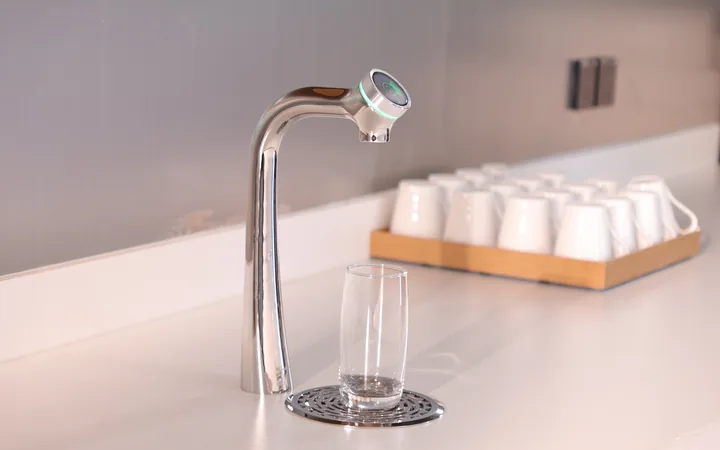
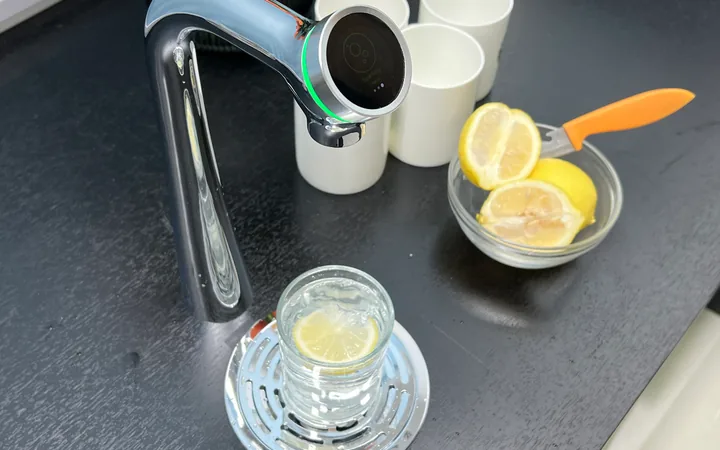
This is an example of a plumbed-in dispenser. Trace the actual branches and parts on your installation drawing.[2][5]
Treat the Surface and the Water as Separate Questions
Biofilm is a layer of microorganisms attached to a surface. A clear glass of water gives you very little information about the inner wall of the tube it came through. For building water management, the CDC asks facilities to consider water age, temperature, disinfectant residual, sediment and biofilm together. A newly changed filter is useful information about one part of that route. Carry the rest of the inspection and service history with it.
At the counter, put the nozzle, cup-contact risk and tray on different lines in the cleaning log. For U.S. foodservice, the FDA 2026 model Food Code calls for the manufacturer’s cleaning frequency for named equipment such as beverage nozzles and enclosed lines. Where that frequency is unspecified, the model uses the prevention of accumulated soil or mold. Check the rule adopted where you operate and the instructions for the actual equipment.
See what belongs in surface cleaning and what needs approved internal service
Write the Sampling Point Beside the Result
In 38 participating stores in the Naples area, researchers compared water from the supply tap with still and carbonated water from the cooler in the same store. The chart gives their reported averages at two laboratory test conditions. Both cooler outlet means exceeded the supply-tap mean under each test condition. The study compares points and gives a reason to distinguish them on your sheet.
A separate survey took place in 11 Suzhou High-Tech District schools from May to October 2017. All 11 unopened bottled-water samples met the criteria used in the survey, as did 15 of 52 cold outlet water samples from the schools’ bottled-water dispensers. The paper reports the two groups separately and applies different criteria to unopened water and outlet water. If your site needs an assessment, have the facility lead and the lab agree on the right collection points and how to interpret their results.
| Sample | 22 °C (CFU/mL) | 37 °C (CFU/mL) |
|---|---|---|
| Supply Tap | 102.9 | 86.3 |
| Still Water Outlet | 569.7 | 331.8 |
| Sparkling Water Outlet | 542.1 | 355.9 |
The two temperatures are laboratory test conditions. CFU/mL means colony-forming units per milliliter.[6]
Make the Handoff Specific to One Outlet
Say the upstairs breakroom reports an unusual taste twice at the same outlet after a ten-day closure. Write down the unit and outlet, when it last ran, whether other taps are affected, and which work was already completed. Ask the building lead about the supply and closure, and the equipment service contact about the cartridge, tubing and the outlet. The person covering the next shift should be able to see who has reviewed each item.
If a concern remains, keep the affected outlet out of use while the site lead follows the building and equipment procedures and arranges further assessment if needed. On the work order, record the person responsible for release and what they checked before serving from that point again.
Check the supply and equipment steps before bringing an unused outlet back into service
Sources for This Edition
- U.S. CDC · Steps to Develop a Water Management Program · March 15, 2024; steps 2, 5–7. Facility water diagram and written description, prior contingency plan, verification, roles and activity documentation. Scope is building Legionella control.
- U.S. CDC · Controlling Legionella in Potable Water Systems · Jan. 3, 2025. Key factors, Design and Operation, maintenance, and control limits. Evaluate building water from entry to fixture, with water age, disinfectant residual, temperature and sediment or biofilm in the facility program.
- U.S. EPA · Premise Plumbing Decontamination · Introduction and research summary, updated Jan. 20, 2026. Biofilms are biologically active layers on plumbing surfaces. A water result and a condition of a wetted surface concern different points.
- U.S. FDA · 2026 Food Code · PDF p. 137 / printed p. 109, §§4-602.11(E)(4) and 4-602.13. Model code, check local adoption. Manufacturer frequency or prevention of soil or mold accumulation for named food-contact equipment; splash-area non-food-contact surfaces use a separate cleanliness provision.
- Liguori et al. · Microbiological Quality of Drinking Water from Dispensers in Italy · BMC Microbiology 2010, Methods and Results. February 2005–September 2007, 38 participating Naples-area stores with same-store supply tap and still/carbonated cooler samples. Overall means in the retained chart are from that study only. The chart temperatures are laboratory test conditions.
- Si et al. · Water Quality at Bottled-Water Dispensers in Suzhou Schools · Jiangsu Journal of Preventive Medicine 29(3), 2018; physical PDF pp. 100–101 / printed 336–337, Abstract, evaluation criteria 1.4 and Results 2.1. May–October 2017, 11 Suzhou High-Tech District schools, 52 bottled-water dispensers. 11 unopened water samples met study criteria; 28.8% (15/52) cold outlet water samples met the study criteria. The authors applied different historical criteria to the two sample types and reported them as separate groups.
- Bestware · G1DS-123 / G1DS-1023 Installation Manual V1.2 · PDF pp. 10–11 / printed 16–17, Dispenser Tap Installation Steps, separate tray and drain hose. PDF p. 14 / printed 24, Connection Diagram for the configuration shown with RO. This is a routing reference for the depicted configuration.
- Bestware Wiki · Example Shift Handoff for One Drinking-Water Outlet · Illustrative route and work assignment. Record unit, supply, operating state, symptoms and recent work. Water or environmental assessment goes through the responsible site team or qualified laboratory if required.
- Bestware Wiki · Surface Cleaning and Internal Sanitation · Distinguish equipment exterior and outlet work from authorized internal servicing.
- Bestware Wiki · Restarting After Unused Periods · Check facility and equipment conditions before putting a closed water outlet back into service.
- U.S. CDC · Steps to Develop a Water Management Program · March 15, 2024; steps 2, 5–7. Facility water diagram and written description, prior contingency plan, verification, roles and activity documentation. Scope is building Legionella control.
- U.S. CDC · Controlling Legionella in Potable Water Systems · Jan. 3, 2025. Key factors, Design and Operation, maintenance, and control limits. Evaluate building water from entry to fixture, with water age, disinfectant residual, temperature and sediment or biofilm in the facility program.
- Liguori et al. · Microbiological Quality of Drinking Water from Dispensers in Italy · BMC Microbiology 2010, Methods and Results. February 2005–September 2007, 38 participating Naples-area stores with same-store supply tap and still/carbonated cooler samples. Overall means in the retained chart are from that study only. The chart temperatures are laboratory test conditions.
Continue With These Decisions
- Water Dispenser Cleaning: Who Signs off on What?
See what belongs in surface cleaning and what needs approved internal service
- Restarting a Water Dispenser After Disuse
Check the supply and equipment steps before bringing an unused outlet back into service