Start at the Farthest Work Position
Before you set out a water cooler, walk from the farthest active work position to the proposed tap or container. Walk it during the shift, with the gates, vehicle routes and barriers in use. If the crew advances down a road or moves between lots, mark where people will get drinking water after the move and from which side they can safely reach it.
On a site sketch, put a name beside each job. Someone verifies the drinking-water source and opens the point. Someone checks the stock and moves or refills the container. Give the crew a second approved point or reserve to use if the gate closes or the refill vehicle is called away.
Water on the Trailer, a Barrier Between Rows
At a vineyard in Saint Helena, California, inspectors found that a crew of about 13 was working on grapevines in several rows. One water jug stood at the end where the crew had started, roughly 1,500 feet away by the time of the August 2018 inspection. Another rode on a shade trailer that moved with the crew. The closer jug was easy to reach from the trailer’s own row. From adjacent rows, workers had to step over an irrigation hose and stoop under a wire. Some passed their personal bottles across the rows to be filled and returned.
In February 2023 the California Occupational Safety and Health Appeals Board adopted the administrative judge’s decision upholding the citation. The record is a useful way to read a site plan. A water point that moves with the crew still needs a usable approach from every active position.
Choose a Protected Supply for Each Work Area
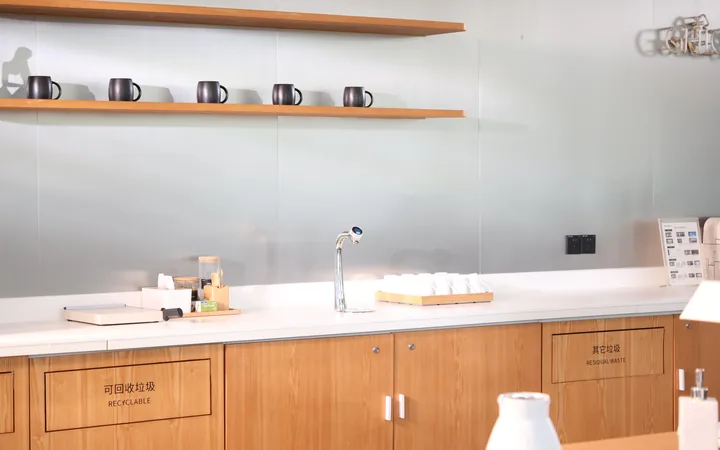
For jobs covered by the U.S. federal construction sanitation rule, 29 CFR 1926.51, employers must provide an adequate supply of potable water. Portable dispensing containers must close tightly and have a tap. Mark them for drinking water, reserve them for that use, and supply a way to drink without a shared cup. Keep potable and nonpotable systems separate. Place the dispenser where the spout and clean cups are protected from site dirt and splashing.
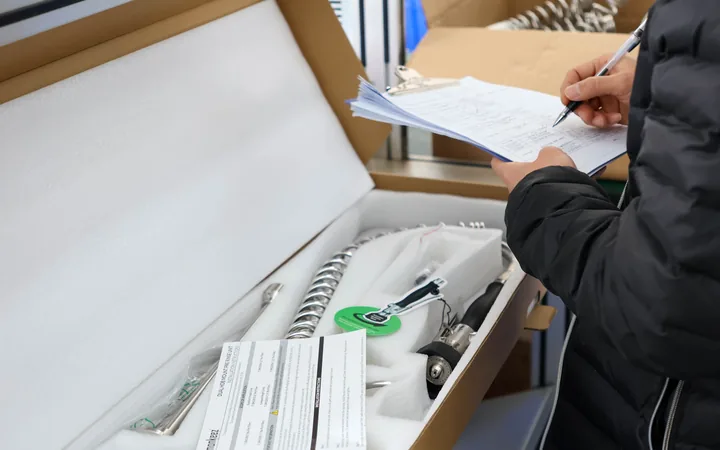
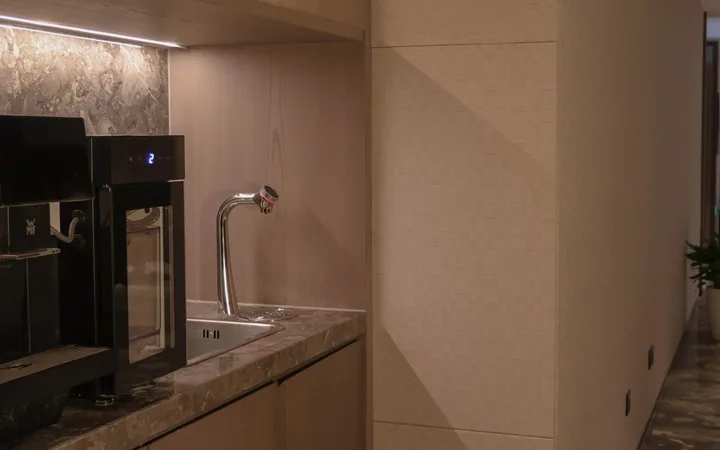
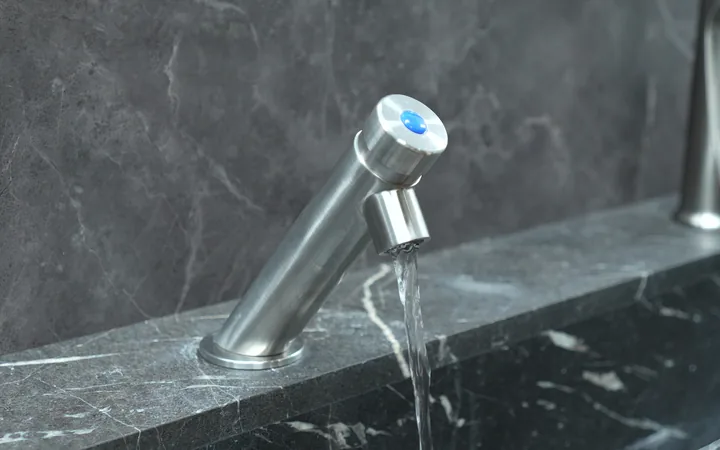
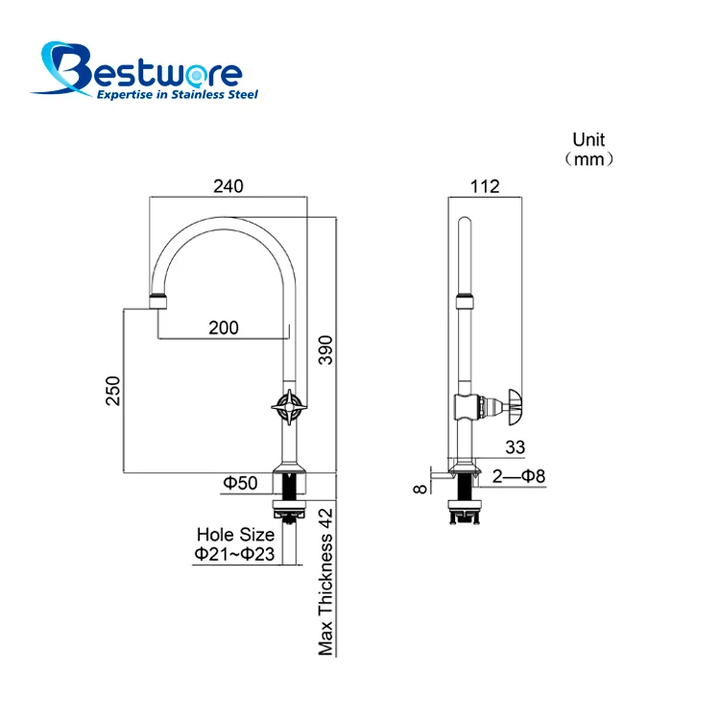
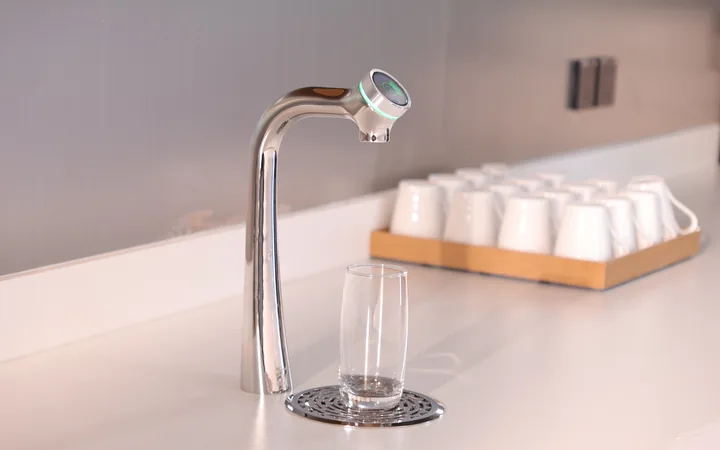
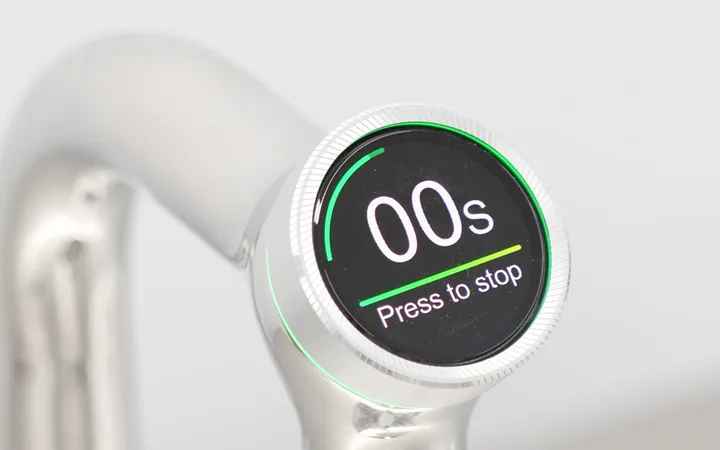
At a permanent dispatch room, a plumbed unit can serve the people who pass through it. The Bestware G1DS-110 installation manual shows a fixed tap, incoming water and drain connections. Use that diagram when checking the dispatch-room installation, and keep a dedicated potable supply on the field route for workers assigned beyond the building.
Plan a temporary supply and handoff before moving a plumbed dispenser
Check the Required Stock for the Whole Shift
For outdoor workplaces covered by California Title 8 §3395, employees must have access to potable, suitably cool water free of charge, as close as practicable to their work. When water is not plumbed or continuously supplied by another means, the starting stock must cover one U.S. quart per employee per hour for the entire shift. A smaller starting stock is allowed if effective replenishment procedures keep that quantity available throughout the shift.
For example, assume eight employees on a six-hour shift at a covered California site, with no continuous supply and no refill planned. The starting water provision is 48 U.S. quarts, about 45.4 liters. That is the quantity to make available to the crew. For a refill arrangement, put a name and a backup beside the route and check that both can run when the site is busy. The site’s heat-illness prevention plan has separate provisions for shade and emergency response.
Tell the Next Shift What Is Ready to Use
At the handover, tell the next lead which containers are in use, where the reserve is, how much remains and who can bring more. Try filling a typical personal bottle at the busiest break, then check that the tap is still reachable when vehicles are lined up. If an approach becomes unusable or stock runs low, act while the reserve is still available and tell the crew where to use it.
See how to place temporary drinking stations and assign refill checks
Sources for This Edition
- U.S. eCFR · 29 CFR 1926.51, Sanitation · Title 29, Part 1926 (construction), §1926.51(a)(1)–(5) and (b)(1)–(2). Adequate potable water, tightly closable portable dispensing containers with taps, drinking-water identification, no common cup, signs and no cross-connection with nonpotable systems.
- California DIR · Title 8 §3395, Heat Illness Prevention in Outdoor Places of Employment · Subsections (a), (c) and (i). Outdoor-work scope, free suitably cool potable water close to the work, full-shift provision of one quart per worker-hour when water is not continuously supplied unless effective replenishment is in place, and other written heat-plan measures.
- Cal/OSHA · Outdoor Heat Illness Prevention FAQ · Provision of Water Q3–Q4. Readily accessible water and site-dependent placement. If less than the full-shift quantity is supplied at the start, describe effective written replenishment procedures.
- California Occupational Safety and Health Appeals Board · Rios Farming Company, LLC, No. 1336276 · Decision After Reconsideration filed February 6, 2023, PDF pp. 1–2. Exhibit A, Findings of Fact 1–7 and Analysis 1, PDF pp. 5, 11–13. August 6, 2018 vineyard inspection in Saint Helena, California; water at starting end and moving shade trailer, trellis crossings, some workers’ bottle relay, and affirmed decision.
- Bestware · G1DS-110 / G1DS-1010 Installation Manual V1.1 · PDF pp. 10–11, printed pp. 15–18, counter and tap installation. PDF p. 13, printed p. 22, connection diagram for the configuration shown with RO. Use the fixed tap, water inlet and drainage routes shown to plan the permanent point.
- Bestware Wiki · Illustrative route and shift water provision · Hypothetical route, staffing and backup example. California example uses 8 workers × 6 hours × 1 U.S. qt = 48 U.S. qt, approximately 45.4 L. This is quantity provided.
- Bestware Wiki · Moving a Plumbed Water Dispenser · Arrange a temporary supply and documented release before moving a plumbed point.
- Bestware Wiki · Planning Drinking Water for an Event · Map how temporary stations are reached and assign a replenishment route.
Continue With These Decisions
- Moving a Plumbed Water Dispenser
Plan a temporary supply and handoff before moving a plumbed dispenser
- How to Plan Drinking Water for an Event
See how to place temporary drinking stations and assign refill checks