Start With the Booking Calendar
Put water out before the doors open if the meeting needs a quiet room and predictable service. On a floor with several rooms, a shared point can work if the route is short and the busiest breaks fit what the point can serve. Get the booking calendar and mark the first break, any overlap with another room, and the time when the next group gets access.
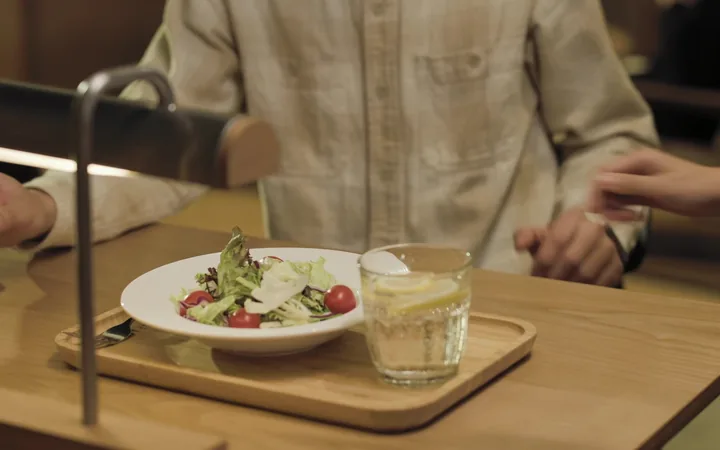
The Monterey Conference Center’s planner guide puts water fountains and bottle refill points in the public lobby, keeps pitchers off meeting tables as its usual arrangement, and makes bottled water available for speakers on request. At the 2022 ICCA Congress in Kraków, the post-event report shows a refill point beside each catering outlet. Take those as different layouts to compare on your own floor plan. Mark where someone waiting with a bottle would stand while the next person leaves with a full one.
Count the First Three Minutes
Suppose Room A is booked for 18 people and Room B for 12. Each gets an eight-minute break. You expect 12 people from A and eight from B to take one 250 mL serving in the first three minutes. That is 3 L for A and 2 L for B, or 5 L altogether. If the water has to come through one point in those three minutes, it needs to deliver about 1.67 L/min on average to keep up with the plan.
Five carafes with 1 L of usable capacity can stage the 5 L. Set three in A and two in B before the break if the room conditions and service plan allow. Rehearse the shared water point on the same schedule. Put a person at each door, have people fill the actual cups, and time the run from the first arrival until the last person is through. Record how many people wait in the corridor and where the queue ends.
Check the Sparkling Outlet Against That Window
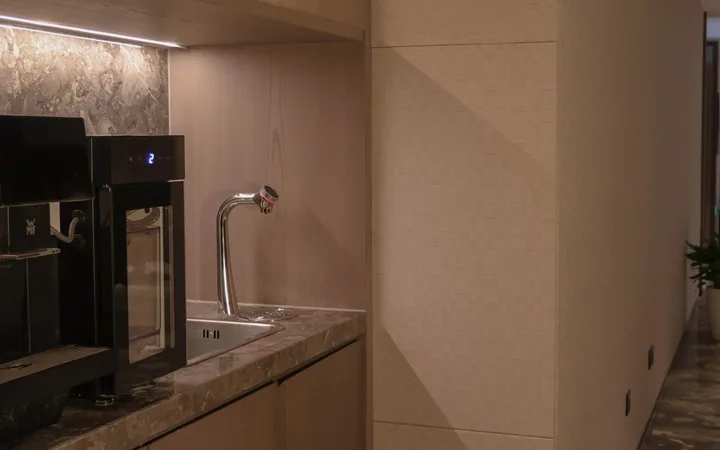
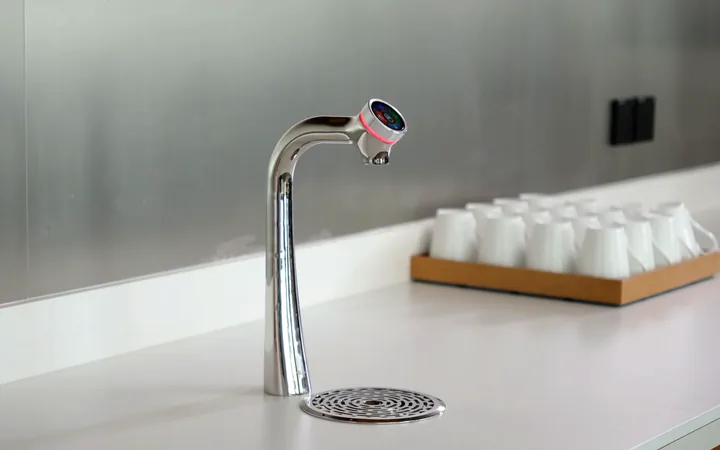
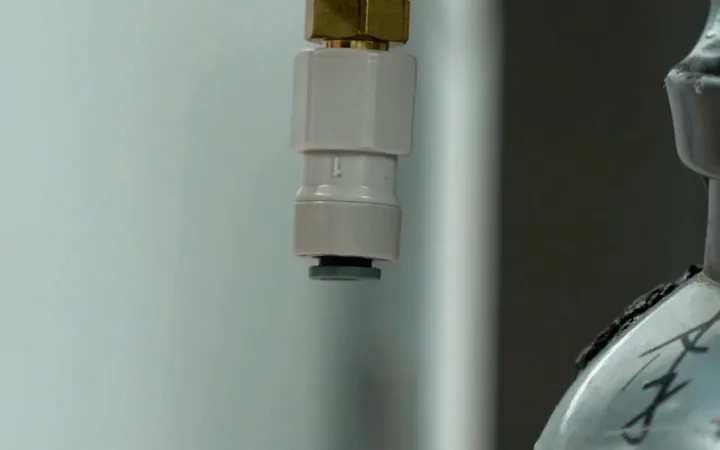
If those two rooms were to draw all 5 L as sparkling water on demand from a single Bestware G1DS-110, its 1.5 L/min manufacturer-rated maximum would put the theoretical three-minute ceiling at 4.5 L. Use that figure to rule out that particular one-outlet plan. The same data sheet shows 20 L/h as rated cooling capacity. Check repeated sparkling pours and recovery in a timed test at the site. Setting water out ahead of the break, shifting the two break times or adding a second serving point gives you different plans to test.
Keep a Clean Set Ready for the Next Group
Follow one jug all the way. Start at the clean shelf, fill it at the pantry, take it to the meeting room and return the used jug to the dishwashing drop. If the doors close for a video call, listen from the seats with the dispenser running and have a colleague try the carrying route once. Mark any doorway or corner where guests and staff cross. Put the room route and who owns each task on the event order. IACC recommends including a scaled room setup and assigning scheduled extra room refreshes to conference services staff.
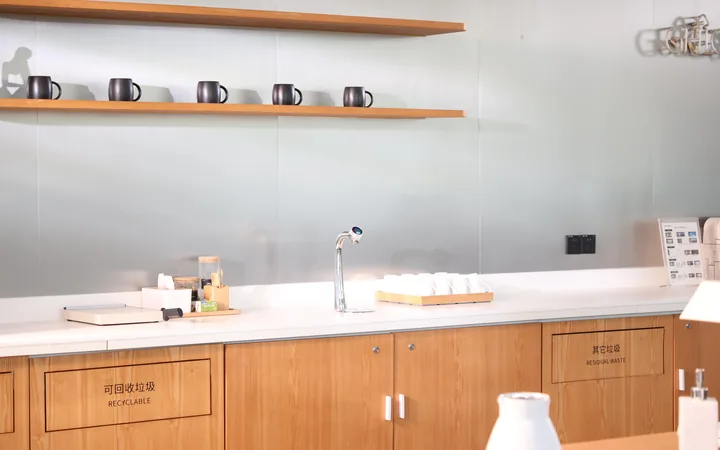
The 2023 ANZCA meeting in Sydney offered water stations for people who brought bottles. The published post-event account also describes providing facilities for washing and refilling cups and bottles. For a five-minute gap between bookings at your venue, time how long it takes to collect, wash, dry and put away the set that just came back. If that takes longer than the gap, set aside another clean set for the incoming group. Write down the shelf, who moves each set and where the backup supply is kept.
Sources for This Edition
- Monterey Conference Center · Event Planner Guide · PDF p. 9, Water Service. The venue guide places drinking fountains and bottle refill points in the public lobby. It leaves pitchers off meeting tables and offers bottled water for speakers on request.
- 61st ICCA Congress · Sustainability Measurement Report 2022 · PDF p. 15, Food and Beverage. The post-event record and photo place a water refill point beside each catering outlet at ICE Kraków.
- IACC · Recommended Guidelines · Service Expectations for Meeting Room Setups and Meeting Room Refresh. The association describes the event order or conference resumé, scaled drawings and assigning a person to scheduled refresh.
- ICC Sydney · 2023 ANZCA Annual Scientific Meeting Case Study · May 5–9, 2023. The venue’s event account describes placing water stations and inviting attendees to bring reusable cups and bottles.
- Fran Lalor et al. · Post-event Report on the 2023 ANZCA Meeting · Catering section, Anaesthesia and Intensive Care (2024), DOI 10.1177/0310057X241264576. The authors describe cleaning and refilling facilities for personal bottles and cups.
- Worked Example · Two Rooms Sharing One Short Break · Assumed bookings of 18 and 12. Twelve and eight guests respectively fill 250 mL once, yielding 3 L and 2 L. The eight-minute break has an assumed three-minute peak. Five 1 L usable carafes contain 5 L. A five-minute meeting turnover is a separate planning assumption.
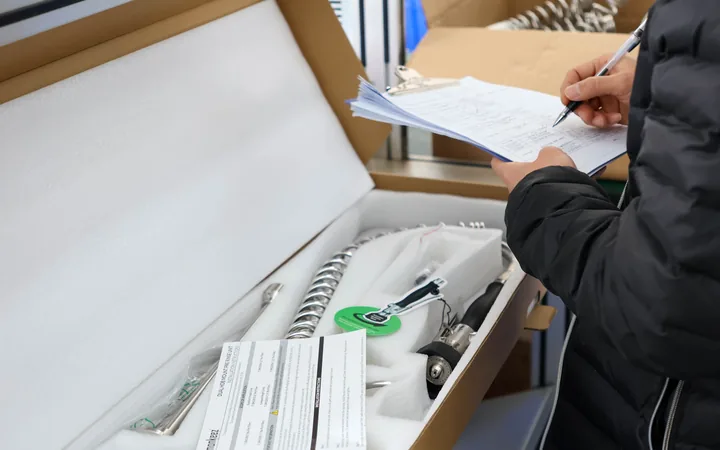
- Bestware · G1DS-110 Model Specifications · All-in-one Unit Specifications, rows 4 and 8. Rated chilling capacity 20 L/h and maximum sparkling-outlet flow 1.5 L/min. The project’s 4.5 L calculation is a ceiling over three minutes under the stated assumption.
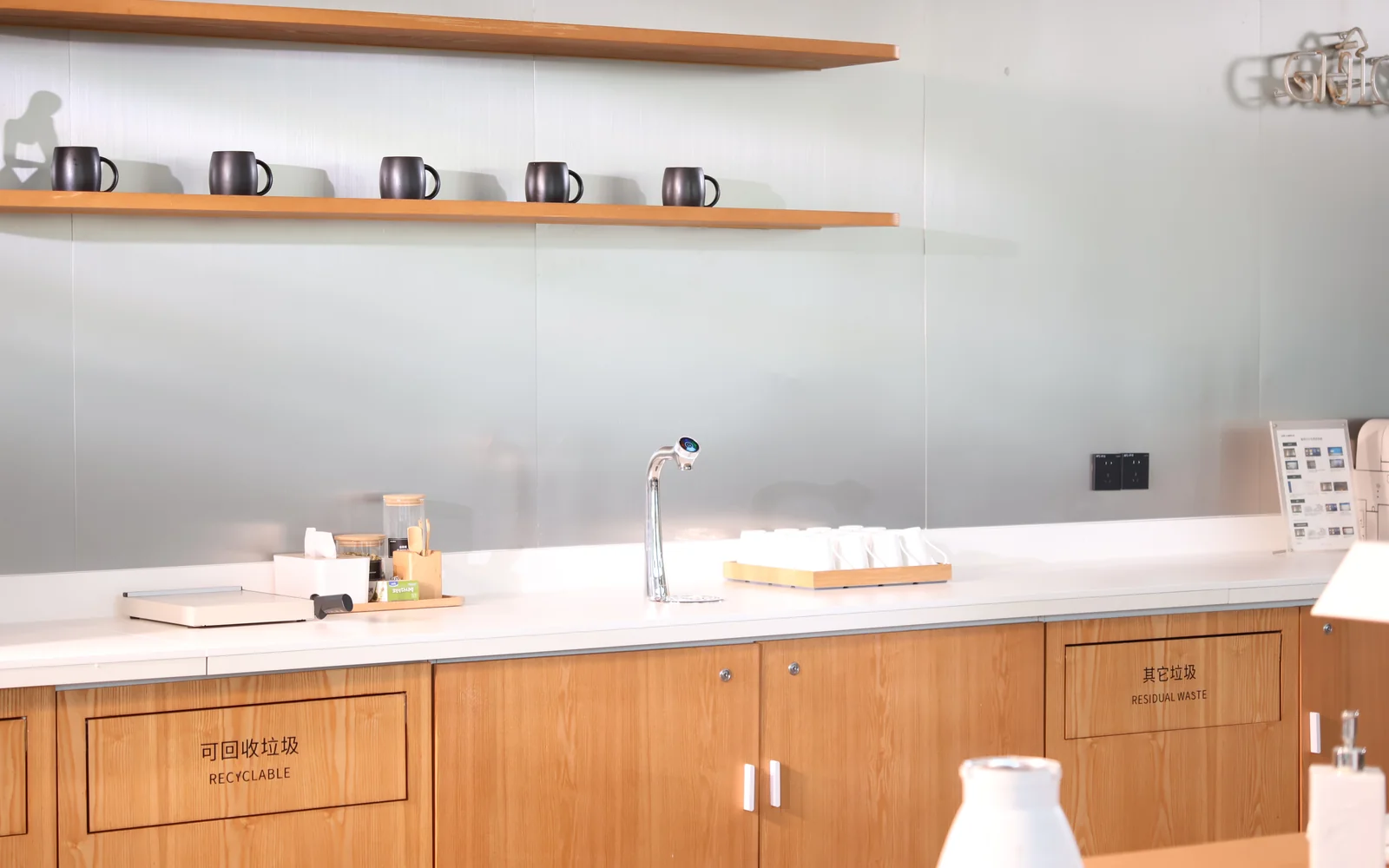
- Bestware Wiki · Office Water Station Layout · Walk the actual route to the station and map the approach, filling point and exit.
- Bestware Wiki · Refilling and Restocking Reusable Containers · Plan the clean stock, the returns point and responsibilities for preparing containers again.
Continue With These Decisions
- Where Should an Office Water Station Go?
Walk the route before choosing a shared water point
- How to Refill and Restock Reusable Bottles in Foodservice
Plan clean, returned and ready-to-serve containers by shift