Look at the Ten Minutes After a Meeting Lets Out
The useful starting point is the break that sends several groups to the same counter. Suppose ten people arrive with 500 mL bottles and six with 250 mL cups in the same ten minutes. That’s 6.5 L. On another day, the same number of people work on that floor, but five bottles need filling in the comparable window: 2.5 L. Put both windows on the survey sheet.
Observe when people arrive, when they leave the outlet and whether they stop at the counter to finish a drink. Record what has to come out chilled, hot, sparkling or ambient. If people spend most of the time looking for mugs or waiting for the counter to clear, faster water flow alone will have little effect on that line.
Test the Route and Count What the Outlets Share
In a 2019 University of British Columbia student study, observers counted bottle fills and direct drinking during defined hours at two campus locations. Use differed by location in their small sample. The signage comparison did not show a statistically significant main effect. The useful method for your office is to count by place and time before assuming the sign or the fixture will change the line.
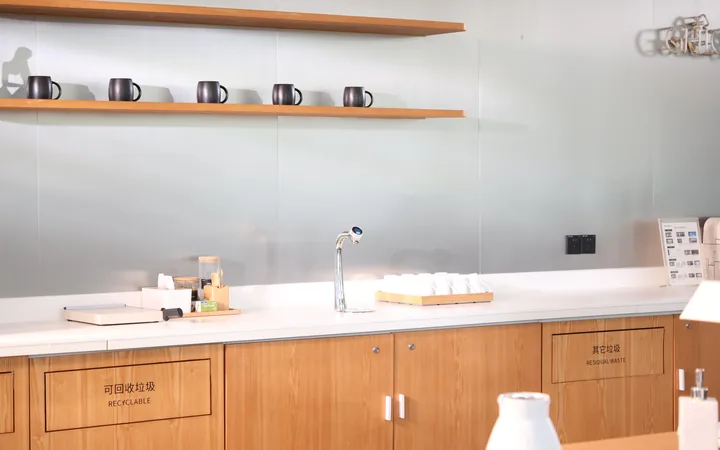
Walk the route from each work area with real bottles. Mark whether the queue blocks a door, the coffee station or the neighboring sink. One larger point can be easier to service, while two points can shorten the walk. Ask what the outlets share. At the AdventHealth Riverview Hospital construction project, employer Robins & Morton describes a temporary water trailer with four outlets connected to a single chiller. Four places to fill tell you something about access. Check the rated capacity of the shared equipment separately.
Read the Model Rating for the Water People Request
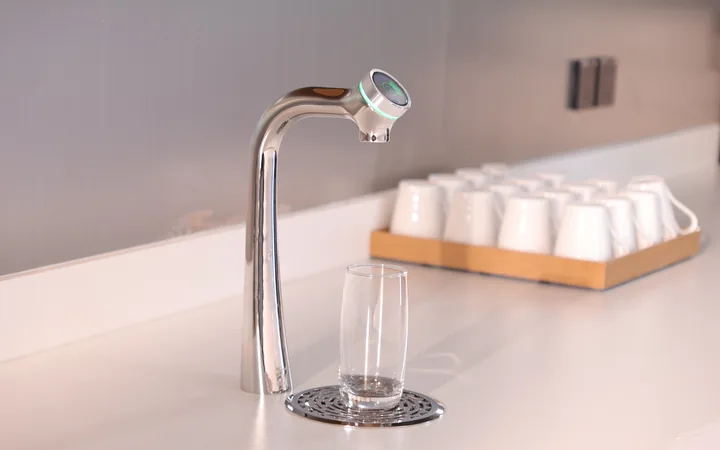
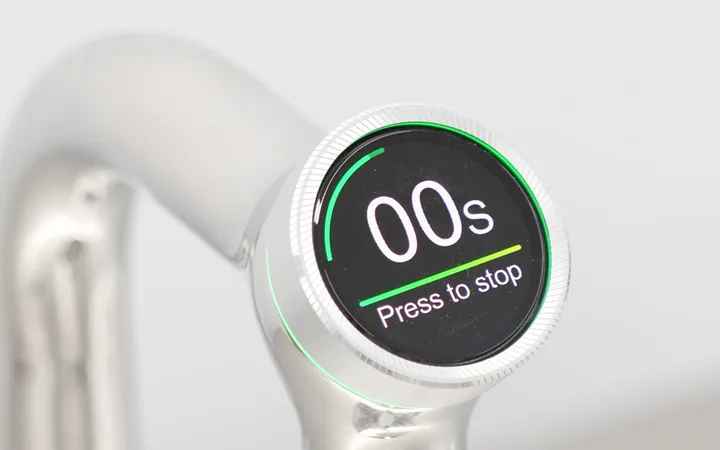
If sparkling water is wanted at one counter, the Bestware G1DS-110 lists 20 L/h chilling capacity and 1.5 L/min maximum sparkling flow. The first describes rated chilling, and the second is a flow ceiling at the outlet. The busy break test still needs the real water mix, the acceptable temperature and whether the station is ready for the next group.
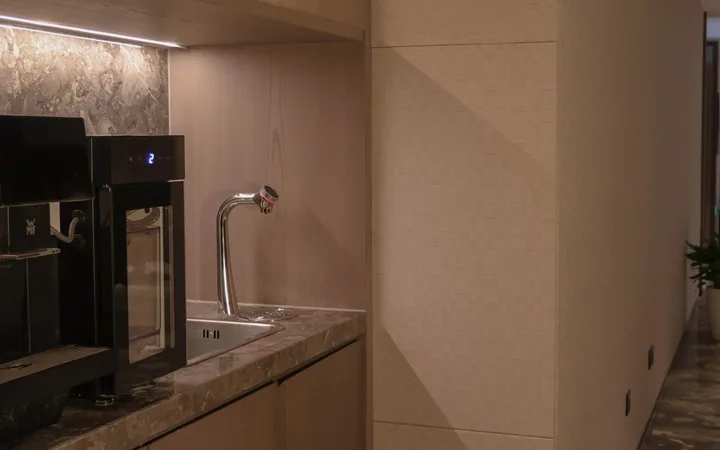
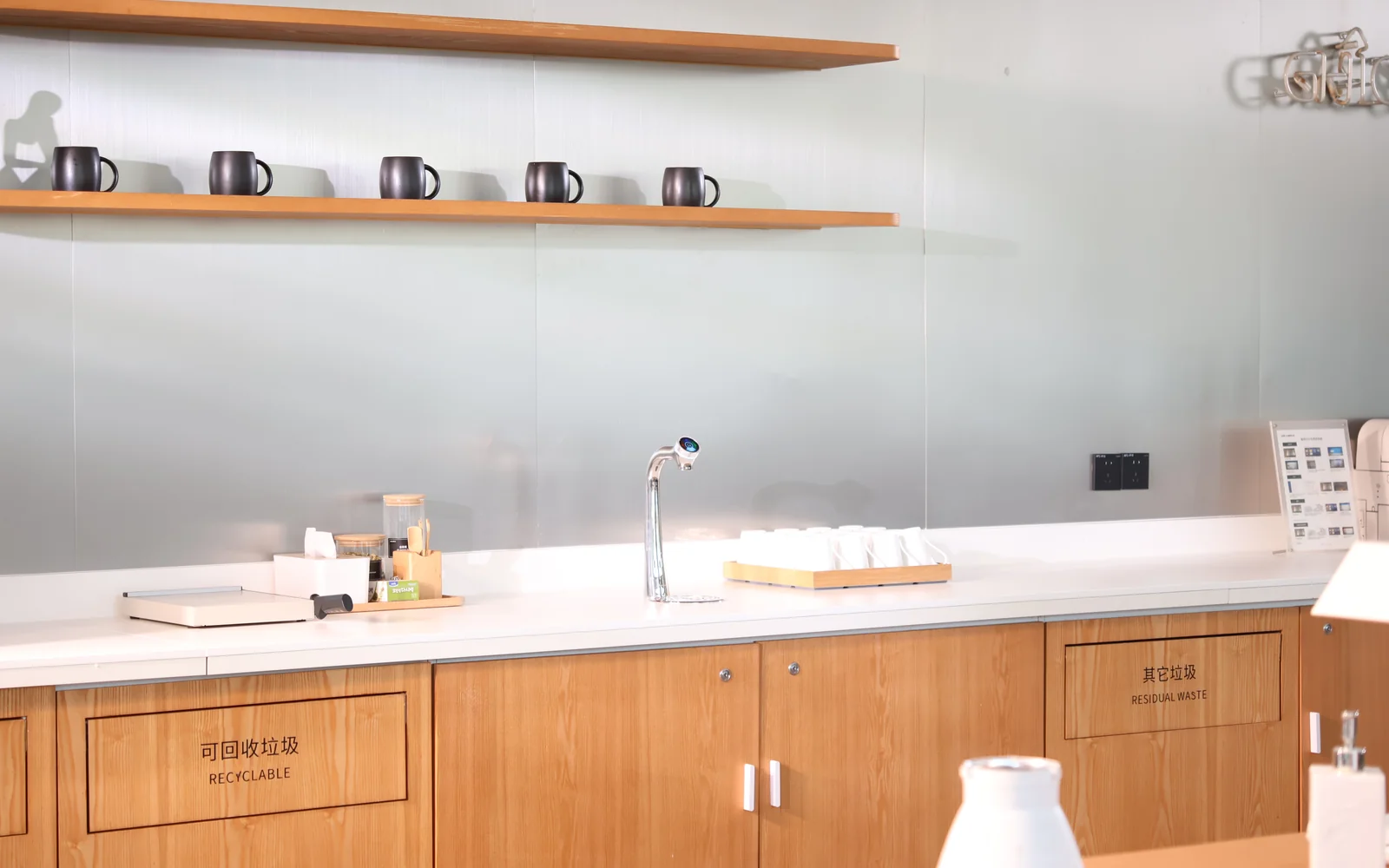
Take the installation drawing to the actual cupboard. This model's manual calls for clearance around the unit and a cabinet-door grille aligned with the unit’s air outlet. Check filter and shutoff access as the room will be used, with the shelves installed. If the floor uses a bottle-fed unit, count the space for full and empty containers and the people who can move them.
Give the Break Room an Owner and a Fallback
Keep an anonymous tally by outlet and interval: pours, waits, interruptions and whether the next break was served. Repeat after the office settles in, on a busy day and on a quieter one. A record of visits and liters helps check the service at a location. Record totals for the station without names.
Write down who cleans, replenishes and calls for repair. Name the cover when that person is away and the available source of safe drinking water during an outage. For U.S. workplaces covered by 29 CFR 1910.141, potable water is part of the sanitation requirement. Make that provision clear before adding options like sparkling water.
Sources for This Edition
- Robins & Morton · Water on Wheels refill station at the AdventHealth Riverview project (April 2024) · April 10, 2024 article, paragraphs describing Kevin Osani and Steve Moore's refill trailer. Four dispensing outlets and one chiller on the same connected installation. Construction workplace example, not an office performance trial.
- De La Cruz, Golovko, Lee and Leung · It’s a sign: The impact of signage on water fountain usage at UBC (2019) · Student SEEDS report, PDF pp.3–4, Methods/Measures and Study 1 Results. Observation blocks include 12–2 and 4–6. Counts of bottle filling and drinking at Life and IKB; observed location difference, no significant signage main effect in the small sample.
- Bestware · G1DS-110 integrated machine specifications · Manufacturer G1DS-110 Specifications, integrated machine rows 4 and 8: 20 L/h chilling, maximum sparkling flow 1.5 L/min. Ratings only.
- Bestware · G1DS-110 / G1DS-1010 V1.1 Installation Manual · Physical PDF pp.9–10, printed pp.13–15: minimum clearances, water and electrical positioning and cabinet-door ventilation aligned with the unit’s air outlet.
- eCFR · 29 CFR 1910.141 Sanitation, workplace potable water · US §1910.141(a)(1) and (b)(1), scope and potable water. Use for applicable workplaces under this standard. Water options and service specifications remain a project decision.
- Illustrative office traffic and container checks · EN two illustrative break blocks with 6.5 L and 2.5 L; ES two directions in one window totaling 7.5 L; ZH ninety employees on roster, sixty onsite, aggregate 6 L in one break. All are stated assumptions and none predicts recovery or a site's usage.
- Bestware Wiki · Office Water Station Layout · Compare walking route, queue space and actual bottle clearance at two accessible locations.
- Bestware Wiki · Handover Water Stations to Site Teams · Document inspection, replenishment, service alert and temporary water ownership.
Continue With These Decisions
- Where Should an Office Water Station Go?
Walk the candidate routes before the cabinet is ordered
- How to Hand Over a Water Station to the Site Team
Record who checks, replenishes and reopens each station