Who Gets the Bottle, and What Do They Get With It?
If a shop will open the multipack and sell a sealed bottle on its own, approve the label on that bottle for individual sale. A consumer-facing pack can carry certain information for the enclosed bottles when it is sold intact and the conditions for the relevant exception are met. A plain shipping carton that stays in the stockroom serves a third purpose. Start the proof by marking which of those packages the shopper actually gets.
Hotels can use the same purchase order for very different routes. A bottle with a minibar price and a complimentary bottle left in a room deserve separate rows on the packing brief. Tell the supplier how each one is handed over. For your own receiving standard, specify which product and lot details a guest or staff member should still be able to find after the carton is gone.
Read the U.S. Multipack Exception One Label Field at a Time
In the United States, 21 CFR 101.9(j)(15) allows the Nutrition Facts to be carried on the retail multipack if the outer pack has the required nutrition information, the inner units are securely enclosed and they are intended to stay in the pack at retail. When the inner bottle carries labeling, the rule requires wording such as “This Unit Not Labeled For Retail Sale” in type at least 1/16 inch high. It also addresses completely unlabeled inner units. That narrow provision is for nutrition labeling. The separate exception in 21 CFR 1.24(a)(14) applies to specified statements, including ingredients and the responsible business name and address, and requires the wording on each unit.
Review the quantity statement separately. For retail multipacks within 21 CFR 101.7(s), check the unit count, the amount in each unit and the total. An open pack may qualify for the exception when shoppers can see the count and examine each unit’s label and the individual units meet the specified requirements. Confirm the drink’s category before using a previous bottle as a template. The U.S. name “sparkling bottled water” in 21 CFR 165.110 is tied to carbon dioxide from the source. A flavored sparkling drink or a club soda needs its own classification review.
Find the Lot With the Carton Gone
A U.S. recall in March 2025 gives a useful example. The Consumer Product Safety Commission described a 750 mL sparkling water in glass bottles, sold by the bottle or in cases of 15. It pointed people to the lot number low on each bottle label. Take the same question to your packing trial. If someone calls from a hotel room with one bottle in hand, can they read the code well enough for you to find the right production record?
Two Changes That Affect Different Identifiers
For a worked example, pack 330 mL bottles into a six-pack and put two sealed six-packs in a shipping case. The case contains 12 bottles. The shopper buys six, with 1.98 L in that retail pack. If the next order calls for three of the same six-packs per case, the GS1 standard calls for a new GTIN at the affected case level. The unchanged retail six-pack keeps its number. If the shopper instead starts buying eight bottles in one retail pack, assign that pack a new GTIN under the declared-count rule and revise the quantity statement and affected higher-level identifiers.
On the trial sheet, give the GTIN, the printed lot and the approved artwork revision separate boxes. Scanning an ordinary product UPC can identify the item on the till. Use the lot to find when and where the specific sample was filled.
Sign off a Sample That Has Been Chilled and Unpacked
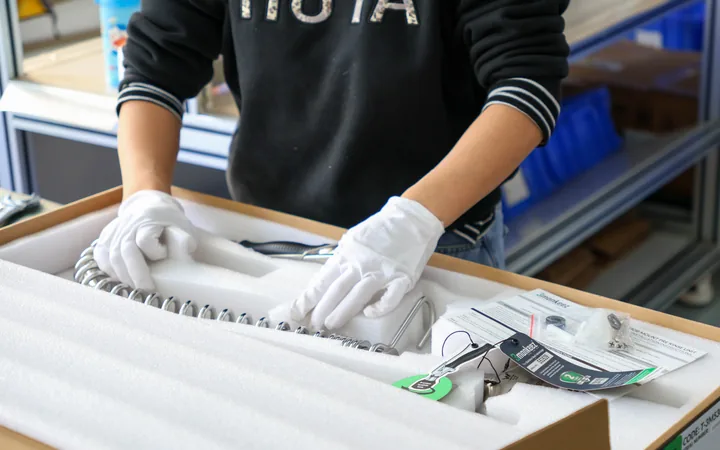
Keep a filled bottle, the finished retail pack and the shipping case from the same trial. Photograph each before and after unpacking. Ask someone who has only the customer’s package to find the required information under normal shop lighting. Then chill and handle the samples as staff will, test the intended barcode at receiving and checkout, and follow the bottle lot back to the fill record.
Write the approved sales route and label revision on the purchase file. Give the hold decision to a named person. If a case-only unit shows up in the single-bottle route, keep it out of that channel until the supplier and your label reviewer resolve the difference.
Sources for This Edition
- U.S. eCFR · 21 CFR §101.9, Nutrition Labeling of Food · Paragraph (j)(15) lists the conditions for the inner-unit Nutrition Facts exception, including the provision for completely unlabeled inner containers.
- U.S. eCFR · 21 CFR §1.24, Exemptions from Required Label Statements · Paragraph (a)(14) covers certain other inner-label statements. It requires a compliant retail outer pack, secure enclosure, no intended retail separation and the specified wording on the unit.
- U.S. eCFR · 21 CFR §101.7, Declaration of Net Quantity of Contents · Paragraph (s) identifies the covered multiunit retail package and describes the count, individual and total quantity statement and visibility proviso.
- U.S. eCFR · 21 CFR §165.110, Bottled Water · Paragraph (a)(2)(v) defines the source carbon dioxide condition for the sparkling bottled water name.
- U.S. Consumer Product Safety Commission · Recall 25-183, March 13, 2025 · The Description and photo identify 750 mL glass bottles, cases of 15 and the lot number low on the individual label.
- Diario Oficial de la Federación · NOM-051 Modification, March 27, 2020 · Printed pages 22–23, clauses 4.5.3.4.4–.5 and items 1–5 under 4.7.1, Generalidades. Clause 4.8 covers Spanish. The rule applies to covered prepackaged products in Mexico.
- Diario Oficial de la Federación · NOM-201-SSA1-2015, Packaged Water · Clauses 8.1 and 8.2.1 cover the additional labelling requirement for covered water, including the declaration of added carbon dioxide.
- 国家卫生健康委 · GB 7718—2011 预包装食品标签通则 · PDF page 4, clauses 3.10–3.11, on separately saleable inner units and permitted omission of corresponding visible statements on the outer label.
- 国家市场监督管理总局 · 中华人民共和国食品安全法 · Articles 67 and 68 distinguish prepackaged labeling from the operator’s markings for food sold in bulk. The text includes the 2025 amendment.
- 国家卫生健康委、国家市场监督管理总局 · GB 7718—2025 · Cover, then clauses 1, 4.1 and 5. Takes effect March 16, 2027. The clauses distinguish storage or transport packaging from foods supplied directly or indirectly to consumers.
- 国家市场监督管理总局 · 食品标识监督管理办法 第 100 号令 · Article 10 covers the smallest sale unit and the readable inner-pack exception. Article 20 covers quantity specifications. Takes effect March 16, 2027.
- 国家市场监督管理总局 · 《食品标识监督管理办法》实施问答 · Question 2 gives examples of readings that do not meet the smallest-sale-unit labeling rule.
- 中国消费者报 · 李建 · 北京超市整箱瓶装饮用水报道,2025 年 7 月 2 日 · Opening and second paragraph describe bottled drinking water sold by the closed case, with the complete label information on the outside.
- GS1 · GTIN Management Standard, Release 1.1 · Sections 2.2 and 2.8, PDF pages 11–12 and 16–17, distinguish a change in declared retail count from a change in the case or predefined pallet configuration.
- Bestware Wiki · Beverage Batch Release · Carry identified samples, comparisons and records through the batch release.
- Bestware Wiki · Specify a Sparkling Water Bottling Line · Take the approved bottle and case into the line trial together.
- Bestware News · China Food Date Marking · China’s 2026 implementation guidance accompanies rules taking effect in 2027.
Continue With These Decisions
- How to Release a Beverage Batch and Trace the Cases on Hold
Check the method and what to record.
- How to Specify a Sparkling-Water Bottling Line for a Full Shift
Check the method and what to record.
- China Clarifies Where to Find the Date on a Drink Bottle
For drinks sold in China, check which date requirements apply to the batch and package.